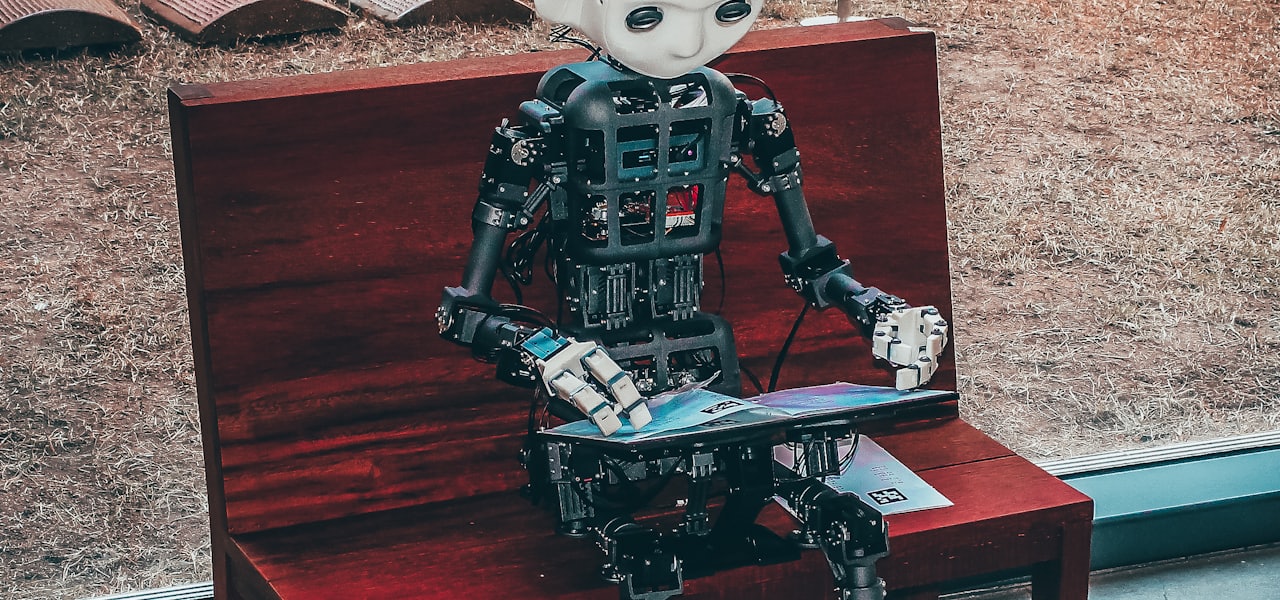
AI Generator Image

AI Generator Image — independent reviews, comparisons, pricing and step-by-step guides on Aizhi.

  • Distribution management system

    Distribution management system

    A distribution management system (DMS) is a collection of applications designed to monitor and control the electric power distribution networks efficiently and reliably. It acts as a decision support system to assist the control room and field operating personnel with the monitoring and control of the electric distribution system. Improving the reliability and quality of service in terms of reducing power outages, minimizing outage time, maintaining acceptable frequency and voltage levels are the key deliverables of a DMS. Given the complexity of distribution grids, such systems may involve communication and coordination across multiple components. For example, the control of active loads may require a complex chain of communication through different components as described in US patent 11747849B2 In recent years, utilization of electrical energy increased exponentially and customer requirement and quality definitions of power were changed enormously. As electric energy became an essential part of daily life, its optimal usage and reliability became important. Real-time network view and dynamic decisions have become instrumental for optimizing resources and managing demands, leading to the need for distribution management systems in large-scale electrical networks. == Overview == Most distribution utilities have been comprehensively using IT solutions through their Outage Management System (OMS) that makes use of other systems like Customer Information System (CIS), Geographical Information System (GIS) and Interactive Voice Response System (IVRS). An outage management system has a network component/connectivity model of the distribution system. By combining the locations of outage calls from customers with knowledge of the locations of the protection devices (such as circuit breakers) on the network, a rule engine is used to predict the locations of outages. Based on this, restoration activities are charted out and the crew is dispatched for the same. In parallel with this, distribution utilities began to roll out Supervisory Control and Data Acquisition (SCADA) systems, initially only at their higher voltage substations. Over time, use of SCADA has progressively extended downwards to sites at lower voltage levels. DMSs access real-time data and provide all information on a single console at the control centre in an integrated manner. Their development varied across different geographic territories. In the US, for example, DMSs typically grew by taking Outage Management Systems to the next level, automating the complete sequences and providing an end to end, integrated view of the entire distribution spectrum. In the UK, by contrast, the much denser and more meshed network topologies, combined with stronger Health & Safety regulation, had led to early centralisation of high-voltage switching operations, initially using paper records and schematic diagrams printed onto large wallboards which were 'dressed' with magnetic symbols to show the current running states. There, DMSs grew initially from SCADA systems as these were expanded to allow these centralised control and safety management procedures to be managed electronically. These DMSs required even more detailed component/connectivity models and schematics than those needed by early OMSs as every possible isolation and earthing point on the networks had to be included. In territories such as the UK, therefore, the network component/connectivity models were usually developed in the DMS first, whereas in the USA these were generally built in the GIS. The typical data flow in a DMS has the SCADA system, the Information Storage & Retrieval (ISR) system, Communication (COM) Servers, Front-End Processors (FEPs) & Field Remote Terminal Units (FRTUs). == Why DMS? == Reduce the duration of outages Improve the speed and accuracy of outage predictions. Reduce crew patrol and drive times through improved outage locating. Improve the operational efficiency Determine the crew resources necessary to achieve restoration objectives. Effectively utilize resources between operating regions. Determine when best to schedule mutual aid crews. Increased customer satisfaction A DMS incorporates IVR and other mobile technologies, through which there is an improved outage communications for customer calls. Provide customers with more accurate estimated restoration times. Improve service reliability by tracking all customers affected by an outage, determining electrical configurations of every device on every feeder, and compiling details about each restoration process. == DMS Functions == In order to support proper decision making and O&M activities, DMS solutions should support the following functions: Network visualization & support tools Applications for Analytical & Remedial Action Utility Planning Tools System Protection Schemes The various sub functions of the same, carried out by the DMS are listed below:- === Network Connectivity Analysis (NCA) === Distribution network usually covers over a large area and catering power to different customers at different voltage levels. So locating required sources and loads on a larger GIS/Operator interface is often very difficult. Panning & zooming provided with normal SCADA system GUI does not cover the exact operational requirement. Network connectivity analysis is an operator specific functionality which helps the operator to identify or locate the preferred network or component very easily. NCA does the required analyses and provides display of the feed point of various network loads. Based on the status of all the switching devices such as circuit breaker (CB), Ring Main Unit (RMU) and/or isolators that affect the topology of the network modeled, the prevailing network topology is determined. The NCA further assists the operator to know operating state of the distribution network indicating radial mode, loops and parallels in the network. === Switching Schedule & Safety Management === In territories such as the UK a core function of a DMS has always been to support safe switching and work on the networks. Control engineers prepare switching schedules to isolate and make safe a section of network before work is carried out, and the DMS validates these schedules using its network model. Switching schedules can combine telecontrolled and manual (on-site) switching operations. When the required section has been made safe, the DMS allows a Permit To Work (PTW) document to be issued. After its cancellation when the work has been finished, the switching schedule then facilitates restoration of the normal running arrangements. Switching components can also be tagged to reflect any Operational Restrictions that are in force. The network component/connectivity model, and associated diagrams, must always be kept absolutely up to date. The switching schedule facility therefore also allows 'patches' to the network model to be applied to the live version at the appropriate stage(s) of the jobs. The term 'patch' is derived from the method previously used to maintain the wallboard diagrams. === State Estimation (SE) === The state estimator is an integral part of the overall monitoring and control systems for transmission networks. It is mainly aimed at providing a reliable estimate of the system voltages. This information from the state estimator flows to control centers and database servers across the network. The variables of interest are indicative of parameters like margins to operating limits, health of equipment and required operator action. State estimators allow the calculation of these variables of interest with high confidence despite the facts that the measurements may be corrupted by noise, or could be missing or inaccurate. Even though we may not be able to directly observe the state, it can be inferred from a scan of measurements which are assumed to be synchronized. The algorithms need to allow for the fact that presence of noise might skew the measurements. In a typical power system, the State is quasi-static. The time constants are sufficiently fast so that system dynamics decay away quickly (with respect to measurement frequency). The system appears to be progressing through a sequence of static states that are driven by various parameters like changes in load profile. The inputs of the state estimator can be given to various applications like Load Flow Analysis, Contingency Analysis, and other applications. === Load Flow Applications (LFA) === Load flow study is an important tool involving numerical analysis applied to a power system. The load flow study usually uses simplified notations like a single-line diagram and focuses on various forms of AC power rather than voltage and current. It analyzes the power systems in normal steady-state operation. The goal of a power flow study is to obtain complete voltage angle and magnitude information for each bus in a power system for specified load and generator real power and voltage conditions. Once this

    Read more →
  • Superincreasing sequence

    Superincreasing sequence

    In mathematics, a sequence of positive real numbers ( s 1 , s 2 , . . . ) {\displaystyle (s_{1},s_{2},...)} is called superincreasing if every element of the sequence is greater than the sum of all previous elements in the sequence. Formally, this condition can be written as s n + 1 > ∑ j = 1 n s j {\displaystyle s_{n+1}>\sum _{j=1}^{n}s_{j}} for all n ≥ 1. == Program == The following Python source code tests a sequence of numbers to determine if it is superincreasing: This produces the following output: Sum: 0 Element: 1 Sum: 1 Element: 3 Sum: 4 Element: 6 Sum: 10 Element: 13 Sum: 23 Element: 27 Sum: 50 Element: 52 Is it a superincreasing sequence? True == Examples == (1, 3, 6, 13, 27, 52) is a superincreasing sequence, but (1, 3, 4, 9, 15, 25) is not. The series a^x for a>=2 == Properties == Multiplying a superincreasing sequence by a positive real constant keeps it superincreasing.

    Read more →
  • Cleo Communications

    Cleo Communications

    Cleo Communications LLC, simply referred to as Cleo, is a privately held software company founded in 1976. The company is best known for its ecosystem integration platform, Cleo Integration Cloud with RADAR. == History == Cleo originally began as a division of Phone 1 Inc., a voice data gathering systems manufacturer, and built data concentrators and terminal emulators — multi-bus computers, modems, and terminals to interface with IBM mainframes via bisynchronous communications. The company then began developing mainframe middleware in the 1980s, and with the rise of the PC, moved into B2B data communications and secure file transfer software. Cleo Communications was acquired in 2012 by Global Equity Partners along with other investment companies. Since being acquired in 2012, the company’s offerings have evolved into Cleo Integration Cloud, a platform for enterprise business integration. == Business == Based in Rockford, Illinois (USA), with offices in Chicago, Pennsylvania, London, and Bangalore, Cleo has about 400 employees and more than 4,100 direct customers. The company's flagship offering, Cleo Integration Cloud, provides both on-premise and cloud-based integration technologies and comprises solutions for B2B/EDI, application integration, data movement and data transformation. Previous products now incorporated into the Cleo Integration Cloud platform include Cleo Harmony, Cleo Clarify, and Cleo Jetsonic. Cleo solutions span a variety of industries, including manufacturing, logistics and supply chain, retail, third-party logistics, warehouse management and transportation management, healthcare, financial services and government. The U.S. Department of Veterans Affairs adopted Cleo's fax technology, Cleo Streem, in 2013 when in need of FIPS 140-2-compliant technology to protect information, and the City of Atlanta has used Cleo Streem for network and desktop faxing since 2006. Cleo also serves U.S. transportation logistics company MercuryGate International and SaaS-based food logistics organization ArrowStream. It powers the architecture for several major supply chain companies, such as Blue Yonder and SAP. Cleo integrates the pharmaceutical supply chain for such companies as Octapharma. Key partners include FourKites and ClientsFirst, among many others. In May 2023, Cleo announced it entered a global partnership with consulting and multinational information technology services company, Cognizant (NASDAQ: CTSH). Together, the companies announced CCIB, powered by Cleo, which is a B2B iPaaS solution that provides B2B managed services with built-in, scalable infrastructure on the cloud. The solution comprises elements from Cleo’s flagship offering, Cleo Integration Cloud. == Expansion == In June 2014, Cleo opened an office in Chicago for members of its support and Ashok and teams. In 2014, the company hired Jorge Rodriguez as Senior Vice President of Product Development and John Thielens as Vice President of Technology. Cleo hired Dave Brunswick as Vice President of Solutions for North America in 2015, and Cleo hired Ken Lyons to lead global sales in 2016. Lyons now serves as the company's Chief Revenue Officer. More recent additions to the company's leadership team include Vipin Mittal, Vice President, Customer Experience, and Tushar Patel, CMO. Cleo opened its product development facility in Bengaluru, India, in 2015 and expanded its hybrid cloud integration teams into a new office there in 2017. The company also opened a London office in 2016 and expanded its network of channel partners in EMEA. In 2016, Cleo acquired EXTOL International, a Pottsville, Pa.-based business and EDI integration and data transformation company for an undisclosed amount. In 2017, the company moved its headquarters from Loves Park, Illinois, to Rockford. In 2021 the company received a significant growth investment from H.I.G. Capital. In July 2022, Cleo opened a new, 5,000-square-foot office located in Chicago's Loop. In November 2022, Cleo launched an accelerator for Microsoft Dynamics 365 SCM-to-X12 and a connector for Microsoft Dynamics 365 Business Central. These pre-built solutions allow businesses and users to quickly build integration flows that integrate their digital ecosystems. In March 2023, Cleo released CIC PAVE (Procurement Automation and Vendor Enablement). PAVE provides customers with enhanced supply chain visibility via a supplier portal that allows the customer to keep vendor interaction in a single location, even if they cannot use EDI or have API-ready applications. In December 2023, Cleo acquired ECS International, an integration technology company based in the Netherlands. == Certification == Cleo regularly submits its products to Drummond Group's interoperability software testing for AS2, AS3 and ebMS 2.0. In January 2020, Cleo announced that its new application connector for Acumatica ERP has been recognized as an Acumatica-Certified Application (ACA). The company also holds SOC 2, Type 2 certification. == Awards == Cleo was a Xerox partner of the year award for five years, from 2009 to 2014. The Cleo Streem solution integrates with Xerox multi-function products, providing customers with solutions for network fax and interactive messaging needs. Cleo was named to Food Logistics’ FL100+ Top Software and Technology Providers Lists in 2016, 2017, 2019 and 2020. Cleo CEO, Mahesh Rajasekharan was named an Ernst & Young Entrepreneur Of The Year 2022 Midwest Award winner. Rajasekharan is serving as a judge for the 2023 Ernst & Young Entrepreneur Of the Year Awards. As of April 2022, Cleo has been named a Leader in EDI on the G2 Grid, a peer-to-peer review site, for 20 straight quarters. In Spring 2023, Cleo won 23 G2 awards—including EDI Leader Enterprise, MFT Leader Enterprise, On-Premise Data Integration Best Support Enterprise, and iPaaS High Performer Asia.

    Read more →
  • Social media and identity

    Social media and identity

    Social media can have both positive and negative impacts on a user's identity. Scholars within the fields of psychology and communication study the relationship between social media and identity in order to understand individual behavior, psychological impacts, and social patterns. Communication within political or social groups online can result in practice application, real-world implementation of a concept, of those found identities or the adoption of them as a whole. Young people, defined as emerging adults in or entering college, are especially found to have their identities shaped through social media. Sometimes it seems as though social media is taking over and changing us for the worse. Social media is always changing and can be hard to keep up with. Platforms come and go trends change everyday. What was cool yesterday is lame today. The biggest change from recent years that users are still adjusting to is the name change of Twitter now called X. Since Elon Musk purchased the platform he changed the name but nothing else about the app. Users now feel the need to explain when talking about X. Now it is often referred to as ‘X(Twitter)’ to clarify. == Social Media Usage and Demographics == We know what social media is and how it is used but who uses it? The Pew Research center conducted a 10 year study from 2005-2015 about the demographics of social media usage. While this article is 10 years old the statistics in it are from a very formative time in social media. This is when most people joined and were consistently using social media. Age: While it is no surprise that 90% of young adults use social media they are the main demographic of users. Older adults (65 and older) really hit a boom on social media. In 2005 only 2% of older adults used any form of social media. By 2015 35% of older adults used social media. We can infer that that percentage has grown even more since 2015. Gender: It is known that women tend to use social media more than men. In 2015 it was noted that 65% of women used social media. Men were not far behind, 62% of men were reported to use social media. There are no notable differences of users from various races and ethnicities. The research also shows that more suburban and urban residents use social media over those who live in rural areas. == Young adults == Young adults are especially influenced by social media, where they find social groups to belong to. Research shows that nearly half of teens believe social media platforms has a negative impact on people their age. Psychologists believe that at a time when young adults are coming into adolescence, they are more likely to be influenced by what they see on sites like Instagram or Twitter. Most young adults will widely share, with varying degrees of accuracy, honesty, and openness, information that in the past would have been private or reserved for select individuals. Key questions include whether they accurately portray their identities online and whether the use of social media might impact young adults' identity development. Media Imagery, in particular, is said to be a major influence on the minds of young men and women. Studies have shown that it is even more relevant when it comes to the issue of body image. Social media, in part, has been created to host a safe haven for those who do not claim a solid identity in the material world, but past identities are not easy to escape from since the Internet preserves much of the information that was shared. Social media is an essential part of the social lives of young adults. They rely on it to maintain relationships, create new relationships, and stay up to date with the world around them. Adolescents find social media to be extremely helpful when changing environments, like moving off to university for example. Social media provides students, especially first year students, the opportunity to create the identity they want the world to see. However, it has been seen that these students create online personas that may not reflect their true selves bringing up the issues of impression management. Social media provides young adults with the opportunity to present themselves as something other than their authentic self. Social media providers can help build relationships and community on their platforms. This is something that will create a more positive impact from social media. When young adults interact with each other using social media they are creating something called a social self-identity. Social self identity is what individuals create when they assimilate to being in a group. Social media has gained the reputation of being isolating. If these platforms encourage community then they can help grow users' social self-identity. == Media literacy == The definition of media literacy has evolved over time to encompass a range of experiences that can occur in social media or other digital spaces. The definition of media literacy is also broad and wide ranging in its context. Currently, media literacy is the idea that one is able to analyze, evaluate, and interact with media content in a meaningful way. Educators teach media literacy skills because of the vulnerable relationship that young adults can have with social media. Some examples of media literacy practices, particularly on Twitter, include using hashtags, live tweeting, and sharing information. One of the overall goals of media literacy within the context of social media is to keep young adults aware of potentially violent, graphic, or dangerous content that they may come across on the internet, and how to determine if the content is credible while engaging responsibly with it. In order to be considered media-literate, a person must be able to take in media from online and social platforms and have the correct competencies and context to be able to organize the information. In order to be considered media-literate, the digital information must be given to the user in a way that it can be put into the correct perspective and analyzed, deducted and synthesized.Teenagers and young adults can be vulnerable to specific content online outside of their age-range. Media literacy campaigns and education research shows that targeting those who fall into this age category would be the best way to understand and target their needs as young online users. There are multiple individual studies investigating social media identity relating to media literacy online, however there is a need for much more conclusive information that analyzes multiple studies at a time. Social media literacy is still considered an under-researched topic. Many scholars in media literacy research emphasize the impact of training young adults to consume media in a safe way is the major solution for furthering internet education in children and young adults. The more information the young adults are given on media literacy, the better prepared they are to enter the digital world confidently. One scientific model that has been proposed, known as The Social Media Literacy (SMILE) model is a framework that hypothesizes that at the core of this model it is helping young adults truly know the meaning and display the actions of media literacy online. SMILE is also meant to inspire more research on the subject of media literacy as it relates to social media effects and young adult learning abilities. The model was applied through the lens of a social media positivity bias among adolescents and puts forth five different assumptions about social media and media literacy; Social media literacy as a moderator (what is seen on social media) Social media literacy as a predictor (what is seen for specific individuals on social media) Media literacy within social media is a reciprocal process The development of social media literacy depends on a conditional process of variables affecting other variables Media literacy within social media is a differential learning process, and who teaches it is highly affective of the outcome This model also stresses that human beings learn media literacy (and social media literacy) naturally as they go through life. Research suggests that having young adults taught media literacy from an educator may make them less interested (and therefore less careful) of threats on social media. == Self Presentation == People create images of themselves to present to the public, a process called self presentation. Depending on the demographic, presenting oneself as authentic can result in identity clarity. Methods of self presentation can also be influenced by geography. The framework for this relationship between a user's location and their social media presentation is called the spatial self. Users depict their spatial self in order to include their physical space as a part of their self presentation to an audience. According to a 2018 research paper, patients of plastic surgeons have gone in and asked for specific snapchat "filter" features. This led to a theory of Snap

    Read more →
  • Software agent

    Software agent

    In computer science, a software agent is a computer program that acts for a user or another program in a relationship of agency. The term agent is derived from the Latin agere (to do): an agreement to act on one's behalf. Such "action on behalf of" implies the authority to decide which, if any, action is appropriate. Some agents are colloquially known as bots, from robot. They may be embodied, as when execution is paired with a robot body, or as software such as a chatbot executing on a computer, such as a mobile device, e.g. Siri. Software agents may be autonomous or work together with other agents or people. Software agents interacting with people (e.g. chatbots, human-robot interaction environments) may possess human-like qualities such as natural language understanding and speech, personality or embody humanoid form (see Asimo). Related and derived concepts include intelligent agents (in particular exhibiting some aspects of artificial intelligence, such as reasoning), autonomous agents (capable of modifying the methods of achieving their objectives), distributed agents (being executed on physically distinct computers), multi-agent systems (distributed agents that work together to achieve an objective that could not be accomplished by a single agent acting alone), and mobile agents (agents that can relocate their execution onto different processors). == Concepts == The basic attributes of an autonomous software agent are that agents: are not strictly invoked for a task, but activate themselves, may reside in wait status on a host, perceiving context, may get to run status on a host upon starting conditions, do not require interaction of user, may invoke other tasks including communication. The concept of an agent provides a method of describing a complex software entity that is capable of acting with a certain degree of autonomy in order to accomplish tasks on behalf of its host. But unlike objects, which are defined in terms of methods and attributes, an agent is defined in terms of its behavior. Various authors have proposed different definitions of agents, these commonly include concepts such as: persistence: code is not executed on demand but runs continuously and decides for itself when it should perform some activity; autonomy: agents have capabilities of task selection, prioritization, goal-directed behavior, decision-making without human intervention; social ability: agents are able to engage other components through some sort of communication and coordination, they may collaborate on a task; reactivity: agents perceive the context in which they operate and react to it appropriately. === Distinguishing agents from programs === All agents are programs, but not all programs are agents. Contrasting the term with related concepts may help clarify its meaning. Franklin & Graesser (1997) discuss four key notions that distinguish agents from arbitrary programs: reaction to the environment, autonomy, goal-orientation and persistence. === Intuitive distinguishing agents from objects === Agents are more autonomous than objects. Agents have flexible behavior: reactive, proactive, social. Agents have at least one thread of control but may have more. === Distinguishing agents from expert systems === Expert systems are not coupled to their environment. Expert systems are not designed for reactive, proactive behavior. Expert systems do not consider social ability. === Distinguishing intelligent software agents from intelligent agents in AI === Intelligent agents (also known as rational agents) are not just computer programs: they may also be machines, human beings, communities of human beings (such as firms) or anything that is capable of goal-directed behavior. == Impact of software agents == Software agents may offer various benefits to their end users by automating complex or repetitive tasks. However, there are organizational and cultural impacts of this technology that need to be considered prior to implementing software agents. === Organizational impact === === Work contentment and job satisfaction impact === People like to perform easy tasks providing the sensation of success unless the repetition of the simple tasking is affecting the overall output. In general implementing software agents to perform administrative requirements provides a substantial increase in work contentment, as administering their own work does never please the worker. The effort freed up serves for a higher degree of engagement in the substantial tasks of individual work. Hence, software agents may provide the basics to implement self-controlled work, relieved from hierarchical controls and interference. Such conditions may be secured by application of software agents for required formal support. === Cultural impact === The cultural effects of the implementation of software agents include trust affliction, skills erosion, privacy attrition and social detachment. Some users may not feel entirely comfortable fully delegating important tasks to software applications. Those who start relying solely on intelligent agents may lose important skills, for example, relating to information literacy. In order to act on a user's behalf, a software agent needs to have a complete understanding of a user's profile, including his/her personal preferences. This, in turn, may lead to unpredictable privacy issues. When users start relying on their software agents more, especially for communication activities, they may lose contact with other human users and look at the world with the eyes of their agents. These consequences are what agent researchers and users must consider when dealing with intelligent agent technologies. === History === The concept of an agent can be traced back to Hewitt's Actor Model (Hewitt, 1977) - "A self-contained, interactive and concurrently-executing object, possessing internal state and communication capability." To be more academic, software agent systems are a direct evolution of Multi-Agent Systems (MAS). MAS evolved from Distributed Artificial Intelligence (DAI), Distributed Problem Solving (DPS) and Parallel AI (PAI), thus inheriting all characteristics (good and bad) from DAI and AI. John Sculley's 1987 "Knowledge Navigator" video portrayed an image of a relationship between end-users and agents. Being an ideal first, this field experienced a series of unsuccessful top-down implementations, instead of a piece-by-piece, bottom-up approach. The range of agent types is now (from 1990) broad: WWW, search engines, etc. == Examples of intelligent software agents == === Buyer agents (shopping bots) === Buyer agents travel around a network (e.g. the internet) retrieving information about goods and services. These agents, also known as 'shopping bots', work very efficiently for commodity products such as CDs, books, electronic components, and other one-size-fits-all products. Buyer agents are typically optimized to allow for digital payment services used in e-commerce and traditional businesses. === User agents (personal agents) === User agents, or personal agents, are intelligent agents that take action on your behalf. In this category belong those intelligent agents that already perform, or will shortly perform, the following tasks: Check your e-mail, sort it according to the user's order of preference, and alert you when important emails arrive. Play computer games as your opponent or patrol game areas for you. Assemble customized news reports for you. There are several versions of these, including CNN. Find information for you on the subject of your choice. Fill out forms on the Web automatically for you, storing your information for future reference Scan Web pages looking for and highlighting text that constitutes the "important" part of the information there Discuss topics with you ranging from your deepest fears to sports Facilitate with online job search duties by scanning known job boards and sending the resume to opportunities who meet the desired criteria Profile synchronization across heterogeneous social networks === Monitoring-and-surveillance (predictive) agents === Monitoring and surveillance agents are used to observe and report on equipment, usually computer systems. The agents may keep track of company inventory levels, observe competitors' prices and relay them back to the company, watch stock manipulation by insider trading and rumors, etc. For example, NASA's Jet Propulsion Laboratory has an agent that monitors inventory, planning, schedules equipment orders to keep costs down, and manages food storage facilities. These agents usually monitor complex computer networks that can keep track of the configuration of each computer connected to the network. A special case of monitoring-and-surveillance agents are organizations of agents used to automate decision-making process during tactical operations. The agents monitor the status of assets (ammunition, weapons available, platforms for transport, etc.) and receive goals from hi

    Read more →
  • Cryptovirology

    Cryptovirology

    Cryptovirology refers to the study of cryptography use in malware, such as ransomware and asymmetric backdoors. Traditionally, cryptography and its applications are defensive in nature, and provide privacy, authentication, and security to users. Cryptovirology employs a twist on cryptography, showing that it can also be used offensively. It can be used to mount extortion based attacks that cause loss of access to information, loss of confidentiality, and information leakage, tasks which cryptography typically prevents. The field was born with the observation that public-key cryptography can be used to break the symmetry between what an antivirus analyst sees regarding malware and what the attacker sees. The antivirus analyst sees a public key contained in the malware, whereas the attacker sees the public key contained in the malware as well as the corresponding private key (outside the malware) since the attacker created the key pair for the attack. The public key allows the malware to perform trapdoor one-way operations on the victim's computer that only the attacker can undo. == Overview == The field encompasses covert malware attacks in which the attacker securely steals private information such as symmetric keys, private keys, PRNG state, and the victim's data. Examples of such covert attacks are asymmetric backdoors. An asymmetric backdoor is a backdoor (e.g., in a cryptosystem) that can be used only by the attacker, even after it is found. This contrasts with the traditional backdoor that is symmetric, i.e., anyone that finds it can use it. Kleptography, a subfield of cryptovirology, is the study of asymmetric backdoors in key generation algorithms, digital signature algorithms, key exchanges, pseudorandom number generators, encryption algorithms, and other cryptographic algorithms. The NIST Dual EC DRBG random bit generator has an asymmetric backdoor in it. The EC-DRBG algorithm utilizes the discrete-log kleptogram from kleptography, which by definition makes the EC-DRBG a cryptotrojan. Like ransomware, the EC-DRBG cryptotrojan contains and uses the attacker's public key to attack the host system. The cryptographer Ari Juels indicated that NSA effectively orchestrated a kleptographic attack on users of the Dual EC DRBG pseudorandom number generation algorithm and that, although security professionals and developers have been testing and implementing kleptographic attacks since 1996, "you would be hard-pressed to find one in actual use until now." Due to public outcry about this cryptovirology attack, NIST rescinded the EC-DRBG algorithm from the NIST SP 800-90 standard. Covert information leakage attacks carried out by cryptoviruses, cryptotrojans, and cryptoworms that, by definition, contain and use the public key of the attacker is a major theme in cryptovirology. In "deniable password snatching," a cryptovirus installs a cryptotrojan that asymmetrically encrypts host data and covertly broadcasts it. This makes it available to everyone, noticeable by no one (except the attacker), and only decipherable by the attacker. An attacker caught installing the cryptotrojan claims to be a virus victim. An attacker observed receiving the covert asymmetric broadcast is one of the thousands, if not millions of receivers, and exhibits no identifying information whatsoever. The cryptovirology attack achieves "end-to-end deniability." It is a covert asymmetric broadcast of the victim's data. Cryptovirology also encompasses the use of private information retrieval (PIR) to allow cryptoviruses to search for and steal host data without revealing the data searched for even when the cryptotrojan is under constant surveillance. By definition, such a cryptovirus carries within its own coding sequence the query of the attacker and the necessary PIR logic to apply the query to host systems. == History == The first cryptovirology attack and discussion of the concept was by Adam L. Young and Moti Yung, at the time called "cryptoviral extortion" and it was presented at the 1996 IEEE Security & Privacy conference. In this attack, a cryptovirus, cryptoworm, or cryptotrojan contains the public key of the attacker and hybrid encrypts the victim's files. The malware prompts the user to send the asymmetric ciphertext to the attacker who will decipher it and return the symmetric decryption key it contains for a fee. The victim needs the symmetric key to decrypt the encrypted files if there is no way to recover the original files (e.g., from backups). The 1996 IEEE paper predicted that cryptoviral extortion attackers would one day demand e-money, long before Bitcoin even existed. Many years later, the media relabeled cryptoviral extortion as ransomware. In 2016, cryptovirology attacks on healthcare providers reached epidemic levels, prompting the U.S. Department of Health and Human Services to issue a Fact Sheet on Ransomware and HIPAA. The fact sheet states that when electronic protected health information is encrypted by ransomware, a breach has occurred, and the attack therefore constitutes a disclosure that is not permitted under HIPAA, the rationale being that an adversary has taken control of the information. Sensitive data might never leave the victim organization, but the break-in may have allowed data to be sent out undetected. California enacted a law that defines the introduction of ransomware into a computer system with the intent of extortion as being against the law. == Examples == === Tremor virus === While viruses in the wild have used cryptography in the past, the only purpose of such usage of cryptography was to avoid detection by antivirus software. For example, the tremor virus used polymorphism as a defensive technique in an attempt to avoid detection by anti-virus software. Though cryptography does assist in such cases to enhance the longevity of a virus, the capabilities of cryptography are not used in the payload. The One-half virus was amongst the first viruses known to have encrypted affected files. === Tro_Ransom.A virus === An example of a virus that informs the owner of the infected machine to pay a ransom is the virus nicknamed Tro_Ransom.A. This virus asks the owner of the infected machine to send $10.99 to a given account through Western Union. Virus.Win32.Gpcode.ag is a classic cryptovirus. This virus partially uses a version of 660-bit RSA and encrypts files with many different extensions. It instructs the owner of the machine to email a given mail ID if the owner desires the decryptor. If contacted by email, the user will be asked to pay a certain amount as ransom in return for the decryptor. === CAPI === It has been demonstrated that using just 8 different calls to Microsoft's Cryptographic API (CAPI), a cryptovirus can satisfy all its encryption needs. == Other uses of cryptography-enabled malware == Apart from cryptoviral extortion, there are other potential uses of cryptoviruses, such as deniable password snatching, cryptocounters, private information retrieval, and in secure communication between different instances of a distributed cryptovirus.

    Read more →
  • Data room

    Data room

    Data rooms are secure spaces used for housing data, usually of a privileged or confidential nature. They can be physical data rooms, virtual data rooms (VDRs), or data centers. They are primarily used for a variety of corporate purposes, including data storage, document exchange, file sharing, financial transactions, and legal proceedings. Today, data rooms are central to workflows in mergers and acquisitions, venture capital, and corporate restructuring, increasingly utilizing artificial intelligence to securely manage and review large datasets. Historically, data rooms were strictly physical locations heavily guarded and monitored. Today, the vast majority of corporate data rooms are hosted virtually on secure cloud platforms, though physical rooms are still occasionally used for highly sensitive government or proprietary intelligence. == Physical Data Rooms == In mergers and acquisitions (M&A), the traditional data room genuinely consists of a physically secured and continually monitored room, normally in the vendor's offices or those of their legal counsel. Bidders and their advisers visit this room in order to inspect and report on various documents, legal contracts, and financial statements made available during the due diligence process. Historically, physical data rooms presented significant logistical challenges. Often, only one bidder at a time was allowed to enter to maintain document integrity and confidentiality. If new documents or new versions of documents were required, they had to be brought in by courier as hardcopies. Teams involved in large due diligence processes typically had to be flown in from many regions or countries and remain available throughout the process. Because these teams comprised a number of experts in different fields—such as legal counsel, forensic accountants, and industry specialists—the overall cost of keeping such groups on call near the physical data room was often extremely high. == Virtual Data Rooms (VDRs) == To address the costs and logistical bottlenecks of physical data rooms, virtual data rooms (VDRs) were developed to provide secure, online dissemination of confidential information. A VDR is essentially a secure cloud repository with strictly controlled access. Access is managed through secure log-ons supplied by the vendor or authority, which can be disabled at any time if a bidder withdraws from a transaction. Because much of the information released during corporate transactions is highly confidential, VDRs utilize digital rights management (DRM) to control information. Restrictions are applied to the viewers' ability to release data to third parties by disabling forwarding, copying, or printing capabilities. Modern VDRs also employ dynamic watermarking and detailed auditing capabilities. Detailed auditing is required for legal reasons so that a precise digital footprint is kept of who has viewed which version of each document, and for how long. Furthermore, modern VDR platforms are typically built to comply with stringent information security standards such as ISO 27001 and SOC 2. Transitioning from sequential physical data rooms to parallel virtual data rooms has been shown to significantly reduce the duration of M&A transactions while allowing sellers to field multiple bidders simultaneously. == Key Applications == Data rooms are commonly used by legal, accounting, investment banking, and private equity firms. Primary applications include: Mergers and Acquisitions (M&A): VDRs are central to the sell-side M&A process. After potential buyers sign a Non-Disclosure Agreement (NDA) and review a Confidential Information Memorandum (CIM), they are granted data room access to perform deep financial due diligence, such as Quality of Earnings (QoE) analysis and legal liability assessments. Venture Capital and Startups: Startups use data rooms as a centralized location for key operational data, capitalization tables, and financial projections to streamline due diligence for angel investors and venture capital firms during fundraising rounds. Initial Public Offerings (IPOs): Taking a company public requires intense regulatory scrutiny. Data rooms are used to securely share company histories and financial audits with investment bankers, legal teams, and regulatory bodies. Corporate Restructuring and Insolvency: During bankruptcies or corporate carve-outs, data rooms are used to organize outstanding debt profiles, creditor agreements, and operational liabilities. == Emerging Technologies == In recent years, the management of virtual data rooms has increasingly incorporated Artificial Intelligence (AI) and Machine Learning (ML). Generative AI and Natural Language Processing (NLP) tools are now integrated into VDRs to automatically index thousands of documents, perform auto-redaction of personally identifiable information (PII), and assist buy-side analysts in identifying hidden liabilities within unstructured text data during the due diligence phase. Modern AI algorithms can extract line items from financial statements to instantly populate structured databases.

    Read more →
  • White-box cryptography

    White-box cryptography

    In cryptography, the white-box model refers to an extreme attack scenario, in which an adversary has full unrestricted access to a cryptographic implementation, most commonly of a block cipher such as the Advanced Encryption Standard (AES). A variety of security goals may be posed (see the section below), the most fundamental being "unbreakability", requiring that any (bounded) attacker should not be able to extract the secret key hardcoded in the implementation, while at the same time the implementation must be fully functional. In contrast, the black-box model only provides an oracle access to the analyzed cryptographic primitive (in the form of encryption and/or decryption queries). There is also a model in-between, the so-called gray-box model, which corresponds to additional information leakage from the implementation, more commonly referred to as side-channel leakage. White-box cryptography is a practice and study of techniques for designing and attacking white-box implementations. It has many applications, including digital rights management (DRM), pay television, protection of cryptographic keys in the presence of malware, mobile payments and cryptocurrency wallets. Examples of DRM systems employing white-box implementations include CSS and Widevine. White-box cryptography is closely related to the more general notions of obfuscation, in particular, to Black-box obfuscation, proven to be impossible, and to Indistinguishability obfuscation, constructed recently under well-founded assumptions but so far being infeasible to implement in practice. As of January 2023, there are no publicly known unbroken white-box designs of standard symmetric encryption schemes. On the other hand, there exist many unbroken white-box implementations of dedicated block ciphers designed specifically to achieve incompressibility (see § Security goals). == Security goals == Depending on the application, different security goals may be required from a white-box implementation. Specifically, for symmetric-key algorithms the following are distinguished: Unbreakability is the most fundamental goal requiring that a bounded attacker should not be able to recover the secret key embedded in the white-box implementation. Without this requirement, all other security goals are unreachable since a successful attacker can simply use a reference implementation of the encryption scheme together with the extracted key. One-wayness requires that a white-box implementation of an encryption scheme can not be used by a bounded attacker to decrypt ciphertexts. This requirement essentially turns a symmetric encryption scheme into a public-key encryption scheme, where the white-box implementation plays the role of the public key associated to the embedded secret key. This idea was proposed already in the famous work of Diffie and Hellman in 1976 as a potential public-key encryption candidate. Code lifting security is an informal requirement on the context, in which the white-box program is being executed. It demands that an attacker can not extract a functional copy of the program. This goal is particularly relevant in the DRM setting. Code obfuscation techniques are often used to achieve this goal. A commonly used technique is to compose the white-box implementation with so-called external encodings. These are lightweight secret encodings that modify the function computed by the white-box part of an application. It is required that their effect is canceled in other parts of the application in an obscure way, using code obfuscation techniques. Alternatively, the canceling counterparts can be applied on a remote server. Incompressibility requires that an attacker can not significantly compress a given white-box implementation. This can be seen as a way to achieve code lifting security (see above), since exfiltrating a large program from a constrained device (for example, an embedded or a mobile device) can be time-consuming and may be easy to detect by a firewall. Examples of incompressible designs include SPACE cipher, SPNbox, WhiteKey and WhiteBlock. These ciphers use large lookup tables that can be pseudorandomly generated from a secret master key. Although this makes the recovery of the master key hard, the lookup tables themselves play the role of an equivalent secret key. Thus, unbreakability is achieved only partially. Traceability (Traitor tracing) requires that each distributed white-box implementation contains a digital watermark allowing identification of the guilty user in case the white-box program is being leaked and distributed publicly. == History == The white-box model with initial attempts of white-box DES and AES implementations were first proposed by Chow, Eisen, Johnson and van Oorshot in 2003. The designs were based on representing the cipher as a network of lookup tables and obfuscating the tables by composing them with small (4- or 8-bit) random encodings. Such protection satisfied a property that each single obfuscated table individually does not contain any information about the secret key. Therefore, a potential attacker has to combine several tables in their analysis. The first two schemes were broken in 2004 by Billet, Gilbert, and Ech-Chatbi using structural cryptanalysis. The attack was subsequently called "the BGE attack". The numerous consequent design attempts (2005-2022) were quickly broken by practical dedicated attacks. In 2016, Bos, Hubain, Michiels and Teuwen showed that an adaptation of standard side-channel power analysis attacks can be used to efficiently and fully automatically break most existing white-box designs. This result created a new research direction about generic attacks (correlation-based, algebraic, fault injection) and protections against them. == Competitions == Four editions of the WhibOx contest were held in 2017, 2019, 2021 and 2024 respectively. These competitions invited white-box designers both from academia and industry to submit their implementation in the form of (possibly obfuscated) C code. At the same time, everyone could attempt to attack these programs and recover the embedded secret key. Each of these competitions lasted for about 4-5 months. WhibOx 2017 / CHES 2017 Capture the Flag Challenge targeted the standard AES block cipher. Among 94 submitted implementations, all were broken during the competition, with the strongest one staying unbroken for 28 days. WhibOx 2019 / CHES 2019 Capture the Flag Challenge again targeted the AES block cipher. Among 27 submitted implementations, 3 programs stayed unbroken throughout the competition, but were broken after 51 days since the publication. WhibOx 2021 / CHES 2021 Capture the Flag Challenge changed the target to ECDSA, a digital signature scheme based on elliptic curves. Among 97 submitted implementations, all were broken within at most 2 days. WhibOx 2024 / CHES 2024 Capture the Flag Challenge again targeted ECDSA. Among 47 submitted implementations, all were broken during the competition, with the strongest one staying unbroken for almost 5 days.

    Read more →
  • Irwin Sobel

    Irwin Sobel

    Irwin Sobel (born September 12, 1940) is a scientist and researcher in digital image processing. == Biography == Irwin Sobel was born in New York City. He graduated from MIT in 1961 and completed his Ph.D. research at the Stanford Artificial Intelligence Project (SAIL) with thesis Camera Models and Machine Perception. His Ph.D. advisor was Jerome A. Feldman. Starting in 1973, he spent nine years doing postdoctoral research at Columbia University. After 1982, he worked as a Senior Researcher at HP Labs. == Sobel operator == In 1968, Sobel gave a talk entitled "An Isotropic 3x3 Image Gradient Operator" at SAIL; this method became known as the Sobel operator. It was developed jointly with a colleague, Gary Feldman, also at SAIL.

    Read more →
  • Intranet

    Intranet

    An intranet is a computer network for sharing information, easier communication, collaboration tools, operational systems, and other computing services within an organization, usually to the exclusion of access by outsiders. The term is used in contrast to public networks, such as the Internet, but uses the same technology based on the Internet protocol suite. An organization-wide intranet can constitute a focal point of internal communication and collaboration, and provide a single starting point to access internal and external resources. In its simplest form, an intranet is established with the technologies for local area networks (LANs) and wide area networks (WANs). Many modern intranets have search engines, user profiles, blogs, mobile apps with notifications, and events planning within their infrastructure. An intranet is sometimes contrasted to an extranet. While an intranet is generally restricted to employees of the organization, extranets may also be accessed by customers, suppliers, or other approved parties. Extranets extend a private network onto the Internet with special provisions for authentication, authorization and accounting (AAA protocol). == Uses == Intranets are increasingly being used to deliver tools, such as for collaboration (to facilitate working in groups and teleconferencing) or corporate directories, sales and customer relationship management, or project management. Intranets are also used as corporate culture-change platforms. For example, a large number of employees using an intranet forum application to host a discussion about key issues could come up with new ideas related to management, productivity, quality, and other corporate issues. In large intranets, website traffic is often similar to public website traffic and can be better understood by using web metrics software to track overall activity. User surveys also improve intranet website effectiveness. Larger businesses allow users within their intranet to access public internet through firewall servers. They have the ability to screen incoming and outgoing messages, keeping security intact. When part of an intranet is made accessible to customers and others outside the business, it becomes part of an extranet. Businesses can send private messages through the public network using special encryption/decryption and other security safeguards to connect one part of their intranet to another. Intranet user-experience, editorial, and technology teams work together to produce in-house sites. Most commonly, intranets are managed by the communications, HR or CIO departments of large organizations, or some combination of these. Because of the scope and variety of content and the number of system interfaces, the intranets of many organizations are much more complex than their respective public websites. Intranets and the use of intranets are growing rapidly. According to the Intranet Design Annual 2007 from Nielsen Norman Group, the number of pages on participants' intranets averaged 200,000 over the years 2001 to 2003 and has grown to an average of 6 million pages over 2005–2007. == Benefits == Intranets can help users locate and view information faster and use applications relevant to their roles and responsibilities. With a web browser interface, users can access data held in any database the organization wants to make available at any time and — subject to security provisions — from anywhere within company workstations, increasing employees' ability to perform their jobs faster, more accurately, and with confidence that they have the right information. It also helps improve services provided to users. Using hypermedia and Web technology, Web publishing allows for the maintenance of and easy access to cumbersome corporate knowledge, such as employee manuals, benefits documents, company policies, business standards, news feeds, and even training, all of which can be accessed throughout a company using common Internet standards (Acrobat files, Flash files, CGI applications). Because each business unit can update the online copy of a document, the most recent version is usually available to employees using the intranet. Intranets are also used as a platform for developing and deploying applications to support business operations and decisions across the internetworked enterprise. Information is easily accessible to all authorised users, enabling collaboration. Being able to communicate in real-time through integrated third-party tools, such as an instant messenger, promotes the sharing of ideas and removes blockages to communication to help boost a business's productivity. Intranets can serve as powerful tools for communicating (such as through chat, email and/or blogs) within a given organization about vertically strategic initiatives that have a global reach throughout said organization. The type of information that can easily be conveyed is the purpose of the initiative and what it is aiming to achieve, who is driving it, results achieved to date, and whom to speak to for more information. By providing this information on the intranet, staff can keep up-to-date with the strategic focus of their organization. For example, when Nestlé had a number of food processing plants in Scandinavia, their central support system had to deal with a number of queries every day. When Nestlé decided to invest in an intranet, they quickly realized the savings. Gerry McGovern says that the savings from the reduction in query calls was substantially greater than the investment in the intranet. Users can view information and data via a web browser rather than maintaining physical documents such as procedure manuals, internal phone list and requisition forms. This can potentially save the business money on printing, duplicating documents, and the environment, as well as document maintenance overhead. For example, the HRM company PeopleSoft "derived significant cost savings by shifting HR processes to the intranet". McGovern goes on to say the manual cost of enrolling in benefits was found to be US$109.48 per enrollment. "Shifting this process to the intranet reduced the cost per enrollment to $21.79; a saving of 80 percent". Another company that saved money on expense reports was Cisco. "In 1996, Cisco processed 54,000 reports and the amount of dollars processed was USD19 million". Many companies dictate computer specifications which, in turn, may allow Intranet developers to write applications that only have to work on one browser such that there are no cross-browser compatibility issues. Being able to specifically address one's "viewer" is a great advantage. Since intranets are user-specific (requiring database/network authentication prior to access), users know exactly who they are interfacing with and can personalize their intranet based on role (job title, department) or individual ("Congratulations Jane, on your 3rd year with our company!"). Since "involvement in decision making" is one of the main drivers of employee engagement, offering tools (like forums or surveys) that foster peer-to-peer collaboration and employee participation can make employees feel more valued and involved. == Planning and creation == Most organizations devote considerable resources into the planning and implementation of their intranet as it is of strategic importance to the organization's success. Some of the planning would include topics such as determining the purpose and goals of the intranet, identifying persons or departments responsible for implementation and management and devising functional plans, page layouts and designs. The appropriate staff would also ensure that implementation schedules and phase-out of existing systems were organized, while defining and implementing security of the intranet and ensuring it lies within legal boundaries and other constraints. In order to produce a high-value end product, systems planners should determine the level of interactivity (e.g. wikis, on-line forms) desired. Planners may also consider whether the input of new data and updating of existing data is to be centrally controlled or devolve. These decisions sit alongside to the hardware and software considerations (like content management systems), participation issues (like good taste, harassment, confidentiality), and features to be supported. Intranets are often static sites; they are a shared drive, serving up centrally stored documents alongside internal articles or communications (often one-way communication). By leveraging firms which specialise in 'social' intranets, organisations are beginning to think of how their intranets can become a 'communication hub' for their entire team. The actual implementation would include steps such as securing senior management support and funding, conducting a business requirement analysis and identifying users' information needs. From the technical perspective, there would need to be a coordinated installation of the web server and user access netw

    Read more →
  • IBM 37xx

    IBM 37xx

    IBM 37xx (or 37x5) is a family of IBM Systems Network Architecture (SNA) programmable front-end processors used mainly in mainframe environments. All members of the family ran one of three IBM-supplied programs. Emulation Program (EP) mimicked the operation of the older IBM 270x non-programmable controllers. Network Control Program (NCP) supported Systems Network Architecture devices. Partitioned Emulation Program (PEP) combined the functions of the two. == Models == === 370x series === 3705 — the oldest of the family, introduced in 1972 to replace the non-programmable IBM 270x family. The 3705 could control up to 352 communications lines. 3704 was a smaller version, introduced in 1973. It supported up to 32 lines. === 371x === The 3710 communications controller was introduced in 1984. === 372x series === The 3725 and the 3720 systems were announced in 1983. The 3725 replaced the hardware line scanners used on previous 370x machines with multiple microcoded processors. The 3725 was a large-scale node and front end processor. The 3720 was a smaller version of the 3725, which was sometimes used as a remote concentrator. The 3726 was an expansion unit for the 3725. With the expansion unit, the 3725 could support up to 256 lines at data rates up to 256 kbit/s, and connect to up to eight mainframe channels. Marketing of the 372x machines was discontinued in 1989. IBM discontinued support for the 3705, 3720, 3725 in 1999. === 374x series === The 3745, announced in 1988, provides up to eight T1 circuits. At the time of the announcement, IBM was estimated to have nearly 85% of the over US$825 million market for communications controllers over rivals such as NCR Comten and Amdahl Corporation. The 3745 is no longer marketed, but still supported and used. The 3746 "Nways Controller" model 900, unveiled in 1992, was an expansion unit for the 3745 supporting additional Token Ring and ESCON connections. A stand-alone model 950 appeared in 1995. == Successors == IBM no longer manufactures 37xx processors. The last models, the 3745/46, were withdrawn from marketing in 2002. Replacement software products are Communications Controller for Linux on System z and Enterprise Extender. == Clones == Several companies produced clones of 37xx controllers, including NCR COMTEN and Amdahl Corporation.

    Read more →
  • HKDF

    HKDF

    HKDF is a multi-purpose key derivation function (KDF) based on the HMAC message authentication code. HKDF follows "extract-then-expand" paradigm, where the KDF logically consists of two modules: the first stage takes the input keying material and "extracts" from it a fixed-length pseudorandom key, and then the second stage "expands" this key into several additional, independent pseudorandom keys as the output of the KDF. == Mechanism == HKDF is the composition of two functions, HKDF-Extract and HKDF-Expand: HKDF(salt, IKM, info, length) = HKDF-Expand(HKDF-Extract(salt, IKM), info, length) === HKDF-Extract === HKDF-Extract (XTR) takes "input key material" or "source key material" (IKM or SKM) such as a shared secret generated using Diffie-Hellman; an optional, non-secret, random or pseudorandom salt (r); and generates a cryptographic key called the PRK ("pseudorandom key"). HKDF-Extract acts as a "randomness extractor", specifically a "computational extractor", taking a potentially non-uniform value of sufficient min-entropy and generating a value indistinguishable from a uniform random value (pseudorandom). Computational extractors assume attackers are computationally bounded and source entropy may only exist in a computational sense. Such extractors can be built using cryptographic functions under suitable assumptions, modeled as universal hash function (in the generic case) or a random oracle (in constrained scenarios like sources with weak entropy). Salt (r) acts as a "source-independent extractor", strengthening HKDF's security guarantees. Using a fixed public r is safe for multiple invocations of HKDF (on "independent" but secret IKMs which may or may not be derived from the same source), provided r isn't chosen or manipulated by an attacker. Ideally, r is a random string of hash function's output length. Even low quality r (weak entropy or shorter length) is recommended as they contribute "significantly" to the security of the OKM. Without or with a low-entropy, non-secret r, if an attacker can influence the IKMs source in a way that specifically exploits HKDF-Extract's underlying hash function (finding a collision or a specific bias), XTR provides no protection. A random r, even if fixed by the application (for example, random number generators using r as seed), would strengthen protections for that specific extractor session. In such a setting, sufficiently long IKMs also provide better entropy extraction. However, allowing the attacker to influence enough of the IKM after seeing r may result in a completely insecure KDF. HKDF-Extract is the result of HMAC with r as the key (all zeros up to length of the underlying extractor hash function, if not provided) and the IKM as the message. The underlying hash function used for HKDF-Extract step may be different to the one used by HKDF-Expand. It is recommended that HKDF-Extract uses strongest hash function available to the application, as it "concentrates" the entropy already present in IKM but may not necessarily "add" to it. Truncated output from a stronger underlying hash function for XTR (for example, SHA512/256) offers stronger extraction properties. The attacker is assumed to have partial knowledge about IKM (publicly known values in the case of Diffie-Hellman) or partial control over it (entropy pools). HKDF-Extract may be skipped if the IKM is itself a cryptographically strong key (and hence can assume the role of PRK), though it is recommended that HKDF-Extract be applied for the sake of compatibility with the general case, especially if r is available to the application. === HKDF-Expand === HKDF-Expand (PRF) takes the PRK (or any random key-derivation key if HKDF-Extract step is skipped), optional info (CTXinfo), and a length (L), to generate output key material (OKM) of length L. Multiple OKMs can be generated from a single PRK by using different values for CTXinfo, which must be "independent" of the IKM passed in HKDF-Extract. Even if an attacker, who knows r and some auxillary information about the secret IKM, can force the use of the same IKM (and PRK, by extension), in two or more HKDF-Expand contexts (represented by CTXinfo), the OKMs output are computationally independent (leak no useful information on each other). HKDF-Expand, acting as a variable-output-length pseudorandom function (PRF) keyed on PRK, calls HMAC on CTXinfo as the message (empty string, if unspecified) appended to a 8-bit counter i initialized to 1. Subsequent calls to HMAC are chained in "feedback mode" by prepending the previous HMAC output to CTXinfo and incrementing i. OKM is a function of the output size (k bits) of HMAC's underlying hash function; i.e., SHA-256 outputs OKM in segments of k=256 bits for up to a maximum of length i × k bits (255 × 256 bits = 8160 bytes) truncated to desired length L. HKDF-Expand may be skipped if PRK is at least desired length L, though it is recommended that HKDF-Expand be applied for additional "smoothing" of the OKM. == Standardization == HKDF was proposed as a building block in various protocols and applications, as well as to discourage the proliferation of multiple KDF mechanisms by its authors. It is formally described in RFC 5869 with detailed analysis in a paper published in 2010. NIST SP800-56Cr2 specifies a parameterizable extract-then-expand scheme, noting that RFC 5869 HKDF is a version of it and citing its paper for the rationale for the recommendations' extract-and-expand mechanisms. == Applications == HKDF is used in the Signal Protocol for end-to-end encrypted messaging where it generates the message keys, in conjunction with the triple Elliptic-curve Diffie-Hellman handshake (X3DH) key agreement protocol. Signal's "Secure Value Recovery" and "Sealed Sender" are based on HKDF. HKDF is a main component in the Noise Protocol Framework, Message Layer Security, and is used in widely deployed protocols like IPsec Internet Key Exchange and TLS 1.3. The "multi-purpose" nature of HKDF is meant to serve applications that require key extraction, key expansion, and key hierarchies in key wrapping, key exchange, PRNG, and password-based key derivation schemes. == Implementations == There are implementations of HKDF for C#, Go, Java, JavaScript, Perl, PHP, Python, Ruby, Rust, and other programming languages. RFC6234 lays out a reference C implementation of HKDF based on the Secure Hash Standard. === Example in Python ===

    Read more →
  • Necrobotics

    Necrobotics

    Necrobotics is the practice of using biotic materials (or dead organisms) as robotic components. Necrobotics can serve as an alternative to mechanical components that are difficult to manufacture by using biological components designed by natural selection in order to exploit the highly developed selective design implemented in biological lifeforms via the process of evolution. In July 2022, researchers in the Preston Innovation Lab at Rice University in Houston, Texas published a paper in Advanced Science introducing the concept and demonstrating its capability by repurposing dead spiders as robotic grippers and applying pressurized air to activate their gripping arms. In April 2025 researchers at Shinshu University created a “bio-hybrid drone” using silk-worm moth antennae to detect the source of a smell. In November 2025 researchers at McGill University demonstrated the use of a mosquito proboscis as a fine nozzle in experimental 3D printing. Necrobotics utilizes the spider's organic hydraulic system and their compact legs to create an efficient and simple gripper system. The necrobotic spider gripper is capable of lifting small and light objects, thereby serving as an alternative to complex and costly small mechanical grippers. == Background == The main appeal of the spider's body in necrobotics is its compact leg mechanism and use of hydraulic pressure. The spider's anatomy utilizes a simple hydraulic (fluid) pressure system. Spider legs have flexor muscles that naturally constrict their legs when relaxed. A force is required to straighten and extend their legs, which spiders accomplish by pumping hemolymph fluid (blood) through their joints as a means of hydraulic pressure. It takes no external power to curl their legs due to their flexor muscles' natural curled state. In July 2022, researchers in the Preston Innovation Lab at Rice University published a paper detailing their experiments with the gripper. Although dead spiders no longer produce hemolymph, Te Faye Yap (lead author and mechanical engineering graduate) found that pumping air through a needle into the spider's cephalothorax (main body) accomplishes the same results as hemolymph. The original hydraulic (fluid) system is essentially converted into a pneumatic (air) system. == Fabrication == Obtain a spider Euthanize the spider using a cold temperature of around -4°C for 5-7 days Insert a 25 gauge hypodermic needle into the spider's cephalothorax (main body) Apply glue around the needle to form a seal and allow it to dry Connect a syringe or pump to the needle Extend the spider's legs by pumping air in == Testing and Data == === Internal Force Versus Gripping Force === The typical pressure in a resting spider's legs ranges from 4 kPa to 6.1 kPa. Researchers extended the legs by increasing the spider's internal pressure to 5.5 kPa. Pumping air into the body increases the internal pressure, causing the legs to expand. Pumping air out of the body decreases internal pressure, causing the legs to contract due to their flexor leg muscles. When the internal pressure decreases to 0 kPa, the gripper would be fully closed, allowing for the gripper to grasp objects. This action demonstrates that as internal pressure decreases, the gripping force increases. Inversely, when internal pressure increases, the gripping force decreases. By gripping individual weighted acetate beads, it is found that the necrobotic gripper achieves a maximum gripping force of 0.35 milinewtons. === Spider Weight Versus Gripping Force === To estimate the gripping forces of smaller and larger spiders, researchers created a plot to predict the gripping force relative to the size of the spider. The wolf spider's body weight is relatively equal to the gripping force of its legs. The mass of the gripper is 33.5 mg and can lift 1.3 times its body weight (43.6 mg or 0.35 mN). However, with larger spiders, the gripping force relative to body weight decreases. For example, a 200-gram goliath birdeater is predicted to lift 10% of its weight (20 grams or 196 mN). Though there is an inverse relationship between spider mass and gripping force, larger spiders exert greater gripping forces than smaller spiders. === Gripper Lifespan === The necrobotic gripper's functionality is entirely reliant on the structural integrity of the spider. If the spider were to break down easily and frequently, the gripper would not be practical. Using cyclic testing, a series of repeated actions, it is found that the necrobotic gripper can actuate 700 to 1000 times. After 1000 cycles, cracks begin forming on the membrane of the leg joints due to dehydration. Weakened and decomposing joints lead to frequent breakage and replacement, thereby serving as an obstacle in applying necrobotics to real-world scenarios. One theorized fix to this issue is applying beeswax or a lubricant to the joints. Researchers found that over 10 days, the mass of an uncoated spider decreased 17 times more than the mass of a spider coated with beeswax. Lubricating joints combats dehydration and slows the loss of organic material. == Constraints == With the usage of organic material, there is a higher chance of the component decomposing and breaking down as opposed to traditional mechanical systems. There may be additional work and management required to replace these grippers if they fail. Additionally, organic inconsistencies with the spiders will yield inaccurate results. Not all wolf spiders develop the same, so gripping force and leg contraction can vary between grippers. There are moral implications behind euthanizing spiders for robotics. The ethical boundaries that necrobotics push in the pursuit of biohybrid systems raise concerns, as opponents say it may lead to the hybridization of mammals and is intrusive to nature. Proponents respond that repurposing dead animals has been human practice for millennia and that necrobotics should be pursued to advance science.

    Read more →
  • G.9970

    G.9970

    G.9970 (also known as G.hnta) is a Recommendation developed by ITU-T that describes the generic transport architecture for home networks and their interfaces to a provider's access network. G.9970 was developed by Study Group 15, Question 1. G.9970 received Consent on December 12, 2008 and was Approved on January 13, 2009. == Relationship with G.hn == G.9970 (G.hnta) and G.9960 (G.hn) are two ITU-T Recommendations that address home networking in a complementary manner. While G.9970 addresses layer 3 (network layer) of the home network architecture, G.9960 addresses layers 1 (physical layer) and 2 (data link layer).

    Read more →
  • Information security

    Information security

    Information security is the practice of protecting information by mitigating information risks. It is part of information risk management. It typically involves preventing or reducing the probability of unauthorized or inappropriate access to data or the unlawful use, disclosure, disruption, deletion, corruption, modification, inspection, recording, or devaluation of information. It also involves actions intended to reduce the adverse impacts of such incidents. Protected information may take any form, e.g., electronic or physical, tangible (e.g., paperwork), or intangible (e.g., knowledge). Information security's primary focus is the balanced protection of data confidentiality, integrity, and availability (known as the CIA triad, unrelated to the US government organization) while maintaining a focus on efficient policy implementation, all without hampering organization productivity. This is largely achieved through a structured risk management process. To standardize this discipline, academics and professionals collaborate to offer guidance, policies, and industry standards on passwords, antivirus software, firewalls, encryption software, legal liability, security awareness and training, and so forth. This standardization may be further driven by a wide variety of laws and regulations that affect how data is accessed, processed, stored, transferred, and destroyed. While paper-based business operations are still prevalent, requiring their own set of information security practices, enterprise digital initiatives are increasingly being emphasized, with information assurance now typically being dealt with by information technology (IT) security specialists. These specialists apply information security to technology (most often some form of computer system). IT security specialists are almost always found in any major enterprise/establishment due to the nature and value of the data within larger businesses. They are responsible for keeping all of the technology within the company secure from malicious attacks that often attempt to acquire critical private information or gain control of the internal systems. There are many specialist roles in Information Security including securing networks and allied infrastructure, securing applications and databases, security testing, information systems auditing, business continuity planning, electronic record discovery, and digital forensics. == Standards == Information security standards are guidelines generally outlined in published materials that aim to protect a user's or an organization's cyber environment from threats. This environment includes the users themselves, hardware such as devices and networks, software such as applications or services, and any information in storage or transit. These standards comprise security concepts, technologies, and guidelines to deal with an adverse event. They may also include assessment criteria and certification for organizations implementing a minimum level of security. These standards are developed by various international and national bodies to prevent or mitigate cyber-attacks, ensure consistency among developers, and establish a minimum standard in industries susceptible to an attack. The ISO/IEC 27000 family, published by the International Organization for Standardization (ISO) and the International Electrotechnical Commission (IEC), provides information about the guidelines and requirements for an Information Security Management System (ISMS). The Common Criteria (ISO/IEC 15408) provides guidelines on evaluating and certifying the security of a system. The IEC 62443 establishes security standards for automation and control systems. Similarly, the ISO/SAE 21434, ETSI EN 303 645, and EN 18031 provide standards for road vehicles, the Internet of Things, and radio-based systems respectively. The NIST Cybersecurity Framework (NIST CSF) is a set of guidelines developed by the U.S. National Institute of Standards and Technology to help organizations with risk management. NIST also publishes various Federal Information Processing Standards (FIPS) and Special Publications. The United Kingdom has introduced Cyber Essentials, which is a certification scheme to protect organizations against common security threats. The Australian Cyber Security Centre publishes the Essential Eight mitigation strategies. The Payment Card Industry Data Security Standard (PCI DSS) regulates handling of cardholder data in order to reduce credit card fraud. UL has published standards related to specific industries such as UL 2900-2-3 for security and life safety signaling systems and UL-2900-2-1 for healthcare and wellness systems. == Threats == Information security threats come in many different forms. Some of the most common threats today are software attacks, theft of intellectual property, theft of identity, theft of equipment or information, sabotage, and information extortion. Viruses, worms, phishing attacks, and Trojan horses are a few common examples of software attacks. The theft of intellectual property has also been an extensive issue for many businesses. Identity theft is the attempt to act as someone else usually to obtain that person's personal information or to take advantage of their access to vital information through social engineering. Sabotage usually consists of the destruction of an organization's website in an attempt to cause loss of confidence on the part of its customers. Information extortion consists of theft of a company's property or information as an attempt to receive a payment in exchange for returning the information or property back to its owner, as with ransomware. One of the most functional precautions against these attacks is to conduct periodical user awareness. Governments, military, corporations, financial institutions, hospitals, non-profit organizations, and private businesses amass a great deal of confidential information about their employees, customers, products, research, and financial status. Should confidential information about a business's customers or finances or new product line fall into the hands of a competitor or hacker, a business and its customers could suffer widespread, irreparable financial loss, as well as damage to the company's reputation. From a business perspective, information security must be balanced against cost; the Gordon-Loeb Model provides a mathematical economic approach for addressing this concern. For the individual, information security has a significant effect on privacy, which is viewed very differently in various cultures. == History == Since the early days of communication, diplomats and military commanders understood that it was necessary to provide some mechanism to protect the confidentiality of correspondence and to have some means of detecting tampering. Julius Caesar is credited with the invention of the Caesar cipher c. 50 B.C., which was created in order to prevent his secret messages from being read should a message fall into the wrong hands. However, for the most part protection was achieved through the application of procedural handling controls. Sensitive information was marked up to indicate that it should be protected and transported by trusted persons, guarded and stored in a secure environment or strong box. As postal services expanded, governments created official organizations to intercept, decipher, read, and reseal letters (e.g., the U.K.'s Secret Office, founded in 1653). In the mid-nineteenth century more complex classification systems were developed to allow governments to manage their information according to the degree of sensitivity. For example, the British Government codified this, to some extent, with the publication of the Official Secrets Act in 1889. Section 1 of the law concerned espionage and unlawful disclosures of information, while Section 2 dealt with breaches of official trust. A public interest defense was soon added to defend disclosures in the interest of the state. A similar law was passed in India in 1889, The Indian Official Secrets Act, which was associated with the British colonial era and used to crack down on newspapers that opposed the Raj's policies. A newer version was passed in 1923 that extended to all matters of confidential or secret information for governance. By the time of the First World War, multi-tier classification systems were used to communicate information to and from various fronts, which encouraged greater use of code making and breaking sections in diplomatic and military headquarters. Encoding became more sophisticated between the wars as machines were employed to scramble and unscramble information. The establishment of computer security inaugurated the history of information security. The need for such appeared during World War II. The volume of information shared by the Allied countries during the Second World War necessitated formal alignment of classification systems and procedural controls. An arcane range of markings evol

    Read more →