AI Chatbots and Assistants

Explore the best AI Chatbots and Assistants — independent reviews, comparisons, pricing and step-by-step how-to guides, curated by Aizhi.

  • PhotoWorks (ray tracing software)

    PhotoWorks (ray tracing software)

    PhotoWorks is a raytrace rendering program created by Dassault Systèmes SolidWorks Corporation, formerly supplied as a photorealistic rendering add-in for SolidWorks. The program is based on the Mental Ray rendering engine. It has a library of scenes and materials that can be used with user-created SolidWorks files to create still frame images within the SolidWorks GUI. Since the 2011 release of SolidWorks, PhotoWorks has been replaced by the PhotoView 360 rendering utility. A 2010 review comparing PhotoWorks with three other rendering programs for SolidWorks (including PhotoView 360) gave the program high marks for render speed and built-in materials, but low marks for realism and user interface. Appearance File Type: .p2m

    Read more →
  • Hierarchical control system

    Hierarchical control system

    A hierarchical control system (HCS) is a form of control system in which a set of devices and governing software is arranged in a hierarchical tree. When the links in the tree are implemented by a computer network, then that hierarchical control system is also a form of networked control system. == Overview == A human-built system with complex behavior is often organized as a hierarchy. For example, a command hierarchy has among its notable features the organizational chart of superiors, subordinates, and lines of organizational communication. Hierarchical control systems are organized similarly to divide the decision making responsibility. Each element of the hierarchy is a linked node in the tree. Commands, tasks and goals to be achieved flow down the tree from superior nodes to subordinate nodes, whereas sensations and command results flow up the tree from subordinate to superior nodes. Nodes may also exchange messages with their siblings. The two distinguishing features of a hierarchical control system are related to its layers. Each higher layer of the tree operates with a longer interval of planning and execution time than its immediately lower layer. The lower layers have local tasks, goals, and sensations, and their activities are planned and coordinated by higher layers which do not generally override their decisions. The layers form a hybrid intelligent system in which the lowest, reactive layers are sub-symbolic. The higher layers, having relaxed time constraints, are capable of reasoning from an abstract world model and performing planning. A hierarchical task network is a good fit for planning in a hierarchical control system. Besides artificial systems, an animal's control systems are proposed to be organized as a hierarchy. In perceptual control theory, which postulates that an organism's behavior is a means of controlling its perceptions, the organism's control systems are suggested to be organized in a hierarchical pattern as their perceptions are constructed so. == Control system structure == The accompanying diagram is a general hierarchical model which shows functional manufacturing levels using computerised control of an industrial control system. Referring to the diagram; Level 0 contains the field devices such as flow and temperature sensors, and final control elements, such as control valves Level 1 contains the industrialised Input/Output (I/O) modules, and their associated distributed electronic processors. Level 2 contains the supervisory computers, which collate information from processor nodes on the system, and provide the operator control screens. Level 3 is the production control level, which does not directly control the process, but is concerned with monitoring production and monitoring targets Level 4 is the production scheduling level. == Applications == === Manufacturing, robotics and vehicles === Among the robotic paradigms is the hierarchical paradigm in which a robot operates in a top-down fashion, heavy on planning, especially motion planning. Computer-aided production engineering has been a research focus at NIST since the 1980s. Its Automated Manufacturing Research Facility was used to develop a five layer production control model. In the early 1990s DARPA sponsored research to develop distributed (i.e. networked) intelligent control systems for applications such as military command and control systems. NIST built on earlier research to develop its Real-Time Control System (RCS) and Real-time Control System Software which is a generic hierarchical control system that has been used to operate a manufacturing cell, a robot crane, and an automated vehicle. In November 2007, DARPA held the Urban Challenge. The winning entry, Tartan Racing employed a hierarchical control system, with layered mission planning, motion planning, behavior generation, perception, world modelling, and mechatronics. === Artificial intelligence === Subsumption architecture is a methodology for developing artificial intelligence that is heavily associated with behavior based robotics. This architecture is a way of decomposing complicated intelligent behavior into many "simple" behavior modules, which are in turn organized into layers. Each layer implements a particular goal of the software agent (i.e. system as a whole), and higher layers are increasingly more abstract. Each layer's goal subsumes that of the underlying layers, e.g. the decision to move forward by the eat-food layer takes into account the decision of the lowest obstacle-avoidance layer. Behavior need not be planned by a superior layer, rather behaviors may be triggered by sensory inputs and so are only active under circumstances where they might be appropriate. Reinforcement learning has been used to acquire behavior in a hierarchical control system in which each node can learn to improve its behavior with experience. James Albus, while at NIST, developed a theory for intelligent system design named the Reference Model Architecture (RMA), which is a hierarchical control system inspired by RCS. Albus defines each node to contain these components. Behavior generation is responsible for executing tasks received from the superior, parent node. It also plans for, and issues tasks to, the subordinate nodes. Sensory perception is responsible for receiving sensations from the subordinate nodes, then grouping, filtering, and otherwise processing them into higher level abstractions that update the local state and which form sensations that are sent to the superior node. Value judgment is responsible for evaluating the updated situation and evaluating alternative plans. World Model is the local state that provides a model for the controlled system, controlled process, or environment at the abstraction level of the subordinate nodes. At its lowest levels, the RMA can be implemented as a subsumption architecture, in which the world model is mapped directly to the controlled process or real world, avoiding the need for a mathematical abstraction, and in which time-constrained reactive planning can be implemented as a finite-state machine. Higher levels of the RMA however, may have sophisticated mathematical world models and behavior implemented by automated planning and scheduling. Planning is required when certain behaviors cannot be triggered by current sensations, but rather by predicted or anticipated sensations, especially those that come about as result of the node's actions.

    Read more →
  • DABUS

    DABUS

    DABUS (Device for the Autonomous Bootstrapping of Unified Sentience) is an artificial intelligence (AI) system created by Stephen Thaler. It reportedly conceived of two novel products — a food container constructed using fractal geometry, which enables rapid reheating, and a flashing beacon for attracting attention in an emergency. The filing of patent applications designating DABUS as inventor has led to decisions by patent offices and courts on whether a patent can be granted for an invention reportedly made by an AI system. == History in different jurisdictions == === Australia === On 17 September 2019, Thaler filed an application to patent a "Food container and devices and methods for attracting enhanced attention," naming DABUS as the inventor. On 21 September 2020, IP Australia found that section 15(1) of the Patents Act 1990 (Cth) is inconsistent with an artificial intelligence machine being treated as an inventor, and Thaler's application had lapsed. Thaler sought judicial review, and on 30 July 2021, the Federal Court set aside IP Australia's decision and ordered IP Australia to reconsider the application. On 13 April 2022, the Full Court of the Federal Court set aside that decision, holding that only a natural person can be an inventor for the purposes of the Patents Act 1990 (Cth) and the Patents Regulations 1991 (Cth), and that such an inventor must be identified for any person to be entitled to a grant of a patent. On 11 November 2022, Thaler was refused special leave to appeal to the High Court. === European Patent Office === On 17 October 2018 and 7 November 2018, Thaler filed two European patent applications with the European Patent Office. The first claimed invention was a "Food Container" and the second was "Devices and Methods for Attracting Enhanced Attention." On 27 January 2020, the EPO rejected the applications on the grounds that the application listed an AI system named DABUS, and not a human, as the inventor, based on Article 81 and Rule 19(1) of the European Patent Convention (EPC). On 21 December 2021, the Board of Appeal of the EPO dismissed Thaler's appeal from the EPO's primary decision. The Board of Appeal confirmed that "under the EPC the designated inventor has to be a person with legal capacity. This is not merely an assumption on which the EPC was drafted. It is the ordinary meaning of the term inventor." === United Kingdom === Similar applications were filed by Thaler to the United Kingdom Intellectual Property Office on 17 October and 7 November 2018. The Office asked Thaler to file statements of inventorship and of right of grant to a patent (Patent Form 7) in respect of each invention within 16 months of the filing date. Thaler filed those forms naming DABUS as the inventor and explaining in some detail why he believed that machines should be regarded as inventors in the circumstances. His application was rejected on the grounds that: (1) naming a machine as inventor did not meet the requirements of the Patents Act 1977; and (2) the IPO was not satisfied as to the manner in which Thaler had acquired rights that would otherwise vest in the inventor. Thaler was not satisfied with the decision and asked for a hearing before an official known as the "hearing officer". By a decision dated 4 December 2019 the hearing officer rejected Thaler's appeal. Thaler appealed against the hearing officer's decision to the Patents Court (a specialist court within the Chancery Division of the High Court of England and Wales that determines patent disputes). On 21 September 2020, Mr Justice Marcus Smith upheld the decision of the hearing officer. On 21 September 2021, Thaler's further appeal to the Court of Appeal was dismissed by Arnold LJ and Laing LJ (Birss LJ dissenting). On 20 December 2023, the UK Supreme Court dismissed a further appeal by Thaler. In its judgment, the court held that an "inventor" under the Patents Act 1977 must be a natural person. === United States === The patent applications on the inventions were refused by the USPTO, which held that only natural persons can be named as inventors in a patent application. Thaler first fought this result by filing a complaint under the Administrative Procedure Act alleging that the decision was "arbitrary, capricious, an abuse of discretion and not in accordance with the law; unsupported by substantial evidence, and in excess of Defendants’ statutory authority." A month later on August 19, 2019, Thaler filed a petition with the USPTO as allowed in 37 C.F.R. § 1.181 stating that DABUS should be the inventor. The judge and Thaler agreed in this case that Thaler himself is unable to receive the patent on behalf of DABUS. In their August 5, 2022, Thaler decision, the US Court of Appeals for the Federal Circuit affirmed that only a natural person could be an inventor, which means that the AI that invents any other type of invention is not addressed by the "who" mentioned in the legislation. === New Zealand === On January 31, 2022, the Intellectual Property Office of New Zealand (IPONZ) decided that a patent application (776029) filed by Stephen Thaler was void, on the basis that no inventor was identified on the patent application. IPONZ determined that DABUS could not be "an actual devisor of the invention" as required by the Patents Act 2013, and that this must be a natural person as held by the previous patent offices above. The High Court of New Zealand confirmed the decision in 2023. === South Africa === On 24 June 2021, the South African Companies and Intellectual Property Commission (CIPC) accepted Dr Thaler's Patent Cooperation Treaty, for a patent in respect of inventions generated by DABUS. In July 2021, the CIPC released a notice of issuance for the patent. It is the first patent granted for an AI invention. === Switzerland === On June 26, 2025, the Swiss Federal Administrative Court ruled that artificial intelligence systems such as DABUS cannot be listed as inventors in patent applications. The court upheld the existing practice of the Swiss Federal Institute of Intellectual Property (IPI), which requires that only natural persons can be recognized as inventors under Swiss patent law. The case concerned a patent application, which sought to designate DABUS as the sole inventor of a food container designed with a fractal geometry to enhance heat distribution. The IPI had rejected the application, arguing that both the absence of a human inventor and the attribution of inventorship to an AI system were inadmissible. While the court dismissed Thaler's main request, it accepted a subsidiary request: if a human applicant recognizes and files a patent based on an AI-generated invention, that person may be considered the inventor. As a result, the application may proceed with Thaler listed as the inventor. The decision (B-2532/2024) can still be appealed to the Swiss Federal Supreme Court.

    Read more →
  • Human-centered AI

    Human-centered AI

    Human-centered AI is the initiative at the intersection of the fields of artificial intelligence (AI) and human-computer interaction (HCI) to develop AI systems in a way that prioritizes human values, needs, and general flourishing. Emphasis is placed on the recognition that artificial intelligence systems are rapidly changing, and will continue to influence, many aspects of the human experience, in areas ranging from scientific inquiry, governance and policy, labor and the economy, and creative expression, with an aim set to adapt current developments and guide future developments on a trajectory which is most beneficial to the human population at large, with the goal of augmenting human intelligence and capacities across these areas, as opposed to replacing them. Particular attention is paid to mitigating negative effects of AI automation on the livelihoods of the labor force, the use of AI in healthcare fields, and imbuing AI systems with societal values. Human-centered AI is linked to related endeavors in AI alignment and AI safety, but while these fields primarily focus on mitigating risks posed by AI that is unaligned to human values and/or uncontrollable AI self-development, human-centered AI places significant focus in exploring how AI systems can augment human capacities and serve as collaborators. == Conceptual history == The importance of the alignment of artificial intelligence development towards human values in some sense predates artificial intelligence itself, as before the modern conception of artificial intelligence as coined at the 1956 Dartmouth Workshop, the conception of robots as constructed, autonomous agents entered the cultural consciousness as early as the 1920s, with Karel Capek's Rossum's Universal Robots. The imagined issues relating to robots' aims and values requiring intentional alignment and direction with those of humans followed soon after, most widely known from science fiction author Isaac Asimov’s Three Laws of Robotics, dating to his 1942 short story “Runaround”. Two of the three eponymous laws are directly concerned with robots’ interaction with and positioned deference towards humans, and have in recent times been reexamined in the face of modern AI. In 1985, after artificial intelligence research had taken off and its effects were more acutely conceptualized, Asimov added a Rule Zero, treating robots' relationship with humanity as a whole, distinct from individual humans. While modern artificial intelligence is largely distinct from robotics, the conceptualization of both robots and AI systems as autonomous agents positions this as a foundation for conceptions of human-centered AI. Aside from robots, artificially intelligent autonomous agents in interaction with humans have been conceived of for at least 75 years. In 1950, Alan Turing published his famous "Imitation Game", often also called the Turing Test, a thought experiment that uses human-machine interaction as an assessor for the intelligence of a system. In recent times, artificial intelligence researchers such as Stanford's Erik Brynjolfsson have conceived of rapid AI development leading to a so-called "Turing Trap". == Augmentation and automation == A major stated aim of human-centered AI is to promote the development of AI in ways that augment human capabilities, rather than replacing them. To this end, organizations and initiatives that take a human-centered approach to AI development focus on frameworks that encourage collaboration between humans and artificial intelligence systems to build towards even greater progress, rather than attempting to automate tasks currently handled by humans. Such avenues include everything from data visualization for big data, allowing human engineers to better understand extremely large datasets, allowing for the design of better machine learning models to handle them, to AI-powered sensors to monitor vitals, allowing for better responsiveness from healthcare providers. Many human-centered AI initiatives often position it as a better alternative to the apparent mainstream in AI development, which is primarily concerned with automation. Driven by the pressures of the market economy, AI development that does replace tasks currently performed by humans with automated processes is incentivized, as it allows for greater profit margins; this often comes at the detriment of the human whose performance is replaced, thus leading to an environment wherein human workers are outcompeted by AI systems across various service-sector and technology-based industries. At the same time, automation and augmentation are not always incompatible; a major aim of human-centered AI is towards the automation of rote tasks that would otherwise hinder a human’s productivity or creativity, freeing them to direct their energy and intelligence towards higher-level tasks, thus achieving augmentation through automation. Empirical research in pharmaceutical sales has shown that a human-centered implementation - where work procedures, training, and incentives are designed around individuals' cognitive needs - improves augmentation performance, while implementation without such adaptation can worsen outcomes relative to a legacy system. == Research == Much of the work done on human-centered AI comes from research institutes, within universities, companies, and as freestanding organizations. The Stanford Institute for Human-Centered AI (abbreviated to HAI) is one such group, engaging academics, industry professionals, and policymakers centered in Stanford University to conduct research and inform policy in various areas in human-centered AI, including on aspects of the intelligence itself, augmentation, and on measuring the impacts of AI systems on sociopolitcal and cultural institutions. Similar groups exist at other universities, including the Chicago Human + AI (CHAI) Lab at the University of Chicago, the HCAI@GU group at the University of Gothenburg, and the Human-Centered AI (HAI) Lab at the University of Oxford. Outside of the academy, companies such as IBM have research initiatives dedicated to advancements in human-centered AI. At Kenyon College, the Integrated Program for Humane Studies (IPHS) launched a human-centered AI program in 2016 integrating artificial intelligence research with humanities and social science inquiry. This approach treats computation and humanistic scholarship as a single unified field of research rather than as separate disciplines requiring collaboration. The program's researchers have published in both AI venues (such as the International Conference on Machine Learning and Frontiers of Computer Science) and humanities journals (such as PMLA and Poetics Today), and the lab was selected in December 2025 by Schmidt Sciences for its Humanities and AI Virtual Institute to apply AI methods to cultural heritage preservation.

    Read more →
  • Companion robot

    Companion robot

    A companion robot is a robot created to create real or apparent companionship for human beings. Target markets for companion robots include the elderly and single children. Companions robots are expected to communicate with non-experts in a natural and intuitive way. They offer a variety of functions, such as monitoring the home remotely, communicating with people, or waking people up in the morning. Their aim is to perform a wide array of tasks including educational functions, home security, diary duties, entertainment and message delivery services, etc. The idea of companionship with robots has already existed on science fictions of 1970s, like R2-D2. Starting from the late 20th century, companion robots became a reality, mostly as robotic pets. Besides entertainment purposes, interactive robots were also introduced as a personal service robot for elderly care around 2000. == Characteristics == Companion robots try to interact with users. They gather information about users based on their interactions and yield feedback. This procedure varies slightly based on their specific roles. For example, social-companion robots make simple conversations, while pet-companion robots mimic being real pets. == Types == Companion robots can perform a variety of tasks and they are produced in a specialized manner according to their purpose or target audience in order to increase convenience and end user satisfaction. === Social companion robots === Social companion robots are designed to provide companionship and be a solution for unwanted solitude. They often mimic adult human, child or pet behaviours appealing to the user base. Robots which are specifically devised for simple conversations, conveying emotions and respond to user feelings fall under this category. === Assistive companion robots === Assistive companion robots are aimed at people who require constant care because of age, disability or rehabilitation purposes. Such robots can help disadvantaged users with their daily tasks, act as reminders (e.g., for regular medication) and facilitate mobility in everyday actions. Assistive companion robots reduce the intensity of labour that should be performed by caretakers, nurses and legal guardians. === Educational companion robots === Educational companion robots perform tutorship for students, regardless of their ages, and can teach desired subjects with activities tailored for the user such as interactive assignments and games. Rather than replacing teachers and instructors, educational companion robots are aides to them. === Therapeutic companion robots === Designed for individuals coping with stress (PTSD in severe cases), anxiety and loneliness; therapeutic companion robots support users' emotional and mental wellbeing. Such robots can be utilized in hospitals and care facilities as well as dwellings where the distressed user may need the most help. Therapeutic companion robots bear a vast resemblance to assistive companion robots to the extent of being a branch of them; the nuance between these two types of companion robots is that the former is for long-term/lifetime usage while the latter is mostly for the duration of the therapy received by the user. === Pet companion robots === Pet companion robots are for individuals who seek an alternative to live pets as live animals demand a considerable amount of care and may not be eligible for people with allergies. These robots aim to be perfect imitations of a pet while diminishing the chore aspect of having one. === Entertainment companion robots === Entertainment companion robots are designed solely for entertainment and can provide numerous ways of entertainment, ranging from dancing to playing games with the user. People who would appreciate an individual to have fun with are the main audience of such products. === Personal assistant robots === Personal assistant robots help people with daily tasks, management, scheduling, reminding etc. Their area of activity can be offices as well as homes and public spaces. === Sex robots === Sex robots are anthropomorphic robotic sex dolls that have human-like movement or behavior, and some degree of artificial intelligence. As of 2026, although elaborately instrumented sex dolls have been created by a number of inventors, no fully animated sex robots yet exist. Simple devices have been created which can speak, make facial expressions, or respond to touch. There is controversy as to whether developing them would be morally justifiable. In 2015, robot ethicist Kathleen Richardson called for a ban on the creation of anthropomorphic sex robots with concerns about normalizing relationships with machines and reinforcing female dehumanization. Questions about their ethics, effects, and possible legal regulations have been discussed since then. == Examples == There are several companion robot prototypes, and these include Paro, CompanionAble, and EmotiRob, among others. === Paro === Paro is a pet-type robot system developed by Japan's National Institute of Advanced Industrial Science and Technology (AIST). The robot, which looked like a small harp seal, was designed as a therapeutic tool for use in hospitals and nursing homes. The robot is programmed to cry for attention and respond to its name. Experiments showed that Paro facilitated elderly residents to communicate with each other, which led to psychological improvements. === CompanionAble === This robot is classified as an FP 7 EU project. It is built to "cooperate with Ambient Assistive Living environment". The autonomous device, which is also built to support the elderly, helps its owner interact with smart home environment as well as caregivers. The robot functions as a mobile friend, by which natural interaction is possible via speech and the touchscreen to detect and track people at home. === EmotiRob === EmotiRob is developed in a robotics project which is the continuity of the MAPH (Active Media For the Handicap) project in emotion synthesis. The aim of the project was to maintain emotional interaction with children. EmotiRob designed in a way that a child can hold it in a his/her arms and with which he/she could interact by talking to it, and then the robot would express itself through body postures or facial expressions. It has cognitive capabilities, which are further extended so that the robot can have a natural linguistic interaction with its owner through the DRAGON speech-recognition software developed by a company called NUANCE. Such interaction is expected to facilitate a child's cognitive development and develop new learning patterns. === LOVOT === Lovot is a Japanese company robot whose only purpose is "to make you happy". It features over 50 sensors that mimic the behavior of a human baby or small pet, a 360° camera with a microphone, the ability to distinguish humans from objects, neoteny eyes, and an internal warmth of 30° celsius. An interactive Lovot Café was opened in Japan October 3, 2020. === NICOBO === Nicobo was developed by Panasonic and was influenced by the loneliness of lockdowns created as a measure of the COVID-19 pandemic. It was designed to appear vulnerable, which creates empathy in its owners. Nicobo's name derives from the Japanese word for "smile". It wags its tail, engages in baby talk, and stays as a housemate. === Hyodol === Hyodol is an advanced care robot designed to support the elderly by reminding them to take their medications and monitoring their movements to keep their guardians informed. Additionally, this innovative robot can detect and respond to the emotional states of its elderly users, adding a layer of personalized care. Hyodol is designed with the appearance and speech style of a 7-year-old Korean grandchild, featuring a soft fabric exterior and user interaction methods such as striking the head or patting the back. It is equipped with various sensors and wireless communication technologies to collect and process data, supporting mobile apps and PC web monitoring systems for remote monitoring from anywhere. In South Korea, approximately 10,000 Hyodol robots are deployed to the homes of elderly individuals living alone, providing essential support and companionship. Local governments, including provincial and county offices, have embraced Hyodol as a solution to address social challenges stemming from the country's rapidly aging society.Furthermore, the robot is widely utilized in the treatment of dementia patients at a university hospital in Gangwon province. Hyodol was honored with the Mobile World Congress (MWC) Global Mobile Awards (GLOMO) in the "Best Mobile Innovation for Connected Health and Wellbeing" category on February 29, 2024. === Moxie === Moxie was a companion robot for autistic children developed by a company called Embodied. Although it had limited motion, it presented itself as a lifelike avatar. It was designed to help the children learn emotional cognition, using remotely hosted large language models to direct its respons

    Read more →
  • Kernel density estimation

    Kernel density estimation

    In statistics, kernel density estimation (KDE) is the application of kernel smoothing for probability density estimation, i.e., a non-parametric method to estimate the probability density function of a random variable based on kernels as weights. KDE answers a fundamental data smoothing problem where inferences about the population are made based on a finite data sample. In some fields such as signal processing and econometrics it is also termed the Parzen–Rosenblatt window method, after Emanuel Parzen and Murray Rosenblatt, who are usually credited with independently creating it in its current form. One of the famous applications of kernel density estimation is in estimating the class-conditional marginal densities of data when using a naive Bayes classifier, which can improve its prediction accuracy. == Definition == Let x = ( x 1 , x 2 , x 3 , . . . ) {\displaystyle \mathbf {x} =\left(x_{1},x_{2},x_{3},...\right)} be independent and identically distributed samples drawn from some univariate distribution with an unknown density f at any given point x. We are interested in estimating the shape of this function f. Its kernel density estimator is f ^ h ( x ) = 1 n ∑ i = 1 n K h ( x − x i ) = 1 n h ∑ i = 1 n K ( x − x i h ) , {\displaystyle {\hat {f}}_{h}(x)={\frac {1}{n}}\sum _{i=1}^{n}K_{h}(x-x_{i})={\frac {1}{nh}}\sum _{i=1}^{n}K{\left({\frac {x-x_{i}}{h}}\right)},} where K is the kernel — a non-negative function — and h > 0 is a smoothing parameter called the bandwidth or simply width. A kernel with subscript h is called the scaled kernel and defined as Kh(x) = ⁠1/h⁠ K(⁠x/h⁠). Intuitively one wants to choose h as small as the data will allow; however, there is always a trade-off between the bias of the estimator and its variance. The choice of bandwidth is discussed in more detail below. A range of kernel functions are commonly used: uniform, triangular, biweight, triweight, Epanechnikov (parabolic), normal, and others. The Epanechnikov kernel is optimal in a mean square error sense, though the loss of efficiency is small for the kernels listed previously. Due to its convenient mathematical properties, the normal kernel is often used, which means K(x) = ϕ(x), where ϕ is the standard normal density function. The kernel density estimator then becomes f ^ h ( x ) = 1 n ∑ i = 1 n 1 h 2 π exp ⁡ ( − ( x − x i ) 2 2 h 2 ) , {\displaystyle {\hat {f}}_{h}(x)={\frac {1}{n}}\sum _{i=1}^{n}{\frac {1}{h{\sqrt {2\pi }}}}\exp \left({\frac {-(x-x_{i})^{2}}{2h^{2}}}\right),} where h {\displaystyle h} is the standard deviation of the sample x {\displaystyle \mathbf {x} } . The construction of a kernel density estimate finds interpretations in fields outside of density estimation. For example, in thermodynamics, this is equivalent to the amount of heat generated when heat kernels (the fundamental solution to the heat equation) are placed at each data point locations xi. Similar methods are used to construct discrete Laplace operators on point clouds for manifold learning (e.g. diffusion map). == Example == Kernel density estimates are closely related to histograms, but can be endowed with properties such as smoothness or continuity by using a suitable kernel. The diagram below based on these 6 data points illustrates this relationship: For the histogram, first, the horizontal axis is divided into sub-intervals or bins which cover the range of the data: In this case, six bins each of width 2. Whenever a data point falls inside this interval, a box of height 1/12 is placed there. If more than one data point falls inside the same bin, the boxes are stacked on top of each other. For the kernel density estimate, normal kernels with a standard deviation of 1.5 (indicated by the red dashed lines) are placed on each of the data points xi. The kernels are summed to make the kernel density estimate (solid blue curve). The smoothness of the kernel density estimate (compared to the discreteness of the histogram) illustrates how kernel density estimates converge faster to the true underlying density for continuous random variables. == Bandwidth selection == The bandwidth of the kernel is a free parameter which exhibits a strong influence on the resulting estimate. To illustrate its effect, we take a simulated random sample from the standard normal distribution (plotted at the blue spikes in the rug plot on the horizontal axis). The grey curve is the true density (a normal density with mean 0 and variance 1). In comparison, the red curve is undersmoothed since it contains too many spurious data artifacts arising from using a bandwidth h = 0.05, which is too small. The green curve is oversmoothed since using the bandwidth h = 2 obscures much of the underlying structure. The black curve with a bandwidth of h = 0.337 is considered to be optimally smoothed since its density estimate is close to the true density. An extreme situation is encountered in the limit h → 0 {\displaystyle h\to 0} (no smoothing), where the estimate is a sum of n delta functions centered at the coordinates of analyzed samples. In the other extreme limit h → ∞ {\displaystyle h\to \infty } the estimate retains the shape of the used kernel, centered on the mean of the samples (completely smooth). The most common optimality criterion used to select this parameter is the expected L2 risk function, also termed the mean integrated squared error: MISE ⁡ ( h ) = E [ ∫ ( f ^ h ( x ) − f ( x ) ) 2 d x ] {\displaystyle \operatorname {MISE} (h)=\operatorname {E} \!\left[\int \!{\left({\hat {f}}\!_{h}(x)-f(x)\right)}^{2}dx\right]} Under weak assumptions on f and K, (f is the, generally unknown, real density function), MISE ⁡ ( h ) = AMISE ⁡ ( h ) + o ( ( n h ) − 1 + h 4 ) {\displaystyle \operatorname {MISE} (h)=\operatorname {AMISE} (h)+{\mathcal {o}}{\left((nh)^{-1}+h^{4}\right)}} where o is the little o notation, and n the sample size (as above). The AMISE is the asymptotic MISE, i. e. the two leading terms, AMISE ⁡ ( h ) = R ( K ) n h + 1 4 m 2 ( K ) 2 h 4 R ( f ″ ) {\displaystyle \operatorname {AMISE} (h)={\frac {R(K)}{nh}}+{\frac {1}{4}}m_{2}(K)^{2}h^{4}R(f'')} where R ( g ) = ∫ g ( x ) 2 d x {\textstyle R(g)=\int g(x)^{2}\,dx} for a function g, m 2 ( K ) = ∫ x 2 K ( x ) d x {\textstyle m_{2}(K)=\int x^{2}K(x)\,dx} and f ″ {\displaystyle f''} is the second derivative of f {\displaystyle f} and K {\displaystyle K} is the kernel. The minimum of this AMISE is the solution to this differential equation ∂ ∂ h AMISE ⁡ ( h ) = − R ( K ) n h 2 + m 2 ( K ) 2 h 3 R ( f ″ ) = 0 {\displaystyle {\frac {\partial }{\partial h}}\operatorname {AMISE} (h)=-{\frac {R(K)}{nh^{2}}}+m_{2}(K)^{2}h^{3}R(f'')=0} or h AMISE = R ( K ) 1 / 5 m 2 ( K ) 2 / 5 R ( f ″ ) 1 / 5 n − 1 / 5 = C n − 1 / 5 {\displaystyle h_{\operatorname {AMISE} }={\frac {R(K)^{1/5}}{m_{2}(K)^{2/5}R(f'')^{1/5}}}n^{-1/5}=Cn^{-1/5}} Neither the AMISE nor the hAMISE formulas can be used directly since they involve the unknown density function f {\displaystyle f} or its second derivative f ″ {\displaystyle f''} . To overcome that difficulty, a variety of automatic, data-based methods have been developed to select the bandwidth. Several review studies have been undertaken to compare their efficacies, with the general consensus that the plug-in selectors and cross validation selectors are the most useful over a wide range of data sets. Substituting any bandwidth h which has the same asymptotic order n−1/5 as hAMISE into the AMISE gives that AMISE(h) = O(n−4/5), where O is the big O notation. It can be shown that, under weak assumptions, there cannot exist a non-parametric estimator that converges at a faster rate than the kernel estimator. Note that the n−4/5 rate is slower than the typical n−1 convergence rate of parametric methods. If the bandwidth is not held fixed, but is varied depending upon the location of either the estimate (balloon estimator) or the samples (pointwise estimator), this produces a particularly powerful method termed adaptive or variable bandwidth kernel density estimation. Bandwidth selection for kernel density estimation of heavy-tailed distributions is relatively difficult. === A rule-of-thumb bandwidth estimator === If Gaussian basis functions are used to approximate univariate data, and the underlying density being estimated is Gaussian, the optimal choice for h (that is, the bandwidth that minimises the mean integrated squared error) is: h = ( 4 σ ^ 5 3 n ) 1 / 5 ≈ 1.06 σ ^ n − 1 / 5 , {\displaystyle h={\left({\frac {4{\hat {\sigma }}^{5}}{3n}}\right)}^{1/5}\approx 1.06\,{\hat {\sigma }}\,n^{-1/5},} An h {\displaystyle h} value is considered more robust when it improves the fit for long-tailed and skewed distributions or for bimodal mixture distributions. This is often done empirically by replacing the standard deviation σ ^ {\displaystyle {\hat {\sigma }}} by the parameter A {\displaystyle A} below: A = min ( σ ^ , I Q R 1.34 ) {\displaystyle A=\min \left({\hat {\sigma }},{\frac {\mathrm {IQR} }{1.34}}\right)} where IQR is the

    Read more →
  • Random feature

    Random feature

    Random features (RF) are a technique used in machine learning to approximate kernel methods, introduced by Ali Rahimi and Ben Recht in their 2007 paper "Random Features for Large-Scale Kernel Machines", and extended by. RF uses a Monte Carlo approximation to kernel functions by randomly sampled feature maps. It is used for datasets that are too large for traditional kernel methods like support vector machine, kernel ridge regression, and gaussian process. == Mathematics == === Kernel method === Given a feature map ϕ : R d → V {\textstyle \phi :\mathbb {R} ^{d}\to V} , where V {\textstyle V} is a Hilbert space (more specifically, a reproducing kernel Hilbert space), the kernel trick replaces inner products in feature space ⟨ ϕ ( x i ) , ϕ ( x j ) ⟩ V {\displaystyle \langle \phi (x_{i}),\phi (x_{j})\rangle _{V}} by a kernel function k ( x i , x j ) : R d × R d → R {\displaystyle k(x_{i},x_{j}):\mathbb {R} ^{d}\times \mathbb {R} ^{d}\to \mathbb {R} } Kernel methods replaces linear operations in high-dimensional space by operations on the kernel matrix: K X := [ k ( x i , x j ) ] i , j ∈ 1 : N {\displaystyle K_{X}:=[k(x_{i},x_{j})]_{i,j\in 1:N}} where N {\textstyle N} is the number of data points. === Random kernel method === The problem with kernel methods is that the kernel matrix K X {\textstyle K_{X}} has size N × N {\textstyle N\times N} . This becomes computationally infeasible when N {\textstyle N} reaches the order of a million. The random kernel method replaces the kernel function k {\textstyle k} by an inner product in low-dimensional feature space R D {\textstyle \mathbb {R} ^{D}} : k ( x , y ) ≈ ⟨ z ( x ) , z ( y ) ⟩ {\displaystyle k(x,y)\approx \langle z(x),z(y)\rangle } where z {\textstyle z} is a randomly sampled feature map z : R d → R D {\textstyle z:\mathbb {R} ^{d}\to \mathbb {R} ^{D}} . This converts kernel linear regression into linear regression in feature space, kernel SVM into SVM in feature space, etc. Since we have K X ≈ Z X T Z X {\displaystyle K_{X}\approx Z_{X}^{T}Z_{X}} where Z X = [ z ( x 1 ) , … , z ( x N ) ] {\displaystyle Z_{X}=[z(x_{1}),\dots ,z(x_{N})]} , these methods no longer involve matrices of size O ( N 2 ) {\textstyle O(N^{2})} , but only random feature matrices of size O ( D N ) {\textstyle O(DN)} . == Random Fourier feature == === Radial basis function kernel === The radial basis function (RBF) kernel on two samples x i , x j ∈ R d {\displaystyle x_{i},x_{j}\in \mathbb {R} ^{d}} is defined as k ( x i , x j ) = exp ⁡ ( − ‖ x i − x j ‖ 2 2 σ 2 ) {\displaystyle k(x_{i},x_{j})=\exp \left(-{\frac {\|x_{i}-x_{j}\|^{2}}{2\sigma ^{2}}}\right)} where ‖ x i − x j ‖ 2 {\displaystyle \|x_{i}-x_{j}\|^{2}} is the squared Euclidean distance and σ {\displaystyle \sigma } is a free parameter defining the shape of the kernel. It can be approximated by a random Fourier feature map z : R d → R 2 D {\displaystyle z:\mathbb {R} ^{d}\to \mathbb {R} ^{2D}} : z ( x ) := 1 D [ cos ⁡ ⟨ ω 1 , x ⟩ , sin ⁡ ⟨ ω 1 , x ⟩ , … , cos ⁡ ⟨ ω D , x ⟩ , sin ⁡ ⟨ ω D , x ⟩ ] T {\displaystyle z(x):={\frac {1}{\sqrt {D}}}[\cos \langle \omega _{1},x\rangle ,\sin \langle \omega _{1},x\rangle ,\ldots ,\cos \langle \omega _{D},x\rangle ,\sin \langle \omega _{D},x\rangle ]^{T}} where ω 1 , . . . , ω D {\displaystyle \omega _{1},...,\omega _{D}} are IID samples from the multidimensional normal distribution N ( 0 , σ − 2 I ) {\displaystyle N(0,\sigma ^{-2}I)} . Since cos , sin {\displaystyle \cos ,\sin } are bounded, there is a stronger convergence guarantee by Hoeffding's inequality. === Random Fourier features === By Bochner's theorem, the above construction can be generalized to arbitrary positive definite shift-invariant kernel k ( x , y ) = k ( x − y ) {\displaystyle k(x,y)=k(x-y)} . Define its Fourier transform p ( ω ) = 1 2 π ∫ R d e − j ⟨ ω , Δ ⟩ k ( Δ ) d Δ {\displaystyle p(\omega )={\frac {1}{2\pi }}\int _{\mathbb {R} ^{d}}e^{-j\langle \omega ,\Delta \rangle }k(\Delta )d\Delta } then ω 1 , . . . , ω D {\displaystyle \omega _{1},...,\omega _{D}} are sampled IID from the probability distribution with probability density p {\displaystyle p} . This applies for other kernels like the Laplace kernel and the Cauchy kernel. === Neural network interpretation === Given a random Fourier feature map z {\displaystyle z} , training the feature on a dataset by featurized linear regression is equivalent to fitting complex parameters θ 1 , … , θ D ∈ C {\displaystyle \theta _{1},\dots ,\theta _{D}\in \mathbb {C} } such that f θ ( x ) = R e ( ∑ k θ k e i ⟨ ω k , x ⟩ ) {\displaystyle f_{\theta }(x)=\mathrm {Re} \left(\sum _{k}\theta _{k}e^{i\langle \omega _{k},x\rangle }\right)} which is a neural network with a single hidden layer, with activation function t ↦ e i t {\displaystyle t\mapsto e^{it}} , zero bias, and the parameters in the first layer frozen. In the overparameterized case, when 2 D ≥ N {\displaystyle 2D\geq N} , the network linearly interpolates the dataset { ( x i , y i ) } i ∈ 1 : N {\displaystyle \{(x_{i},y_{i})\}_{i\in 1:N}} , and the network parameters is the least-norm solution: θ ^ = arg ⁡ min θ ∈ C D , f θ ( x k ) = y k ∀ k ∈ 1 : N ‖ θ ‖ {\displaystyle {\hat {\theta }}=\arg \min _{\theta \in \mathbb {C} ^{D},f_{\theta }(x_{k})=y_{k}\forall k\in 1:N}\|\theta \|} At the limit of D → ∞ {\displaystyle D\to \infty } , the L2 norm ‖ θ ^ ‖ → ‖ f K ‖ H {\displaystyle \|{\hat {\theta }}\|\to \|f_{K}\|_{H}} where f K {\displaystyle f_{K}} is the interpolating function obtained by the kernel regression with the original kernel, and ‖ ⋅ ‖ H {\displaystyle \|\cdot \|_{H}} is the norm in the reproducing kernel Hilbert space for the kernel. == Other examples == === Random binning features === A random binning features map partitions the input space using randomly shifted grids at randomly chosen resolutions and assigns to an input point a binary bit string that corresponds to the bins in which it falls. The grids are constructed so that the probability that two points x i , x j ∈ R d {\displaystyle x_{i},x_{j}\in \mathbb {R} ^{d}} are assigned to the same bin is proportional to K ( x i , x j ) {\displaystyle K(x_{i},x_{j})} . The inner product between a pair of transformed points is proportional to the number of times the two points are binned together, and is therefore an unbiased estimate of K ( x i , x j ) {\displaystyle K(x_{i},x_{j})} . Since this mapping is not smooth and uses the proximity between input points, Random Binning Features works well for approximating kernels that depend only on the L 1 {\displaystyle L_{1}} distance between datapoints. === Orthogonal random features === Orthogonal random features uses a random orthogonal matrix instead of a random Fourier matrix. == Historical context == In NIPS 2006, deep learning had just become competitive with linear models like PCA and linear SVMs for large datasets, and people speculated about whether it could compete with kernel SVMs. However, there was no way to train kernel SVM on large datasets. The two authors developed the random feature method to train those. It was then found that the O ( 1 / D ) {\displaystyle O(1/D)} variance bound did not match practice: the variance bound predicts that approximation to within 0.01 {\displaystyle 0.01} requires D ∼ 10 4 {\displaystyle D\sim 10^{4}} , but in practice required only ∼ 10 2 {\displaystyle \sim 10^{2}} . Attempting to discover what caused this led to the subsequent two papers.

    Read more →
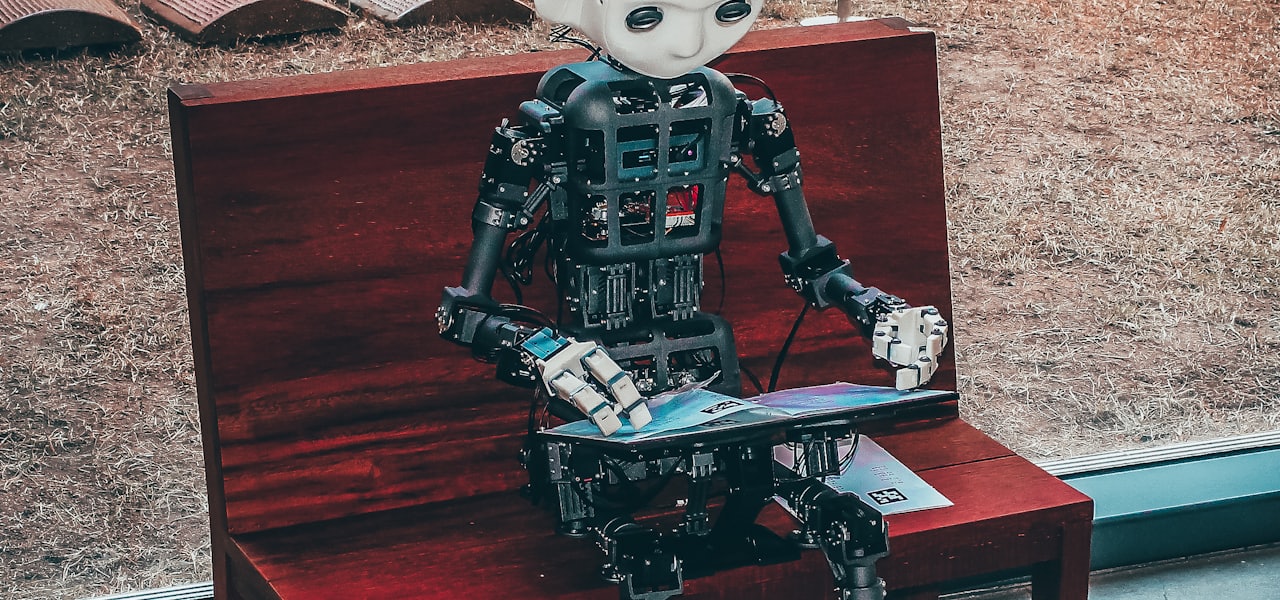
  • Computational humor

    Computational humor

    Computational humor is a branch of computational linguistics and artificial intelligence which uses computers in humor research. It is a relatively new area, with the first dedicated conference organized in 1996. The first "computer model of a sense of humor" was suggested by Suslov as early as 1992. Investigation of the general scheme of the information processing show a possibility of a specific malfunction, conditioned by the necessity of a quick deletion from consciousness of a false version. This specific malfunction can be identified with a humorous effect on the psychological grounds; however, an essentially new ingredient, a role of timing, is added to a well known role of ambiguity. In biological systems, a sense of humour inevitably develops in the course of evolution, because its biological function consists in quickening the transmission of processed information into consciousness and in a more effective use of brain resources. A realization of this algorithm in neural networks explains naturally the mechanism of laughter: deletion of a false version corresponds to zeroing of some part of the neural network and excessive energy of neurons is thrown out to the motor cortex, arousing muscular contractions. Unfortunately, a practical realization of this algorithm needs extensive databases, whose creation in the automatic regime was suggested only recently . As a result, this magistral direction was not developed properly and subsequent investigations (see below) accepted somewhat specialized colouring. == Joke generators == === Pun generation === An approach to analysis of humor is classification of jokes. A further step is an attempt to generate jokes basing on the rules that underlie classification. Simple prototypes for computer pun generation were reported in the early 1990s, based on a natural language generator program, VINCI. Graeme Ritchie and Kim Binsted in their 1994 research paper described a computer program, JAPE, designed to generate question-answer-type puns from a general, i.e., non-humorous, lexicon. (The program name is an acronym for "Joke Analysis and Production Engine".) Some examples produced by JAPE are: Q: What is the difference between leaves and a car? A: One you brush and rake, the other you rush and brake. Q: What do you call a strange market? A: A bizarre bazaar. Since then the approach has been improved, and the latest report, dated 2007, describes the STANDUP joke generator, implemented in the Java programming language. The STANDUP generator was tested on children within the framework of analyzing its usability for language skills development for children with communication disabilities, e.g., because of cerebral palsy. (The project name is an acronym for "System To Augment Non-speakers' Dialog Using Puns" and an allusion to standup comedy.) Children responded to this "language playground" with enthusiasm, and showed marked improvement on certain types of language tests. The two young people, who used the system over a ten-week period, regaled their peers, staff, family and neighbors with jokes such as: "What do you call a spicy missile? A hot shot!" Their joy and enthusiasm at entertaining others was inspirational. === Other === Stock and Strapparava described a program to generate funny acronyms. == Joke recognition == A statistical machine learning algorithm to detect whether a sentence contained a "That's what she said" double entendre was developed by Kiddon and Brun (2011). There is an open-source Python implementation of Kiddon & Brun's TWSS system. A program to recognize knock-knock jokes was reported by Taylor and Mazlack. This kind of research is important in analysis of human–computer interaction. An application of machine learning techniques for the distinguishing of joke texts from non-jokes was described by Mihalcea and Strapparava (2006). Takizawa et al. (1996) reported on a heuristic program for detecting puns in the Japanese language. == Applications == A possible application for assistance in language acquisition is described in the section "Pun generation". Another envisioned use of joke generators is in cases of a steady supply of jokes where quantity is more important than quality. Another obvious, yet remote, direction is automated joke appreciation. It is known that humans interact with computers in ways similar to interacting with other humans that may be described in terms of personality, politeness, flattery, and in-group favoritism. Therefore, the role of humor in human–computer interaction is being investigated. In particular, humor generation in user interface to ease communications with computers was suggested. Craig McDonough implemented the Mnemonic Sentence Generator, which converts passwords into humorous sentences. Based on the incongruity theory of humor, it is suggested that the resulting meaningless but funny sentences are easier to remember. For example, the password AjQA3Jtv is converted into "Arafat joined Quayle's Ant, while TARAR Jeopardized thurmond's vase," an example chosen by combining politicians names with verbs and common nouns. == Related research == John Allen Paulos is known for his interest in mathematical foundations of humor. His book Mathematics and Humor: A Study of the Logic of Humor demonstrates structures common to humor and formal sciences (mathematics, linguistics) and develops a mathematical model of jokes based on catastrophe theory. Conversational systems which have been designed to take part in Turing test competitions generally have the ability to learn humorous anecdotes and jokes. Because many people regard humor as something particular to humans, its appearance in conversation can be quite useful in convincing a human interrogator that a hidden entity, which could be a machine or a human, is in fact a human.

    Read more →
  • Apache ORC

    Apache ORC

    Apache ORC (Optimized Row Columnar) is a free and open-source column-oriented data storage format. It is similar to the other columnar-storage file formats available in the Hadoop ecosystem such as RCFile and Parquet. It is used by most of the data processing frameworks Apache Spark, Apache Hive, Apache Flink, and Apache Hadoop. In February 2013, the Optimized Row Columnar (ORC) file format was announced by Hortonworks in collaboration with Facebook. A calendar month later, the Apache Parquet format was announced, developed by Cloudera and Twitter. Apache ORC format is widely supported including Amazon Web Services' Glue,Google Cloud Platform's BigQuery, and Pandas (software). == History ==

    Read more →
  • Hallucination (artificial intelligence)

    Hallucination (artificial intelligence)

    In the field of artificial intelligence (AI), a hallucination or artificial hallucination (also called bullshitting, confabulation, or delusion) is a response generated by AI that contains false or misleading information presented as fact. This term draws a loose analogy with human psychology, where a hallucination typically involves false percepts. For example, a chatbot powered by large language models (LLMs), like ChatGPT, may embed plausible-sounding random falsehoods within its generated content. Detecting and mitigating errors and hallucinations pose significant challenges for practical deployment and reliability of LLMs in high-stakes scenarios, such as chip design, supply chain logistics, and medical diagnostics. Some software engineers and statisticians have criticized the specific term "AI hallucination" for unreasonably anthropomorphizing computers. Symbolic artificial intelligence models generally do not produce hallucinations, unlike large language models. == Term == === Origin === Since the 1980s, the term "hallucination" has been used in computer vision with a positive connotation to describe the process of adding detail to an image. For example, the task of generating high-resolution face images from low-resolution inputs is called face hallucination. The first documented use of the term "hallucination" in this sense is in the PhD thesis of Eric Mjolsness in 1986. A notable work is the face hallucination algorithm by Simon Baker and Takeo Kanade published in 1999. In the 2000s, hallucinations were described in statistical machine translation as a failure mode. Since the 2010s, the term has undergone a semantic shift to signify the generation of factually incorrect or misleading outputs by AI systems in tasks like machine translation and object detection. In 2015, hallucinations were identified in visual semantic role labeling tasks by Saurabh Gupta and Jitendra Malik. In 2015, computer scientist Andrej Karpathy used the term "hallucinated" in a blog post to describe his recurrent neural network (RNN) language model generating an incorrect citation link. In 2017, Google researchers used the term to describe the responses generated by neural machine translation (NMT) models when they are not related to the source text, and in 2018, the term was used in computer vision to describe instances where non-existent objects are erroneously detected because of adversarial attacks. In July 2021, Meta warned during its release of BlenderBot 2 that the system is prone to "hallucinations", which Meta defined as "confident statements that are not true". Following OpenAI's ChatGPT release in beta version in November 2022, some users complained that such chatbots often seem to pointlessly embed plausible-sounding random falsehoods within their generated content. Many news outlets, including The New York Times, started to use the term "hallucinations" to describe these models' frequently incorrect or inconsistent responses. In 2023, the Cambridge dictionary updated its definition of hallucination to include this new sense specific to the field of AI. Some researchers have highlighted a lack of consistency in how the term is used, but also identified several alternative terms in the literature, such as confabulations, fabrications, and factual errors. === Definitions and alternatives === Uses, definitions and characterizations of the term "hallucination" in the context of LLMs include: "a tendency to invent facts in moments of uncertainty" (OpenAI, May 2023) "a model's logical mistakes" (OpenAI, May 2023) "fabricating information entirely, but behaving as if spouting facts" (CNBC, May 2023) "making up information" (The Verge, February 2023) "probability distributions" (in scientific contexts) Journalist Benj Edwards, in Ars Technica, writes that the term "hallucination" is controversial, but that some form of metaphor remains necessary; Edwards suggests "confabulation" as an analogy for processes that involve "creative gap-filling". In July 2024, a White House report on fostering public trust in AI research mentioned hallucinations only in the context of reducing them. Notably, when acknowledging David Baker's Nobel Prize-winning work with AI-generated proteins, the Nobel committee avoided the term entirely, instead referring to "imaginative protein creation". Hicks, Humphries, and Slater, in their article in Ethics and Information Technology, argue that the output of LLMs is "bullshit" under Harry Frankfurt's definition of the term, and that the models are "in an important way indifferent to the truth of their outputs", with true statements only accidentally true, and false ones accidentally false. Some researchers also use the derogatory term "botshit", often referring to uncritical use of AI. === Criticism === In the scientific community, some researchers avoid the term "hallucination", seeing it as potentially misleading. It has been criticized by Usama Fayyad, executive director of the Institute for Experimental Artificial Intelligence at Northeastern University, on the grounds that it misleadingly personifies large language models and is vague. Mary Shaw said, "The current fashion for calling generative AI's errors 'hallucinations' is appalling. It anthropomorphizes the software, and it spins actual errors as somehow being idiosyncratic quirks of the system even when they're objectively incorrect." In Salon, statistician Gary Smith argues that LLMs "do not understand what words mean" and consequently that the term "hallucination" unreasonably anthropomorphizes the machine. Murray Shanahan argues that anthropomorphic framing of LLM capabilities, including terms like "hallucination", encourages users and researchers to attribute cognitive processes to systems that operate through statistical pattern completion, and advocates for more careful linguistic practices when discussing LLM behavior. Kristina Šekrst argues that applying psychological vocabulary to LLM outputs obscures the difference between the appearance of mental properties and their genuine presence. Förster & Skop assert that tech companies use the hallucination metaphor to anthropomorphize models and deflect responsibility for non-factual outputs. Some see the AI outputs not as illusory but as prospective—that is, having some chance of being true, similar to early-stage scientific conjectures. The term has also been criticized for its association with psychedelic drug experiences. == In natural language generation == In natural language generation, there are several reasons why natural language models hallucinate: === Hallucination from data === Hallucinations can stem from incomplete, inaccurate or unrepresentative data sets. === Modeling-related causes === The pre-training of generative pretrained transformers (GPT) involves predicting the next word. It incentivizes GPT models to "give a guess" about what the next word is, even when they lack information. Some researchers take an anthropomorphic perspective and posit that hallucinations arise from a tension between novelty and usefulness. For instance, Amabile and Pratt define human creativity as the production of novel and useful ideas. By extension, a focus on novelty in machine creativity can lead to the production of original but inaccurate responses—that is, falsehoods—whereas a focus on usefulness may result in memorized content lacking originality. By 2022, newspapers such as The New York Times expressed concern that, as the adoption of bots based on large language models continued to grow, unwarranted user confidence in bot output could lead to problems. === Interpretability research === In 2025, interpretability research by Anthropic on the LLM Claude identified internal circuits that cause it to decline to answer questions unless it knows the answer. By default, the circuit is active and the LLM doesn't answer. When the LLM has sufficient information, these circuits are inhibited and the LLM answers the question. Hallucinations were found to occur when this inhibition happens incorrectly, such as when Claude recognizes a name but lacks sufficient information about that person, causing it to generate plausible but untrue responses. === Examples === On 15 November 2022, researchers from Meta AI published Galactica, designed to "store, combine and reason about scientific knowledge". Content generated by Galactica came with the warning: "Outputs may be unreliable! Language Models are prone to hallucinate text." In one case, when asked to draft a paper on creating avatars, Galactica cited a fictitious paper from a real author who works in the relevant area. Meta withdrew Galactica on 17 November due to offensiveness and inaccuracy. OpenAI's ChatGPT, released in beta version to the public on November 30, 2022, was based on the foundation model GPT-3.5 (a revision of GPT-3). Professor Ethan Mollick of Wharton called it an "omniscient, eager-to-please intern who sometimes lies to you". Data scientist Teresa Kuba

    Read more →
  • AI literacy

    AI literacy

    AI literacy or artificial intelligence literacy is "a set of competencies that enables individuals to critically evaluate AI technologies; communicate and collaborate effectively with AI; and use AI as a tool online, at home, and in the workplace." AI is employed in a variety of applications, including self-driving automobiles, virtual assistants and text generation by generative AI models. Users of these tools should be able to make informed decisions. AI literacy may have an impact on students' future employment prospects. With the rise of generative AI platforms, AI literacy has become a topic of conversation in the field of education. Some think AI literacy is essential for school and college students, while others restrict or prohibit the use of AI in assignments, viewing it as a form of academic dishonesty. However, many researchers and educational institutions promote a more nuanced approach, encouraging critical engagement with AI while developing policies that balance academic integrity with opportunities for learning. == Definitions == Other definitions of AI literacy include the ability to understand, use, monitor, and critically reflect on AI applications. That use of the term usually refers to teaching skills and knowledge to the general public, particularly those who are not adept in AI and the ability to understand, use, evaluate, and ethically navigate AI. As research into AI literacy is still emerging and focused on developing context-specific skills, there is not yet a single, broadly agreed-upon definition. AI literacy is linked to other forms of literacy. AI literacy requires digital literacy, whereas scientific and computational literacy may inform it. Data literacy also significantly overlaps with it. == Categories == AI literacy encompasses multiple categories, including a theoretical understanding of how artificial intelligence works, the usage of artificial intelligence technologies, and the critical appraisal of artificial intelligence, and its ethics. === Know and understand AI === Knowledge and understanding of AI refers to a basic understanding of what artificial intelligence is and how it works. This includes familiarity with machine learning algorithms and the limitations and biases present in AI systems. Users who know and understand AI should be familiar with various technologies that use artificial intelligence, including cognitive systems, robotics and machine learning. This includes recognizing that large language models (LLMs) are machine learning models trained on extensive datasets which generate new text rather than retrieving pre-written responses. === Use and apply AI === Using and applying AI refers to the ability to use AI tools to solve problems and perform tasks such as programming and analyzing big data. Some consider prompt engineering, the practice of designing effective prompts to guide generative AI platforms more effectively, as another competency within AI literacy. === Evaluate and create AI === Evaluation and creation refers to the ability to critically evaluate the quality and reliability of AI systems. It also refers to designing and building fair and ethical AI systems. To evaluate correctly, users should also learn in which areas AI is strong, and in which areas it is weak. === AI ethics === AI ethics refers to understanding the moral implications of AI, and the making informed decisions regarding the use of AI tools. This area includes considerations such as: Accountability: Hold AI actors accountable for the operation of AI systems and adherence to ethical ideals. Accuracy: Identify and report sources of error and uncertainty in algorithms and data. Auditability: Enable other parties to audit and assess algorithm behavior via transparent information sharing. Explainability: Make sure that algorithmic judgments and the underlying data can be presented in simple language. Fairness: Prevent biases and consider varied viewpoints. To do so, increase the diversity of researchers in the field. Human Centricity and Well-being: Prioritize human well-being in AI development and deployment. Human rights Alignment: Ensure that technology do not infringe internationally recognized human rights. Inclusivity: Make AI accessible to everyone. Progress: Choose high value initiatives. Responsibility, accountability, and transparency: Foster trust via responsibility, accountability, and fairness. Robustness and Security: Make AI systems safe, secure, and resistant to manipulation or data breach. Sustainability: Choose implementations that generate long-term, useful benefits. Environmental Implications: How this tool impacts the environment, any restrictions or laws, if this impact is worth the effects or not. === Enabling AI === Support AI by developing associated knowledge and skills such as programming and statistics. == Promoting AI literacy == Several governments have recognized the need to promote AI literacy, including among adults. Such programs have been published in the United States, China, Germany and Finland. Programs intended for the general public usually consist of short and easy to understand online study units. Programs intended for children are usually project-based. Programs for students at colleges and universities often address the specific professional needs of the student, depending on their field of study. Beyond the education system, AI literacy can also be developed in the community, for example in museums. === Schools === Schools use diverse pedagogies to promote AI literacy. These include: Performing a Turing test with an intelligent agent Creating chatbots Building apps using Blockly-based programming Project-based learning Building robots Data visualization Training AI models Artificial intelligence curricula can improve students' understanding of topics such as machine learning, neural networks, and deep learning. === Higher education === Before the second decade of the 21st century, artificial intelligence was studied mainly in STEM courses. Later, projects emerged to increase artificial intelligence education, specifically to promote AI literacy. Most courses start with one or more study units that deal with basic questions such as what artificial intelligence is, where it comes from, what it can do and what it can't do. Most courses also refer to machine learning and deep learning. Some of the courses deal with moral issues in artificial intelligence. In Ireland, the Higher Education Authority published Generative AI in Higher Education Teaching & Learning: Policy Framework in December 2025, which encouraged higher education institutions to embed AI literacy across programmes as a core graduate attribute. ==== Disciplinary policy ==== As a response to the increase of generative AI use in education, several disciplines formed committees or task forces to examine context-specific approaches toward AI literacy. In spring 2025, the Modern Language Association and Conference on College Composition and Communication Joint Task Force finished development of three working papers, a guide on AI literacy for students, and a collection of resources addressing AI use in writing. The task force emphasized the need for "a culture of critical AI literacy" and included guidelines not only for students but also educators and institutions, highlighting the need for modeling ethical AI use in planning processes. Similarly, a committee formed by the American Historical Association Council published "Guiding Principles for Artificial Intelligence in History Education" which encouraged "clear and transparent engagement with generative AI." The guidelines demonstrate the value of criticality when working with generative AI in thinking and research.

    Read more →
  • Concurrent MetateM

    Concurrent MetateM

    Concurrent MetateM is a multi-agent language in which each agent is programmed using a set of (augmented) temporal logic specifications of the behaviour it should exhibit. These specifications are executed directly to generate the behaviour of the agent. As a result, there is no risk of invalidating the logic as with systems where logical specification must first be translated to a lower-level implementation. The root of the MetateM concept is Gabbay's separation theorem; any arbitrary temporal logic formula can be rewritten in a logically equivalent past → future form. Execution proceeds by a process of continually matching rules against a history, and firing those rules when antecedents are satisfied. Any instantiated future-time consequents become commitments which must subsequently be satisfied, iteratively generating a model for the formula made up of the program rules. == Temporal Connectives == The Temporal Connectives of Concurrent MetateM can divided into two categories, as follows: Strict past time connectives: '●' (weak last), '◎' (strong last), '◆' (was), '■' (heretofore), 'S' (since), and 'Z' (zince, or weak since). Present and future time connectives: '◯' (next), '◇' (sometime), '□' (always), 'U' (until), and 'W' (unless). The connectives {◎,●,◆,■,◯,◇,□} are unary; the remainder are binary. === Strict past time connectives === ==== Weak last ==== ●ρ is satisfied now if ρ was true in the previous time. If ●ρ is interpreted at the beginning of time, it is satisfied despite there being no actual previous time. Hence "weak" last. ==== Strong last ==== ◎ρ is satisfied now if ρ was true in the previous time. If ◎ρ is interpreted at the beginning of time, it is not satisfied because there is no actual previous time. Hence "strong" last. ==== Was ==== ◆ρ is satisfied now if ρ was true in any previous moment in time. ==== Heretofore ==== ■ρ is satisfied now if ρ was true in every previous moment in time. ==== Since ==== ρSψ is satisfied now if ψ is true at any previous moment and ρ is true at every moment after that moment. ==== Zince, or weak since ==== ρZψ is satisfied now if (ψ is true at any previous moment and ρ is true at every moment after that moment) OR ψ has not happened in the past. === Present and future time connectives === ==== Next ==== ◯ρ is satisfied now if ρ is true in the next moment in time. ==== Sometime ==== ◇ρ is satisfied now if ρ is true now or in any future moment in time. ==== Always ==== □ρ is satisfied now if ρ is true now and in every future moment in time. ==== Until ==== ρUψ is satisfied now if ψ is true at any future moment and ρ is true at every moment prior. ==== Unless ==== ρWψ is satisfied now if (ψ is true at any future moment and ρ is true at every moment prior) OR ψ does not happen in the future.

    Read more →
  • Comparison of operating systems

    Comparison of operating systems

    These tables provide a comparison of operating systems, of computer devices, as listing general and technical information for a number of widely used and currently available PC or handheld (including smartphone and tablet computer) operating systems. The article "Usage share of operating systems" provides a broader, and more general, comparison of operating systems that includes servers, mainframes and supercomputers. Because of the large number and variety of available Linux distributions, they are all grouped under a single entry; see comparison of Linux distributions for a detailed comparison. There is also a variety of BSD and DOS operating systems, covered in comparison of BSD operating systems and comparison of DOS operating systems. == Nomenclature == The nomenclature for operating systems varies among providers and sometimes within providers. For purposes of this article the terms used are; kernel In some operating systems, the OS is split into a low level region called the kernel and higher level code that relies on the kernel. Typically the kernel implements processes but its code does not run as part of a process. hybrid kernel monolithic kernel Nucleus In some operating systems there is OS code permanently present in a contiguous region of memory addressable by unprivileged code; in IBM systems this is typically referred to as the nucleus. The nucleus typically contains both code that requires special privileges and code that can run in an unprivileged state. Typically some code in the nucleus runs in the context of a dispatching unit, e.g., address space, process, task, thread, while other code runs independent of any dispatching unit. In contemporary operating systems unprivileged applications cannot alter the nucleus. License and pricing policies vary widely among different systems. Among others, the tables below use the following terms: BSD BSD licenses are a family of permissive free software licenses, imposing minimal restrictions on the use and distribution of covered software. bundled The fee is included in the price of the hardware == General information == == Technical information == == Security == == Commands == For POSIX compliant (or partly compliant) systems like FreeBSD, Linux, macOS or Solaris, the basic commands are the same because they are standardized. NOTE: Linux systems may vary by distribution which specific program, or even 'command' is called, via the POSIX alias function. For example, if you wanted to use the DOS dir to give you a directory listing with one detailed file listing per line you could use alias dir='ls -lahF' (e.g. in a session configuration file).

    Read more →
  • Journal of Machine Learning Research

    Journal of Machine Learning Research

    The Journal of Machine Learning Research is a peer-reviewed open access scientific journal covering machine learning. It was established in 2000 and the first editor-in-chief was Leslie Kaelbling. The current editors-in-chief are Francis Bach (Inria) and David Blei (Columbia University). == History == The journal was established as an open-access alternative to the journal Machine Learning. In 2001, forty editorial board members of Machine Learning resigned, saying that in the era of the Internet, it was detrimental for researchers to continue publishing their papers in expensive journals with pay-access archives. The open access model employed by the Journal of Machine Learning Research allows authors to publish articles for free and retain copyright, while archives are freely available online. Print editions of the journal were published by MIT Press until 2004 and by Microtome Publishing thereafter. From its inception, the journal received no revenue from the print edition and paid no subvention to MIT Press or Microtome Publishing. In response to the prohibitive costs of arranging workshop and conference proceedings publication with traditional academic publishing companies, the journal launched a proceedings publication arm in 2007 and now publishes proceedings for several leading machine learning conferences, including the International Conference on Machine Learning, COLT, AISTATS, and workshops held at the Conference on Neural Information Processing Systems.

    Read more →
  • Anomaly detection

    Anomaly detection

    In data analysis, anomaly detection (also referred to as outlier detection and sometimes as novelty detection) is generally understood to be the identification of rare items, events or observations which deviate significantly from the majority of the data and do not conform to a well defined notion of normal behavior. Such examples may arouse suspicions of being generated by a different mechanism, or appear inconsistent with the remainder of that set of data. Anomaly detection finds application in many domains including cybersecurity, medicine, machine vision, statistics, neuroscience, law enforcement and financial fraud to name only a few. Anomalies were initially searched for clear rejection or omission from the data to aid statistical analysis, for example to compute the mean or standard deviation. They were also removed to better predictions from models such as linear regression, and more recently their removal aids the performance of machine learning algorithms. However, in many applications anomalies themselves are of interest and are the observations most desirous in the entire data set, which need to be identified and separated from noise or irrelevant outliers. Three broad categories of anomaly detection techniques exist. Supervised anomaly detection techniques require a data set that has been labeled as "normal" and "abnormal" and involves training a classifier. However, this approach is rarely used in anomaly detection due to the general unavailability of labelled data and the inherent unbalanced nature of the classes. Semi-supervised anomaly detection techniques assume that some portion of the data is labelled. This may be any combination of the normal or anomalous data, but more often than not, the techniques construct a model representing normal behavior from a given normal training data set, and then test the likelihood of a test instance to be generated by the model. Unsupervised anomaly detection techniques assume the data is unlabelled and are by far the most commonly used due to their wider and relevant application. == Definition == Many attempts have been made in the statistical and computer science communities to define an anomaly. The most prevalent ones include the following, and can be categorised into three groups: those that are ambiguous, those that are specific to a method with pre-defined thresholds usually chosen empirically, and those that are formally defined: === Ill defined === An outlier is an observation which deviates so much from the other observations as to arouse suspicions that it was generated by a different mechanism. Anomalies are instances or collections of data that occur very rarely in the data set and whose features differ significantly from most of the data. An outlier is an observation (or subset of observations) which appears to be inconsistent with the remainder of that set of data. An anomaly is a point or collection of points that is relatively distant from other points in multi-dimensional space of features. Anomalies are patterns in data that do not conform to a well-defined notion of normal behaviour. === Specific === Let T be observations from a univariate Gaussian distribution and O a point from T. Then the z-score for O is greater than a pre-selected threshold if and only if O is an outlier. == History == === Intrusion detection === The concept of intrusion detection, a critical component of anomaly detection, has evolved significantly over time. Initially, it was a manual process where system administrators would monitor for unusual activities, such as a vacationing user's account being accessed or unexpected printer activity. This approach was not scalable and was soon superseded by the analysis of audit logs and system logs for signs of malicious behavior. By the late 1970s and early 1980s, the analysis of these logs was primarily used retrospectively to investigate incidents, as the volume of data made it impractical for real-time monitoring. The affordability of digital storage eventually led to audit logs being analyzed online, with specialized programs being developed to sift through the data. These programs, however, were typically run during off-peak hours due to their computational intensity. The 1990s brought the advent of real-time intrusion detection systems capable of analyzing audit data as it was generated, allowing for immediate detection of and response to attacks. This marked a significant shift towards proactive intrusion detection. As the field has continued to develop, the focus has shifted to creating solutions that can be efficiently implemented across large and complex network environments, adapting to the ever-growing variety of security threats and the dynamic nature of modern computing infrastructures. == Applications == Anomaly detection is applicable in a very large number and variety of domains, and is an important subarea of unsupervised machine learning. As such it has applications in cyber-security, intrusion detection, fraud detection, fault detection, system health monitoring, event detection in sensor networks, detecting ecosystem disturbances, defect detection in images using machine vision, medical diagnosis and law enforcement. === Intrusion detection === Anomaly detection was proposed for intrusion detection systems (IDS) by Dorothy Denning in 1986. Anomaly detection for IDS is normally accomplished with thresholds and statistics, but can also be done with soft computing, and inductive learning. Types of features proposed by 1999 included profiles of users, workstations, networks, remote hosts, groups of users, and programs based on frequencies, means, variances, covariances, and standard deviations. The counterpart of anomaly detection in intrusion detection is misuse detection. === Fintech fraud detection === Anomaly detection is vital in fintech for fraud prevention. === Preprocessing === Preprocessing data to remove anomalies can be an important step in data analysis, and is done for a number of reasons. Statistics such as the mean and standard deviation are more accurate after the removal of anomalies, and the visualisation of data can also be improved. In supervised learning, removing the anomalous data from the dataset often results in a statistically significant increase in accuracy. === Video surveillance === Anomaly detection has become increasingly vital in video surveillance to enhance security and safety. With the advent of deep learning technologies, methods using Convolutional Neural Networks (CNNs) and Simple Recurrent Units (SRUs) have shown significant promise in identifying unusual activities or behaviors in video data. These models can process and analyze extensive video feeds in real-time, recognizing patterns that deviate from the norm, which may indicate potential security threats or safety violations. An important aspect for video surveillance is the development of scalable real-time frameworks. Such pipelines are required for processing multiple video streams with low computational resources. === IT infrastructure === In IT infrastructure management, anomaly detection is crucial for ensuring the smooth operation and reliability of services. These are complex systems, composed of many interactive elements and large data quantities, requiring methods to process and reduce this data into a human and machine interpretable format. Techniques like the IT Infrastructure Library (ITIL) and monitoring frameworks are employed to track and manage system performance and user experience. Detected anomalies can help identify and pre-empt potential performance degradations or system failures, thus maintaining productivity and business process effectiveness. === IoT systems === Anomaly detection is critical for the security and efficiency of Internet of Things (IoT) systems. It helps in identifying system failures and security breaches in complex networks of IoT devices. The methods must manage real-time data, diverse device types, and scale effectively. Garg et al. have introduced a multi-stage anomaly detection framework that improves upon traditional methods by incorporating spatial clustering, density-based clustering, and locality-sensitive hashing. This tailored approach is designed to better handle the vast and varied nature of IoT data, thereby enhancing security and operational reliability in smart infrastructure and industrial IoT systems. === Petroleum industry === Anomaly detection is crucial in the petroleum industry for monitoring critical machinery. A 2015 paper proposed a novel segmentation algorithm using support vector machines to analyze sensor data for real-time anomaly detection. === Oil and gas pipeline monitoring === In the oil and gas sector, anomaly detection is not just crucial for maintenance and safety, but also for environmental protection. Aljameel et al. propose an advanced machine learning-based model for detecting minor leaks in oil and gas pipelines, a task traditional methods may miss.

    Read more →