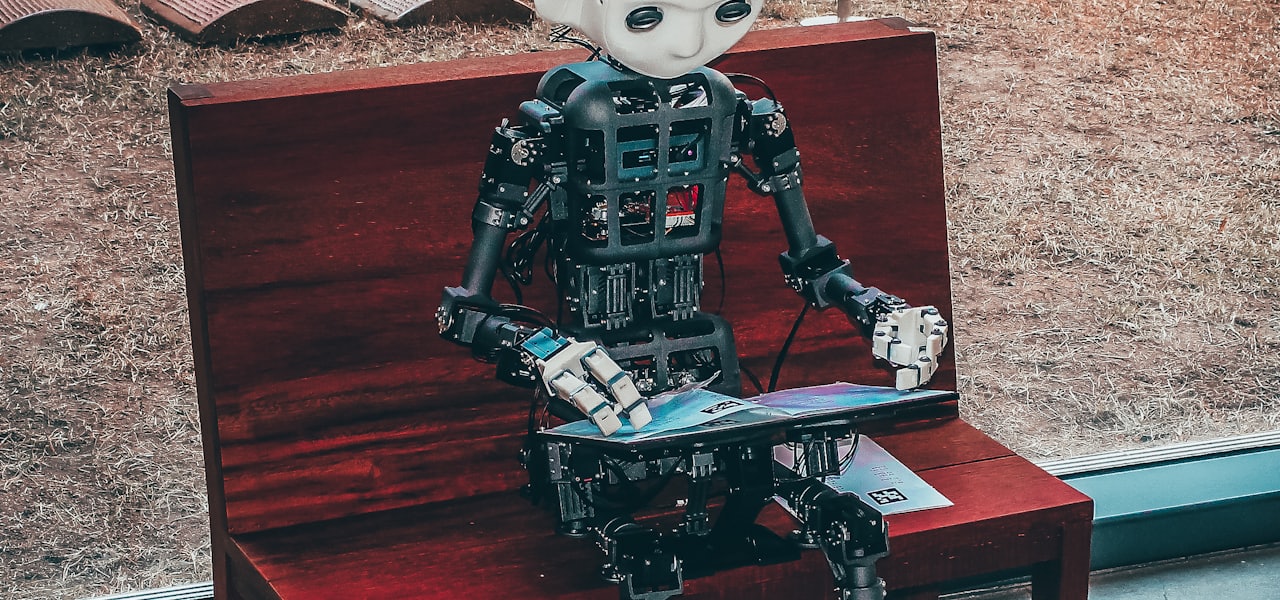
AI Data Poisoning

AI Data Poisoning — independent reviews, comparisons, pricing and step-by-step guides on Aizhi.

  • Amira (software)

    Amira (software)

    Amira (ah-MEER-ah) is a software platform for visualization, processing, and analysis of 3D and 4D data. It is being actively developed by Thermo Fisher Scientific in collaboration with the Zuse Institute Berlin (ZIB), and commercially distributed by Thermo Fisher Scientific — together with its sister software Avizo. == Overview == Amira is an extendable software system for scientific visualization, data analysis, and presentation of 3D and 4D data. It is used by researchers and engineers in academia and industry. It is a tool for processing, analysis and visualization of data from various modalities; e.g. micro-CT, PET, Ultrasound. It is used in many fields, such as microscopy in biology and materials science, molecular biology, quantum physics, astrophysics, computational fluid dynamics (CFD), finite element modeling (FEM), non-destructive testing (NDT), and many more. One of the key features, besides data visualization, is Amira's set of tools for image segmentation and geometry reconstruction. This allows the user to mark (or segment) structures and regions of interest in 3D image volumes using automatic, semi-automatic, and manual tools. The segmentation can then be used for a variety of subsequent tasks, such as volumetric analysis, density analysis, shape analysis, or the generation of 3D computer models for visualization, numerical simulations, or rapid prototyping or 3D printing. Other key Amira features are multi-planar and volume visualization, image registration, filament tracing, cell separation and analysis, tetrahedral mesh generation, fiber-tracking from diffusion tensor imaging (DTI) data, skeletonization, spatial graph analysis, and stereoscopic rendering of 3D data over multiple displays and immersive virtual reality environments, including CAVEs. As a commercial product Amira requires the purchase of a license or an academic subscription. A time-limited, but full-featured evaluation version is available for download free of charge. == History == === 1993–1998: Research software === Amira's roots go back to 1993 and the Department for Scientific Visualization, headed by Hans-Christian Hege at the Zuse Institute Berlin (ZIB). The ZIB is a research institute for mathematics and informatics. The Scientific Visualization department's mission is to help solve computationally and scientifically challenging tasks in medicine, biology, engineering and materials science. For this purpose, it develops algorithms and software for 2D, 3D, and 4D data visualization and visually supported exploration and analysis. At that time, the young visualization group at the ZIB had experience with the extendable, data flow-oriented visualization environments apE, IRIS Explorer, and Advanced Visualization Studio (AVS), but was not satisfied with these products' interactivity, flexibility, and ease-of-use for non-computer scientists. Therefore, the development of a new software system was started in a research project within a medically oriented, multi-disciplinary collaborative research center. Based on experiences that Tobias Höllerer had gained in late 1993 with the new graphics library IRIS Inventor, it was decided to utilize that library. The development of the medical planning system was performed by Detlev Stalling, who later became the chief software architect of Amira. The new software was called "HyperPlan", highlighting its initial target application – a planning system for hyperthermia cancer treatment. The system was being developed on Silicon Graphics (SGI) computers, which at the time were the standard workstations used for high-end graphics computing. The software was based on libraries such as OpenGL (originally IRIS GL), Open Inventor (originally IRIS Inventor), and the graphical user interface libraries X11, Motif (software), and ViewKit. In 1998, X11/Motif/Viewkit were replaced by the Qt toolkit. The HyperPlan framework served as the base for more and more projects at the ZIB and was used by a growing number of researchers in collaborating institutions. The projects included applications in medical image computing, medical visualization, neurobiology, confocal microscopy, flow visualization, molecular analytics and computational astrophysics. === 1998–today: Commercially supported product === The growing number of users of the system started to exceed the capacities that ZIB could spare for software distribution and support, as ZIB's primary mission was algorithmic research. Therefore, the spin-off company Indeed – Visual Concepts GmbH was founded by Hans-Christian Hege, Detlev Stalling, and Malte Westerhoff. In Feb 1998 the HyperPlan software was given the new, application-neutral name "Amira". This name is not an acronym, but was chosen for being pronounceable in different languages and providing a suitable connotation, namely "to look at" or "to wonder at", from the Latin verb "admirare" (to admire), which reflects a basic situation in data visualization. A major re-design of the software was undertaken by Detlev Stalling and Malte Westerhoff in order to make it a commercially supportable product and to make it available on non-SGI computers as well. In March 1999, the first version of the commercial Amira was exhibited at the CeBIT tradeshow in Hannover, Germany on SGI IRIX and Hewlett-Packard UniX (HP-UX) booths. Versions for Linux and Microsoft Windows followed within the following twelve months. Later Mac OS X support was added. Indeed – Visual Concepts GmbH selected the Bordeaux, France and San Diego, United States based company TGS, Inc. as the worldwide distributor for Amira and completed five major releases (up to version 3.1) in the subsequent four years. In 2003 both Indeed – Visual Concepts GmbH, as well as TGS, Inc. were acquired by Massachusetts-based Mercury Computer Systems, Inc. (NASDAQ:MRCY) and became part of Mercury's newly formed life sciences business unit, later branded Visage Imaging. In 2009, Mercury Computer Systems, Inc. spun off Visage Imaging again and sold it to Melbourne, Australia based Promedicus Ltd (ASX:PME), a leading provider of radiology information systems and medical IT solutions. During this time, Amira continued to be developed in Berlin, Germany and in close collaboration with the ZIB, still headed by the original creators of Amira. TGS, located in Bordeaux, France was sold by Mercury Computer systems to a French investor and renamed to Visualization Sciences Group (VSG). VSG continued the work on a complementary product named Avizo, based on the same source code but customized for material sciences. In August 2012, FEI, to that date the largest OEM reseller of Amira, purchased VSG and the Amira business from Promedicus. This brought the two software sisters Amira and Avizo back into one hand. In August 2013, Visualization Sciences Group (VSG) became a business unit of FEI. In 2016 FEI has been bought by Thermo Fisher Scientific and became part of its Materials & Structural Analysis division in early 2017. Amira and Avizo are still being marketed as two different products; Amira for life sciences and Avizo for materials science, but the development efforts are now joined once again. In the meantime, the number of scientific articles using the Amira / Avizo software, is in the order of 10 thousands. == Amira options == === Microscopy option === Specific readers for microscopy data Image deconvolution Exploration of 3D imagery obtained from virtually any microscope Extraction and editing of filament networks from microscopy images === DICOM reader === Import of clinical and preclinical data in DICOM format === Mesh option === Generation of 3D finite element (FE) meshes from segmented image data Support for many state-of-the-art FE solver formats High-quality visualization of simulation mesh-based results, using scalar, vector, and tensor field display modules === Skeletonization option === Reconstruction and analysis of neural and vascular networks Visualization of skeletonized networks Length and diameter quantification of network segments Ordering of segments in a tree graph Skeletonization of very large image stacks === Molecular option === Advanced tools for the visualization of molecule models Hardware-accelerated volume rendering Powerful molecule editor Specific tools for complex molecular visualization === Developer option === Creation of new custom components for visualizing or data processing Implementation of new file readers or writers C++ programming language Development wizard for getting started quickly === Neuro option === Medical image analysis for DTI and brain perfusion Fiber tracking supporting several stream-line based algorithms Fiber separation into fiber bundles based on user defined source and destination regions Computation of tensor fields, diffusion weighted maps Eigenvalue decomposition of tensor fields Computation of mean transit time, cerebral blood flow, and cerebral blood volume === VR option === Visualization of data on large tiled displays

    Read more →
  • Wake-sleep algorithm

    Wake-sleep algorithm

    The wake-sleep algorithm is an unsupervised learning algorithm for deep generative models, especially Helmholtz Machines. The algorithm is similar to the expectation-maximization algorithm, and optimizes the model likelihood for observed data. The name of the algorithm derives from its use of two learning phases, the “wake” phase and the “sleep” phase, which are performed alternately. It can be conceived as a model for learning in the brain, but is also being applied for machine learning. == Description == The goal of the wake-sleep algorithm is to find a hierarchical representation of observed data. In a graphical representation of the algorithm, data is applied to the algorithm at the bottom, while higher layers form gradually more abstract representations. Between each pair of layers are two sets of weights: Recognition weights, which define how representations are inferred from data, and generative weights, which define how these representations relate to data. == Training == Training consists of two phases – the “wake” phase and the “sleep” phase. It has been proven that this learning algorithm is convergent. === The "wake" phase === Neurons are fired by recognition connections (from what would be input to what would be output). Generative connections (leading from outputs to inputs) are then modified to increase probability that they would recreate the correct activity in the layer below – closer to actual data from sensory input. === The "sleep" phase === The process is reversed in the “sleep” phase – neurons are fired by generative connections while recognition connections are being modified to increase probability that they would recreate the correct activity in the layer above – further to actual data from sensory input. == Extensions == Since the recognition network is limited in its flexibility, it might not be able to approximate the posterior distribution of latent variables well. To better approximate the posterior distribution, it is possible to employ importance sampling, with the recognition network as the proposal distribution. This improved approximation of the posterior distribution also improves the overall performance of the model.

    Read more →
  • Genetic operator

    Genetic operator

    A genetic operator is an operator used in evolutionary algorithms (EA) to guide the algorithm towards a solution to a given problem. There are three main types of operators (mutation, crossover and selection), which must work in conjunction with one another in order for the algorithm to be successful. Genetic operators are used to create and maintain genetic diversity (mutation operator), combine existing solutions (also known as chromosomes) into new solutions (crossover) and select between solutions (selection). The classic representatives of evolutionary algorithms include genetic algorithms, evolution strategies, genetic programming and evolutionary programming. In his book discussing the use of genetic programming for the optimization of complex problems, computer scientist John Koza has also identified an 'inversion' or 'permutation' operator; however, the effectiveness of this operator has never been conclusively demonstrated and this operator is rarely discussed in the field of genetic programming. For combinatorial problems, however, these and other operators tailored to permutations are frequently used by other EAs. Mutation (or mutation-like) operators are said to be unary operators, as they only operate on one chromosome at a time. In contrast, crossover operators are said to be binary operators, as they operate on two chromosomes at a time, combining two existing chromosomes into one new chromosome. == Operators == Genetic variation is a necessity for the process of evolution. Genetic operators used in evolutionary algorithms are analogous to those in the natural world: survival of the fittest, or selection; reproduction (crossover, also called recombination); and mutation. === Selection === Selection operators give preference to better candidate solutions (chromosomes), allowing them to pass on their 'genes' to the next generation (iteration) of the algorithm. The best solutions are determined using some form of objective function (also known as a 'fitness function' in evolutionary algorithms), before being passed to the crossover operator. Different methods for choosing the best solutions exist, for example, fitness proportionate selection and tournament selection. A further or the same selection operator is used to determine the individuals for being selected to form the next parental generation. The selection operator may also ensure that the best solution(s) from the current generation always become(s) a member of the next generation without being altered; this is known as elitism or elitist selection. === Crossover === Crossover is the process of taking more than one parent solutions (chromosomes) and producing a child solution from them. By recombining portions of good solutions, the evolutionary algorithm is more likely to create a better solution. As with selection, there are a number of different methods for combining the parent solutions, including the edge recombination operator (ERO) and the 'cut and splice crossover' and 'uniform crossover' methods. The crossover method is often chosen to closely match the chromosome's representation of the solution; this may become particularly important when variables are grouped together as building blocks, which might be disrupted by a non-respectful crossover operator. Similarly, crossover methods may be particularly suited to certain problems; the ERO is considered a good option for solving the travelling salesman problem. === Mutation === The mutation operator encourages genetic diversity amongst solutions and attempts to prevent the evolutionary algorithm converging to a local minimum by stopping the solutions becoming too close to one another. In mutating the current pool of solutions, a given solution may change between slightly and entirely from the previous solution. By mutating the solutions, an evolutionary algorithm can reach an improved solution solely through the mutation operator. Again, different methods of mutation may be used; these range from a simple bit mutation (flipping random bits in a binary string chromosome with some low probability) to more complex mutation methods in which genes in the solution are changed, for example by adding a random value from the Gaussian distribution to the current gene value. As with the crossover operator, the mutation method is usually chosen to match the representation of the solution within the chromosome. == Combining operators == While each operator acts to improve the solutions produced by the evolutionary algorithm working individually, the operators must work in conjunction with each other for the algorithm to be successful in finding a good solution. Using the selection operator on its own will tend to fill the solution population with copies of the best solution from the population. If the selection and crossover operators are used without the mutation operator, the algorithm will tend to converge to a local minimum, that is, a good but sub-optimal solution to the problem. Using the mutation operator on its own leads to a random walk through the search space. Only by using all three operators together can the evolutionary algorithm become a noise-tolerant global search algorithm, yielding good solutions to the problem at hand.

    Read more →
  • Boosting (machine learning)

    Boosting (machine learning)

    In machine learning (ML), boosting is an ensemble learning method that combines a set of less accurate models (called "weak learners") to create a single, highly accurate model (a "strong learner"). Unlike other ensemble methods that build models in parallel (such as bagging), boosting algorithms build models sequentially. Each new model in the sequence is trained to correct the errors made by its predecessors. This iterative process allows the overall model to improve its accuracy, particularly by reducing bias. Boosting is a popular and effective technique used in supervised learning for both classification and regression tasks. The theoretical foundation for boosting came from a question posed by Kearns and Valiant (1988, 1989): "Can a set of weak learners create a single strong learner?" A weak learner is defined as a classifier that performs only slightly better than random guessing, whereas a strong learner is a classifier that is highly correlated with the true classification. Robert Schapire's affirmative answer to this question in a 1990 paper led to the development of practical boosting algorithms. The first such algorithm was developed by Schapire, with Freund and Schapire later developing AdaBoost, which remains a foundational example of boosting. == Algorithms == While boosting is not algorithmically constrained, most boosting algorithms consist of iteratively learning weak classifiers with respect to a distribution and adding them to a final strong classifier. When they are added, they are weighted in a way that is related to the weak learners' accuracy. After a weak learner is added, the data weights are readjusted, known as "re-weighting". Misclassified input data gain a higher weight and examples that are classified correctly lose weight. Thus, future weak learners focus more on the examples that previous weak learners misclassified. There are many boosting algorithms. The original ones, proposed by Robert Schapire (a recursive majority gate formulation), and Yoav Freund (boost by majority), were not adaptive and could not take full advantage of the weak learners. Schapire and Freund then developed AdaBoost, an adaptive boosting algorithm that won the prestigious Gödel Prize. Only algorithms that are provable boosting algorithms in the probably approximately correct learning formulation can accurately be called boosting algorithms. Other algorithms that are similar in spirit to boosting algorithms are sometimes called "leveraging algorithms", although they are also sometimes incorrectly called boosting algorithms. The main variation between many boosting algorithms is their method of weighting training data points and hypotheses. AdaBoost is very popular and the most significant historically as it was the first algorithm that could adapt to the weak learners. It is often the basis of introductory coverage of boosting in university machine learning courses. There are many more recent algorithms such as LPBoost, TotalBoost, BrownBoost, xgboost, MadaBoost, LogitBoost, CatBoost and others. Many boosting algorithms fit into the AnyBoost framework, which shows that boosting performs gradient descent in a function space using a convex cost function. == Object categorization in computer vision == Given images containing various known objects in the world, a classifier can be learned from them to automatically classify the objects in future images. Simple classifiers built based on some image feature of the object tend to be weak in categorization performance. Using boosting methods for object categorization is a way to unify the weak classifiers in a special way to boost the overall ability of categorization. === Problem of object categorization === Object categorization is a typical task of computer vision that involves determining whether or not an image contains some specific category of object. The idea is closely related with recognition, identification, and detection. Appearance based object categorization typically contains feature extraction, learning a classifier, and applying the classifier to new examples. There are many ways to represent a category of objects, e.g. from shape analysis, bag of words models, or local descriptors such as SIFT, etc. Examples of supervised classifiers are Naive Bayes classifiers, support vector machines, mixtures of Gaussians, and neural networks. However, research has shown that object categories and their locations in images can be discovered in an unsupervised manner as well. === Status quo for object categorization === The recognition of object categories in images is a challenging problem in computer vision, especially when the number of categories is large. This is due to high intra class variability and the need for generalization across variations of objects within the same category. Objects within one category may look quite different. Even the same object may appear unalike under different viewpoint, scale, and illumination. Background clutter and partial occlusion add difficulties to recognition as well. Humans are able to recognize thousands of object types, whereas most of the existing object recognition systems are trained to recognize only a few, e.g. human faces, cars, simple objects, etc. Research has been very active on dealing with more categories and enabling incremental additions of new categories, and although the general problem remains unsolved, several multi-category objects detectors (for up to hundreds or thousands of categories) have been developed. One means is by feature sharing and boosting. === Boosting for binary categorization === AdaBoost can be used for face detection as an example of binary categorization. The two categories are faces versus background. The general algorithm is as follows: Form a large set of simple features Initialize weights for training images For T rounds Normalize the weights For available features from the set, train a classifier using a single feature and evaluate the training error Choose the classifier with the lowest error Update the weights of the training images: increase if classified wrongly by this classifier, decrease if correctly Form the final strong classifier as the linear combination of the T classifiers (coefficient larger if training error is small) After boosting, a classifier constructed from 200 features could yield a 95% detection rate under a 10 − 5 {\displaystyle 10^{-5}} false positive rate. Another application of boosting for binary categorization is a system that detects pedestrians using patterns of motion and appearance. This work is the first to combine both motion information and appearance information as features to detect a walking person. It takes a similar approach to the Viola-Jones object detection framework. === Boosting for multi-class categorization === Compared with binary categorization, multi-class categorization looks for common features that can be shared across the categories at the same time. They turn to be more generic edge like features. During learning, the detectors for each category can be trained jointly. Compared with training separately, it generalizes better, needs less training data, and requires fewer features to achieve the same performance. The main flow of the algorithm is similar to the binary case. What is different is that a measure of the joint training error shall be defined in advance. During each iteration the algorithm chooses a classifier of a single feature (features that can be shared by more categories shall be encouraged). This can be done via converting multi-class classification into a binary one (a set of categories versus the rest), or by introducing a penalty error from the categories that do not have the feature of the classifier. In the paper "Sharing visual features for multiclass and multiview object detection", A. Torralba et al. used GentleBoost for boosting and showed that when training data is limited, learning via sharing features does a much better job than no sharing, given same boosting rounds. Also, for a given performance level, the total number of features required (and therefore the run time cost of the classifier) for the feature sharing detectors, is observed to scale approximately logarithmically with the number of class, i.e., slower than linear growth in the non-sharing case. Similar results are shown in the paper "Incremental learning of object detectors using a visual shape alphabet", yet the authors used AdaBoost for boosting. == Convex vs. non-convex boosting algorithms == Boosting algorithms can be based on convex or non-convex optimization algorithms. Convex algorithms, such as AdaBoost and LogitBoost, can be "defeated" by random noise such that they can't learn basic and learnable combinations of weak hypotheses. This limitation was pointed out by Long & Servedio in 2008. However, by 2009, multiple authors demonstrated that boosting algorithms based on non-convex optimization, such as BrownBoost, can learn from nois

    Read more →
  • JDoodle

    JDoodle

    JDoodle is a cloud-based online integrated development environment and compiler platform that supports execution of source code in 70+ programming languages including Java, Python, C/C++, PHP, Ruby, Perl, HTML, and more. It provides zero‑setup code for compilation, execution, and sharing via a web browser interface. == Features == Provides real‑time collaboration and code embedding via shareable URLs and APIs Offers an integrated terminal interface supporting database engines such as MySQL and MongoDB. JDroid — AI‑assistant to generate code snippets, optimize code, and assist debugging. == Languages and frameworks supported ==

    Read more →
  • Cartesian genetic programming

    Cartesian genetic programming

    Cartesian genetic programming is a form of genetic programming that uses a graph representation to encode computer programs. It grew from a method of evolving digital circuits developed by Julian F. Miller and Peter Thomson in 1997. The term ‘Cartesian genetic programming’ first appeared in 1999 and was proposed as a general form of genetic programming in 2000. It is called ‘Cartesian’ because it represents a program using a two-dimensional grid of nodes. Miller's keynote explains how CGP works. He edited a book entitled Cartesian Genetic Programming, published in 2011 by Springer. The open source project dCGP implements a differentiable version of CGP developed at the European Space Agency by Dario Izzo, Francesco Biscani and Alessio Mereta able to approach symbolic regression tasks, to find solution to differential equations, find prime integrals of dynamical systems, represent variable topology artificial neural networks and more.

    Read more →
  • Generalized multidimensional scaling

    Generalized multidimensional scaling

    Generalized multidimensional scaling (GMDS) is an extension of metric multidimensional scaling, in which the target space is non-Euclidean. When the dissimilarities are distances on a surface and the target space is another surface, GMDS allows finding the minimum-distortion embedding of one surface into another. GMDS is an emerging research direction. Currently, main applications are recognition of deformable objects (e.g. for three-dimensional face recognition) and texture mapping.

    Read more →
  • Preference regression

    Preference regression

    Preference regression is a statistical technique used by marketers to determine consumers’ preferred core benefits. It usually supplements product positioning techniques like multi dimensional scaling or factor analysis and is used to create ideal vectors on perceptual maps. == Application == Starting with raw data from surveys, researchers apply positioning techniques to determine important dimensions and plot the position of competing products on these dimensions. Next they regress the survey data against the dimensions. The independent variables are the data collected in the survey. The dependent variable is the preference datum. Like all regression methods, the computer fits weights to best predict data. The resultant regression line is referred to as an ideal vector because the slope of the vector is the ratio of the preferences for the two dimensions. If all the data is used in the regression, the program will derive a single equation and hence a single ideal vector. This tends to be a blunt instrument so researchers refine the process with cluster analysis. This creates clusters that reflect market segments. Separate preference regressions are then done on the data within each segment. This provides an ideal vector for each segment. == Alternative methods == Self-stated importance method is an alternative method in which direct survey data is used to determine the weightings rather than statistical imputations. A third method is conjoint analysis in which an additive method is used.

    Read more →
  • ISLRN

    ISLRN

    The ISLRN or International Standard Language Resource Number is Persistent Unique Identifier for Language Resources. == Context == On November 18, 2013, 12 major organisations (see list below) from the fields Language Resources and Technologies, Computational Linguistics, and Digital Humanities held a cooperation meeting in Paris (France) and agreed to announce the establishment of the International Standard Language Resource Number (ISLRN), to be assigned to each Language Resource. Among the 12 organisations, 4 institutions constitute the ISLRN Steering Committee (ST) ADHO ACL Asian Federation of Natural Language Processing ST COCOSDA, International Committee for the Coordination & Standardisation of Speech Databases and Assessment Techniques ICCL (COLING) European Data Forum ELRA ST IAMT, International Association for Machine Translation Archived 2010-06-24 at the Wayback Machine ISCA LDC ST Oriental COCOSDA ST RMA, Language Resource Management Agency == Size and Content == The Joint Research Centre(JRC), the [European Commission]'s in-house science service, was the first organisation to adopt the ISLRN initiative and requested. 2500 resources and tools have already been allocated an ISLRN. These resources include written data (Annotated corpus, Annotated text, List of misspelled word, Terminological database, Treebank, Wordnet, etc.) and speech corpora (Synthesised Speech, Transcripts and Audiovisual Recordings, Conversational Speech, Folk Sayings, etc.) == Objectives == Providing Language Resources with unique names and identifiers using a standardized nomenclature ensures the identification of each Language Resources and streamlines the citation with proper references in activities within Human Language Technology as well as in documents and scientific publications. Such unique identifier also enhances the reproducibility, an essential feature of scientific work.

    Read more →
  • Chromosome (evolutionary algorithm)

    Chromosome (evolutionary algorithm)

    A chromosome or genotype in evolutionary algorithms (EA) is a set of parameters which define a proposed solution of the problem that the evolutionary algorithm is trying to solve. The set of all solutions, also called individuals according to the biological model, is known as the population. The genome of an individual consists of one, more rarely of several, chromosomes and corresponds to the genetic representation of the task to be solved. A chromosome is composed of a set of genes, where a gene consists of one or more semantically connected parameters, which are often also called decision variables. They determine one or more phenotypic characteristics of the individual or at least have an influence on them. In the basic form of genetic algorithms, the chromosome is represented as a binary string, while in later variants and in EAs in general, a wide variety of other data structures are used. == Chromosome design == When creating the genetic representation of a task, it is determined which decision variables and other degrees of freedom of the task should be improved by the EA and possible additional heuristics and how the genotype-phenotype mapping should look like. The design of a chromosome translates these considerations into concrete data structures for which an EA then has to be selected, configured, extended, or, in the worst case, created. Finding a suitable representation of the problem domain for a chromosome is an important consideration, as a good representation will make the search easier by limiting the search space; similarly, a poorer representation will allow a larger search space. In this context, suitable mutation and crossover operators must also be found or newly defined to fit the chosen chromosome design. An important requirement for these operators is that they not only allow all points in the search space to be reached in principle, but also make this as easy as possible. The following requirements must be met by a well-suited chromosome: It must allow the accessibility of all admissible points in the search space. Design of the chromosome in such a way that it covers only the search space and no additional areas. so that there is no redundancy or only as little redundancy as possible. Observance of strong causality: small changes in the chromosome should only lead to small changes in the phenotype. This is also called locality of the relationship between search and problem space. Designing the chromosome in such a way that it excludes prohibited regions in the search space completely or as much as possible. While the first requirement is indispensable, depending on the application and the EA used, one usually only has to be satisfied with fulfilling the remaining requirements as far as possible. The evolutionary search is supported and possibly considerably accelerated by a fulfillment as complete as possible. == Examples of chromosomes == === Chromosomes for binary codings === In their classical form, GAs use bit strings and map the decision variables to be optimized onto them. An example for one Boolean and three integer decision variables with the value ranges 0 ≤ D 1 ≤ 60 {\displaystyle 0\leq D_{1}\leq 60} , 28 ≤ D 2 ≤ 30 {\displaystyle 28\leq D_{2}\leq 30} and − 12 ≤ D 3 ≤ 14 {\displaystyle -12\leq D_{3}\leq 14} may illustrate this: Note that the negative number here is given in two's complement. This straight forward representation uses five bits to represent the three values of D 2 {\displaystyle D_{2}} , although two bits would suffice. This is a significant redundancy. An improved alternative, where 28 is to be added for the genotype-phenotype mapping, could look like this: with D 2 = 28 + D 2 ′ = 29 {\displaystyle D_{2}=28+D'_{2}=29} . === Chromosomes with real-valued or integer genes === For the processing of tasks with real-valued or mixed-integer decision variables, EAs such as the evolution strategy or the real-coded GAs are suited. In the case of mixed-integer values, rounding is often used, but this represents some violation of the redundancy requirement. If the necessary precisions of the real values can be reasonably narrowed down, this violation can be remedied by using integer-coded GAs. For this purpose, the valid digits of real values are mapped to integers by multiplication with a suitable factor. For example, 12.380 becomes the integer 12380 by multiplying by 1000. This must of course be taken into account in genotype-phenotype mapping for evaluation and result presentation. A common form is a chromosome consisting of a list or an array of integer or real values. === Chromosomes for permutations === Combinatorial problems are mainly concerned with finding an optimal sequence of a set of elementary items. As an example, consider the problem of the traveling salesman who wants to visit a given number of cities exactly once on the shortest possible tour. The simplest and most obvious mapping onto a chromosome is to number the cities consecutively, to interpret a resulting sequence as permutation and to store it directly in a chromosome, where one gene corresponds to the ordinal number of a city. Then, however, the variation operators may only change the gene order and not remove or duplicate any genes. The chromosome thus contains the path of a possible tour to the cities. As an example the sequence 3 , 5 , 7 , 1 , 4 , 2 , 9 , 6 , 8 {\displaystyle 3,5,7,1,4,2,9,6,8} of nine cities may serve, to which the following chromosome corresponds: In addition to this encoding frequently called path representation, there are several other ways of representing a permutation, for example the ordinal representation or the matrix representation. === Chromosomes for co-evolution === When a genetic representation contains, in addition to the decision variables, additional information that influences evolution and/or the mapping of the genotype to the phenotype and is itself subject to evolution, this is referred to as co-evolution. A typical example is the evolution strategy (ES), which includes one or more mutation step sizes as strategy parameters in each chromosome. Another example is an additional gene to control a selection heuristic for resource allocation in a scheduling tasks. This approach is based on the assumption that good solutions are based on an appropriate selection of strategy parameters or on control gene(s) that influences genotype-phenotype mapping. The success of the ES gives evidence to this assumption. === Chromosomes for complex representations === The chromosomes presented above are well suited for processing tasks of continuous, mixed-integer, pure-integer or combinatorial optimization. For a combination of these optimization areas, on the other hand, it becomes increasingly difficult to map them to simple strings of values, depending on the task. The following extension of the gene concept is proposed by the EA GLEAM (General Learning Evolutionary Algorithm and Method) for this purpose: A gene is considered to be the description of an element or elementary trait of the phenotype, which may have multiple parameters. For this purpose, gene types are defined that contain as many parameters of the appropriate data type as are required to describe the particular element of the phenotype. A chromosome now consists of genes as data objects of the gene types, whereby, depending on the application, each gene type occurs exactly once as a gene or can be contained in the chromosome any number of times. The latter leads to chromosomes of dynamic length, as they are required for some problems. The gene type definitions also contain information on the permissible value ranges of the gene parameters, which are observed during chromosome generation and by corresponding mutations, so they cannot lead to lethal mutations. For tasks with a combinatorial part, there are suitable genetic operators that can move or reposition genes as a whole, i.e. with their parameters. A scheduling task is used as an illustration, in which workflows are to be scheduled that require different numbers of heterogeneous resources. A workflow specifies which work steps can be processed in parallel and which have to be executed one after the other. In this context, heterogeneous resources mean different processing times at different costs in addition to different processing capabilities. Each scheduling operation therefore requires one or more parameters that determine the resource selection, where the value ranges of the parameters depend on the number of alternative resources available for each work step. A suitable chromosome provides one gene type per work step and in this case one corresponding gene, which has one parameter for each required resource. The order of genes determines the order of scheduling operations and, therefore, the precedence in case of allocation conflicts. The exemplary gene type definition of work step 15 with two resources, for which there are four and seven alternatives respectively

    Read more →
  • Gaussian adaptation

    Gaussian adaptation

    Gaussian adaptation (GA), also called normal or natural adaptation (NA) is an evolutionary algorithm designed for the maximization of manufacturing yield due to statistical deviation of component values of signal processing systems. In short, GA is a stochastic adaptive process where a number of samples of an n-dimensional vector x[xT = (x1, x2, ..., xn)] are taken from a multivariate Gaussian distribution, N(m, M), having mean m and moment matrix M. The samples are tested for fail or pass. The first- and second-order moments of the Gaussian restricted to the pass samples are m and M. The outcome of x as a pass sample is determined by a function s(x), 0 < s(x) < q ≤ 1, such that s(x) is the probability that x will be selected as a pass sample. The average probability of finding pass samples (yield) is P ( m ) = ∫ s ( x ) N ( x − m ) d x {\displaystyle P(m)=\int s(x)N(x-m)\,dx} Then the theorem of GA states: For any s(x) and for any value of P < q, there always exist a Gaussian p. d. f. [ probability density function ] that is adapted for maximum dispersion. The necessary conditions for a local optimum are m = m and M proportional to M. The dual problem is also solved: P is maximized while keeping the dispersion constant (Kjellström, 1991). Proofs of the theorem may be found in the papers by Kjellström, 1970, and Kjellström & Taxén, 1981. Since dispersion is defined as the exponential of entropy/disorder/average information it immediately follows that the theorem is valid also for those concepts. Altogether, this means that Gaussian adaptation may carry out a simultaneous maximisation of yield and average information (without any need for the yield or the average information to be defined as criterion functions). The theorem is valid for all regions of acceptability and all Gaussian distributions. It may be used by cyclic repetition of random variation and selection (like the natural evolution). In every cycle a sufficiently large number of Gaussian distributed points are sampled and tested for membership in the region of acceptability. The centre of gravity of the Gaussian, m, is then moved to the centre of gravity of the approved (selected) points, m. Thus, the process converges to a state of equilibrium fulfilling the theorem. A solution is always approximate because the centre of gravity is always determined for a limited number of points. It was used for the first time in 1969 as a pure optimization algorithm making the regions of acceptability smaller and smaller (in analogy to simulated annealing, Kirkpatrick 1983). Since 1970 it has been used for both ordinary optimization and yield maximization. == Natural evolution and Gaussian adaptation == It has also been compared to the natural evolution of populations of living organisms. In this case s(x) is the probability that the individual having an array x of phenotypes will survive by giving offspring to the next generation; a definition of individual fitness given by Hartl 1981. The yield, P, is replaced by the mean fitness determined as a mean over the set of individuals in a large population. Phenotypes are often Gaussian distributed in a large population and a necessary condition for the natural evolution to be able to fulfill the theorem of Gaussian adaptation, with respect to all Gaussian quantitative characters, is that it may push the centre of gravity of the Gaussian to the centre of gravity of the selected individuals. This may be accomplished by the Hardy–Weinberg law. This is possible because the theorem of Gaussian adaptation is valid for any region of acceptability independent of the structure (Kjellström, 1996). In this case the rules of genetic variation such as crossover, inversion, transposition etcetera may be seen as random number generators for the phenotypes. So, in this sense Gaussian adaptation may be seen as a genetic algorithm. == How to climb a mountain == Mean fitness may be calculated provided that the distribution of parameters and the structure of the landscape is known. The real landscape is not known, but figure below shows a fictitious profile (blue) of a landscape along a line (x) in a room spanned by such parameters. The red curve is the mean based on the red bell curve at the bottom of figure. It is obtained by letting the bell curve slide along the x-axis, calculating the mean at every location. As can be seen, small peaks and pits are smoothed out. Thus, if evolution is started at A with a relatively small variance (the red bell curve), then climbing will take place on the red curve. The process may get stuck for millions of years at B or C, as long as the hollows to the right of these points remain, and the mutation rate is too small. If the mutation rate is sufficiently high, the disorder or variance may increase and the parameter(s) may become distributed like the green bell curve. Then the climbing will take place on the green curve, which is even more smoothed out. Because the hollows to the right of B and C have now disappeared, the process may continue up to the peaks at D. But of course the landscape puts a limit on the disorder or variability. Besides — dependent on the landscape — the process may become very jerky, and if the ratio between the time spent by the process at a local peak and the time of transition to the next peak is very high, it may as well look like a punctuated equilibrium as suggested by Gould (see Ridley). == Computer simulation of Gaussian adaptation == Thus far the theory only considers mean values of continuous distributions corresponding to an infinite number of individuals. In reality however, the number of individuals is always limited, which gives rise to an uncertainty in the estimation of m and M (the moment matrix of the Gaussian). And this may also affect the efficiency of the process. Unfortunately very little is known about this, at least theoretically. The implementation of normal adaptation on a computer is a fairly simple task. The adaptation of m may be done by one sample (individual) at a time, for example m(i + 1) = (1 – a) m(i) + ax where x is a pass sample, and a < 1 a suitable constant so that the inverse of a represents the number of individuals in the population. M may in principle be updated after every step y leading to a feasible point x = m + y according to: M(i + 1) = (1 – 2b) M(i) + 2byyT, where yT is the transpose of y and b << 1 is another suitable constant. In order to guarantee a suitable increase of average information, y should be normally distributed with moment matrix μ2M, where the scalar μ > 1 is used to increase average information (information entropy, disorder, diversity) at a suitable rate. But M will never be used in the calculations. Instead we use the matrix W defined by WWT = M. Thus, we have y = Wg, where g is normally distributed with the moment matrix μU, and U is the unit matrix. W and WT may be updated by the formulas W = (1 – b)W + bygT and WT = (1 – b)WT + bgyT because multiplication gives M = (1 – 2b)M + 2byyT, where terms including b2 have been neglected. Thus, M will be indirectly adapted with good approximation. In practice it will suffice to update W only W(i + 1) = (1 – b)W(i) + bygT. This is the formula used in a simple 2-dimensional model of a brain satisfying the Hebbian rule of associative learning; see the next section (Kjellström, 1996 and 1999). The figure below illustrates the effect of increased average information in a Gaussian p.d.f. used to climb a mountain Crest (the two lines represent the contour line). Both the red and green cluster have equal mean fitness, about 65%, but the green cluster has a much higher average information making the green process much more efficient. The effect of this adaptation is not very salient in a 2-dimensional case, but in a high-dimensional case, the efficiency of the search process may be increased by many orders of magnitude. == The evolution in the brain == In the brain the evolution of DNA-messages is supposed to be replaced by an evolution of signal patterns and the phenotypic landscape is replaced by a mental landscape, the complexity of which will hardly be second to the former. The metaphor with the mental landscape is based on the assumption that certain signal patterns give rise to a better well-being or performance. For instance, the control of a group of muscles leads to a better pronunciation of a word or performance of a piece of music. In this simple model it is assumed that the brain consists of interconnected components that may add, multiply and delay signal values. A nerve cell kernel may add signal values, a synapse may multiply with a constant and An axon may delay values. This is a basis of the theory of digital filters and neural networks consisting of components that may add, multiply and delay signalvalues and also of many brain models, Levine 1991. In the figure below the brain stem is supposed to deliver Gaussian distributed signal patterns. This may be possible since certai

    Read more →
  • Perceptron

    Perceptron

    In machine learning, the perceptron is an algorithm for supervised learning of binary classifiers. A binary classifier is a function that can decide whether or not an input, represented by a vector of numbers, belongs to some specific class. It is a type of linear classifier, i.e. a classification algorithm that makes its predictions based on a linear predictor function combining a set of weights with the feature vector. == History == The artificial neuron and artificial neural network were invented in 1943 by Warren McCulloch and Walter Pitts in their seminal paper "A Logical Calculus of the Ideas Immanent in Nervous Activity". In 1957, Frank Rosenblatt was at the Cornell Aeronautical Laboratory. He simulated the perceptron on an IBM 704. Later, he obtained funding by the Information Systems Branch of the United States Office of Naval Research and the Rome Air Development Center, to build a custom-made computer, the Mark I Perceptron. It was first publicly demonstrated on 23 June 1960. The machine was "part of a previously secret four-year NPIC [the US' National Photographic Interpretation Center] effort from 1963 through 1966 to develop this algorithm into a useful tool for photo-interpreters". Rosenblatt described the details of the perceptron in a 1958 paper. His organization of a perceptron is constructed of three kinds of cells ("units"): S, A, R, which stand for "sensory", "association" and "response". He presented at the first international symposium on AI, Mechanisation of Thought Processes, which took place in 1958 November. Rosenblatt's project was funded under Contract Nonr-401(40) "Cognitive Systems Research Program", which lasted from 1959 to 1970, and Contract Nonr-2381(00) "Project PARA" ("PARA" means "Perceiving and Recognition Automata"), which lasted from 1957 to 1963. In 1959, the Institute for Defense Analysis awarded his group a $10,000 contract. By September 1961, the ONR awarded further $153,000 worth of contracts, with $108,000 committed for 1962. The ONR research manager, Marvin Denicoff, stated that ONR, instead of ARPA, funded the Perceptron project, because the project was unlikely to produce technological results in the near or medium term. Funding from ARPA go up to the order of millions dollars, while from ONR are on the order of 10,000 dollars. Meanwhile, the head of IPTO at ARPA, J.C.R. Licklider, was interested in 'self-organizing', 'adaptive' and other biologically-inspired methods in the 1950s; but by the mid-1960s he was openly critical of these, including the perceptron. Instead he strongly favored the logical AI approach of Simon and Newell. === Mark I Perceptron machine === The perceptron was intended to be a machine, rather than a program, and while its first implementation was in software for the IBM 704, it was subsequently implemented in custom-built hardware as the Mark I Perceptron with the project name "Project PARA", designed for image recognition. The machine is currently in Smithsonian National Museum of American History. The Mark I Perceptron had three layers. One version was implemented as follows: An array of 400 photocells arranged in a 20x20 grid, named "sensory units" (S-units), or "input retina". Each S-unit can connect to up to 40 A-units. A hidden layer of 512 perceptrons, named "association units" (A-units). An output layer of eight perceptrons, named "response units" (R-units). Rosenblatt called this three-layered perceptron network the alpha-perceptron, to distinguish it from other perceptron models he experimented with. The S-units are connected to the A-units randomly (according to a table of random numbers) via a plugboard (see photo), to "eliminate any particular intentional bias in the perceptron". The connection weights are fixed, not learned. Rosenblatt was adamant about the random connections, as he believed the retina was randomly connected to the visual cortex, and he wanted his perceptron machine to resemble human visual perception. The A-units are connected to the R-units, with adjustable weights encoded in potentiometers, and weight updates during learning were performed by electric motors.The hardware details are in an operators' manual. In a 1958 press conference organized by the US Navy, Rosenblatt made statements about the perceptron that caused a heated controversy among the fledgling AI community; based on Rosenblatt's statements, The New York Times reported the perceptron to be "the embryo of an electronic computer that [the Navy] expects will be able to walk, talk, see, write, reproduce itself and be conscious of its existence." The Photo Division of Central Intelligence Agency, from 1960 to 1964, studied the use of Mark I Perceptron machine for recognizing militarily interesting silhouetted targets (such as planes and ships) in aerial photos. === Principles of Neurodynamics (1962) === Rosenblatt described his experiments with many variants of the Perceptron machine in a book Principles of Neurodynamics (1962). The book is a published version of the 1961 report. Among the variants are: "cross-coupling" (connections between units within the same layer) with possibly closed loops, "back-coupling" (connections from units in a later layer to units in a previous layer), four-layer perceptrons where the last two layers have adjustable weights (and thus a proper multilayer perceptron), incorporating time-delays to perceptron units, to allow for processing sequential data, analyzing audio (instead of images). The machine was shipped from Cornell to Smithsonian in 1967, under a government transfer administered by the Office of Naval Research. === Perceptrons (1969) === Although the perceptron initially seemed promising, it was quickly proved that perceptrons could not be trained to recognise many classes of patterns. This caused the field of neural network research to stagnate for many years, before it was recognised that a feedforward neural network with two or more layers (also called a multilayer perceptron) had greater processing power than perceptrons with one layer (also called a single-layer perceptron). Single-layer perceptrons are only capable of learning linearly separable patterns. For a classification task with some step activation function, a single node will have a single line dividing the data points forming the patterns. More nodes can create more dividing lines, but those lines must somehow be combined to form more complex classifications. A second layer of perceptrons, or even linear nodes, are sufficient to solve many otherwise non-separable problems. In 1969, a famous book entitled Perceptrons by Marvin Minsky and Seymour Papert showed that it was impossible for these classes of network to learn an XOR function. It is often incorrectly believed that they also conjectured that a similar result would hold for a multi-layer perceptron network. However, this is not true, as both Minsky and Papert already knew that multi-layer perceptrons were capable of producing an XOR function. (See the page on Perceptrons (book) for more information.) Nevertheless, the often-miscited Minsky and Papert text caused a significant decline in interest and funding of neural network research. It took ten more years until neural network research experienced a resurgence in the 1980s. This text was reprinted in 1987 as "Perceptrons - Expanded Edition" where some errors in the original text are shown and corrected. === Subsequent work === Rosenblatt continued working on perceptrons despite diminishing funding. The last attempt was Tobermory, built between 1961 and 1967, built for speech recognition. It occupied an entire room. It had 4 layers with 12,000 weights implemented by toroidal magnetic cores. By the time of its completion, simulation on digital computers had become faster than purpose-built perceptron machines. He died in a boating accident in 1971. A simulation program for neural networks was written for IBM 7090/7094, and was used to study various pattern recognition applications, such as character recognition, particle tracks in bubble-chamber photographs; phoneme, isolated word, and continuous speech recognition; speaker verification; and center-of-attention mechanisms for image processing. The kernel perceptron algorithm was already introduced in 1964 by Aizerman et al. Margin bounds guarantees were given for the Perceptron algorithm in the general non-separable case first by Freund and Schapire (1998), and more recently by Mohri and Rostamizadeh (2013) who extend previous results and give new and more favorable L1 bounds. The perceptron is a simplified model of a biological neuron. While the complexity of biological neuron models is often required to fully understand neural behavior, research suggests a perceptron-like linear model can produce some behavior seen in real neurons. The solution spaces of decision boundaries for all binary functions and learning behaviors are studied in. == Definition == In the modern sense, the perceptron is an algori

    Read more →
  • Pocketbook (application)

    Pocketbook (application)

    Pocketbook was a Sydney-based free budget planner and personal finance app launched in 2012. The app helped users setup and manage budgets, track spending and manage bills. As of 2016 Pocketbook claimed to support over 250,000 Australians, in January 2018 that number was 435,000. After being acquired by Zip Co Ltd in 2016, it was announced in 2022 that the app was to be shut down and all user accounts deleted. == History == Pocketbook was founded by Alvin Singh and Bosco Tan in 2012. It was conceived in 2011 in a Wolli Creek apartment as a tool for Alvin and Bosco to take control of their money. In 2013, Pocketbook raised $500,000 from technology fund Tank Stream Ventures, and a group of investors including TV personality David Koch, Geoff Levy, David Shein and Peter Cooper. In September 2016 Digital retail finance and payment industry player zipMoney (now trading as Zip Co Limited) acquired Pocketbook in a $7.5m deal == Features == The app synced with the bank account of users and would organize spending into different categories. Users could also be reminded of bill payments, analyse spending and set spending limits. They can also be alerted of fraudulent transactions and deductions. The app employs security measures like end to end encryption, CloudFlare protection, fraud detection, identity protection etc. Pocketbook was available via web and mobile version. == Awards == Personal Finance Innovator of the Year by Fintech Business Awards 2017 Innovator of the Year by OPTUS MyBusiness Awards 2017 Best Finance App of 2016 by Australian Fintech Best Personal Finance App: Pocketbook won the 2016 Finder Innovation Awards, presented at a gala dinner hosted by media personality and The New Inventors presenter James O'Loghlin. Best Mobile App of the Year Winner: StartCon hosted the first annual Australasian Startup Awards. Over 200 nominations in 14 categories and an overall winner were reviewed, and winners were determined by public voting, with over 63,000 votes in total. Best New Startup 2014 by StartupSmart. Finalist in the SWIFT Innotribe startup competition in Dubai in 2013.

    Read more →
  • Automated Pain Recognition

    Automated Pain Recognition

    Automated Pain Recognition (APR) is a method for objectively measuring pain and at the same time represents an interdisciplinary research area that comprises elements of medicine, psychology, psychobiology, and computer science. The focus is on computer-aided objective recognition of pain, implemented on the basis of machine learning. Automated pain recognition allows for the valid, reliable detection and monitoring of pain in people who are unable to communicate verbally. The underlying machine learning processes are trained and validated in advance by means of unimodal or multimodal body signals. Signals used to detect pain may include facial expressions or gestures and may also be of a (psycho-)physiological or paralinguistic nature. To date, the focus has been on identifying pain intensity, but visionary efforts are also being made to recognize the quality, site, and temporal course of pain. However, the clinical implementation of this approach is a controversial topic in the field of pain research. Critics of automated pain recognition argue that pain diagnosis can only be performed subjectively by humans. == Background == Pain diagnosis under conditions where verbal reporting is restricted - such as in verbally and/or cognitively impaired people or in patients who are sedated or mechanically ventilated - is based on behavioral observations by trained professionals. However, all known observation procedures (e.g., Zurich Observation Pain Assessment (ZOPA)); Pain Assessment in Advanced Dementia Scale (PAINAD) require a great deal of specialist expertise. These procedures can be made more difficult by perception- and interpretation-related misjudgments on the part of the observer. With regard to the differences in design, methodology, evaluation sample, and conceptualization of the phenomenon of pain, it is difficult to compare the quality criteria of the various tools. Even if trained personnel could theoretically record pain intensity several times a day using observation instruments, it would not be possible to measure it every minute or second. In this respect, the goal of automated pain recognition is to use valid, robust pain response patterns that can be recorded multimodally for a temporally dynamic, high-resolution, automated pain intensity recognition system. == Procedure == For automated pain recognition, pain-relevant parameters are usually recorded using non-invasive sensor technology, which captures data on the (physical) responses of the person in pain. This can be achieved with camera technology that captures facial expressions, gestures, or posture, while audio sensors record paralinguistic features. (Psycho-)physiological information such as muscle tone and heart rate can be collected via biopotential sensors (electrodes). Pain recognition requires the extraction of meaningful characteristics or patterns from the data collected. This is achieved using machine learning techniques that are able to provide an assessment of the pain after training (learning), e.g., "no pain," "mild pain," or "severe pain." == Parameters == Although the phenomenon of pain comprises different components (sensory discriminative, affective (emotional), cognitive, vegetative, and (psycho-)motor), automated pain recognition currently relies on the measurable parameters of pain responses. These can be divided roughly into the two main categories of "physiological responses" and "behavioral responses". === Physiological responses === In humans, pain almost always initiates autonomic nervous processes that are reflected measurably in various physiological signals. ==== Physiological signals ==== Measurements can include electrodermal activity (EDA, also skin conductance), electromyography (EMG), electrocardiogram (ECG), blood volume pulse (BVP), electroencephalogram (EEG), respiration, and body temperature, which are regulatory mechanisms of the sympathetic and parasympathetic systems. Physiological signals are mainly recorded using special non-invasive surface electrodes (for EDA, EMG, ECG, and EEG), a blood volume pulse sensor (BVP), a respiratory belt (respiration), and a thermal sensor (body temperature). Endocrinological and immunological parameters can also be recorded, but this requires measures that are somewhat invasive (e.g., blood sampling). === Behavioral responses === Behavioral responses to pain fulfil two functions: protection of the body (e.g., through protective reflexes) and external communication of the pain (e.g., as a cry for help). The responses are particularly evident in facial expressions, gestures, and paralinguistic features. ==== Facial expressions ==== Behavioral signals captured comprise facial expression patterns (expressive behavior), which are measured with the aid of video signals. Facial expression recognition is based on the everyday clinical observation that pain often manifests itself in the patient's facial expressions but that this is not necessarily always the case, since facial expressions can be inhibited through self-control. Despite the possibility that facial expressions may be influenced consciously, facial expression behavior represents an essential source of information for pain diagnosis and is thus also a source of information for automatic pain recognition. One advantage of video-based facial expression recognition is the contact-free measurement of the face, provided that it can be captured on video, which is not possible in every position (e.g., lying face down) or may be limited by bandages covering the face. Facial expression analysis relies on rapid, spontaneous, and temporary changes in neuromuscular activity that lead to visually detectable changes in the face. ==== Gestures ==== Gestures are also captured predominantly using non-contact camera technology. Motor pain responses vary and are strongly dependent on the type and cause of the pain. They range from abrupt protective reflexes (e.g., spontaneous retraction of extremities or doubling up) to agitation (pathological restlessness) and avoidance behavior (hesitant, cautious movements). ==== Paralinguistic features of language ==== Among other things, pain leads to nonverbal linguistic behavior that manifests itself in sounds such as sighing, gasping, moaning, whining, etc. Paralinguistic features are usually recorded using highly sensitive microphones. == Algorithms == After the recording, pre-processing (e.g., filtering), and extraction of relevant features, an optional information fusion can be performed. During this process, modalities from different signal sources are merged to generate new or more precise knowledge. The pain is classified using machine learning processes. The method chosen has a significant influence on the recognition rate and depends greatly on the quality and granularity of the underlying data. Similar to the field of affective computing, the following classifiers are currently being used: Support Vector Machine (SVM): The goal of an SVM is to find a clearly defined optimal hyperplane with the greatest minimal distance to two (or more) classes to be separated. The hyperplane acts as a decision function for classifying an unknown pattern. Random Forest (RF): RF is based on the composition of random, uncorrelated decision trees. An unknown pattern is judged individually by each tree and assigned to a class. The final classification of the patterns by the RF is then based on a majority decision. k-Nearest Neighbors (k-NN): The k-NN algorithm classifies an unknown object using the class label that most commonly classifies the k neighbors closest to it. Its neighbors are determined using a selected similarity measure (e.g., Euclidean distance, Jaccard coefficient, etc.). Artificial neural networks (ANNs): ANNs are inspired by biological neural networks and model their organizational principles and processes in a very simplified manner. Class patterns are learned by adjusting the weights of the individual neuronal connections. == Databases == In order to classify pain in a valid manner, it is necessary to create representative, reliable, and valid pain databases that are available to the machine learner for training. An ideal database would be sufficiently large and would consist of natural (not experimental), high-quality pain responses. However, natural responses are difficult to record and can only be obtained to a limited extent; in most cases they are characterized by suboptimal quality. The databases currently available therefore contain experimental or quasi-experimental pain responses, and each database is based on a different pain model. The following list shows a selection of the most relevant pain databases (last updated: April 2020): UNBC-McMaster Shoulder Pain BioVid Heat Pain EmoPain SenseEmotion X-ITE Pain

    Read more →
  • Gaussian process emulator

    Gaussian process emulator

    In statistics, Gaussian process emulator is one name for a general type of statistical model that has been used in contexts where the problem is to make maximum use of the outputs of a complicated (often non-random) computer-based simulation model. Each run of the simulation model is computationally expensive and each run is based on many different controlling inputs. The variation of the outputs of the simulation model is expected to vary reasonably smoothly with the inputs, but in an unknown way. The overall analysis involves two models: the simulation model, or "simulator", and the statistical model, or "emulator", which notionally emulates the unknown outputs from the simulator. The Gaussian process emulator model treats the problem from the viewpoint of Bayesian statistics. In this approach, even though the output of the simulation model is fixed for any given set of inputs, the actual outputs are unknown unless the computer model is run and hence can be made the subject of a Bayesian analysis. The main element of the Gaussian process emulator model is that it models the outputs as a Gaussian process on a space that is defined by the model inputs. The model includes a description of the correlation or covariance of the outputs, which enables the model to encompass the idea that differences in the output will be small if there are only small differences in the inputs.

    Read more →