AI App Building Tools

AI App Building Tools — independent reviews, comparisons, pricing and step-by-step guides on Aizhi.

  • Integrated test facility

    Integrated test facility

    An integrated test facility (ITF) creates a fictitious entity in a database to process test transactions simultaneously with live input. ITF can be used to incorporate test transactions into a normal production run of a system. Its advantage is that periodic testing does not require separate test processes. However, careful planning is necessary, and test data must be isolated from production data. Moreover, ITF validates the correct operation of a transaction in an application, but it does not ensure that a system is being operated correctly. Integrated test facility is considered a useful audit tool during an IT audit because it uses the same programs to compare processing using independently calculated data. This involves setting up dummy entities on an application system and processing test or production data against the entity as a means of verifying processing accuracy.

    Read more →
  • Matchbox Educable Noughts and Crosses Engine

    Matchbox Educable Noughts and Crosses Engine

    The Matchbox Educable Noughts and Crosses Engine (sometimes called the Machine Educable Noughts and Crosses Engine or MENACE) was a mechanical computer made from 304 matchboxes designed and built by artificial intelligence researcher Donald Michie and his colleague Roger Chambers, in 1961. It was designed to play human opponents in games of noughts and crosses (tic-tac-toe) by returning a move for any given state of play and to refine its strategy through reinforcement learning. This was one of the first types of artificial intelligence. Michie and Chambers did not have immediate access to a computer; they worked around this by building the engine out of matchboxes. The matchboxes they used each represented a single possible layout of a noughts and crosses grid. When the computer first played, it would randomly choose moves based on the current layout. As it played more games, through a reinforcement loop, it disqualified strategies that led to losing games, and supplemented strategies that led to winning games. Michie held a tournament against MENACE in 1961, wherein he experimented with different openings. Following MENACE's maiden tournament against Michie, it demonstrated successful artificial intelligence in its strategy. Michie's essays on MENACE's weight initialisation and the BOXES algorithm used by MENACE became popular in the field of computer science research. Michie was honoured for his contribution to machine learning research, and was twice commissioned to program a MENACE simulation on an actual computer. == Origin == Donald Michie (1923–2007) had been on the team decrypting the German Tunny Code during World War II. Fifteen years later, he wanted to further display his mathematical and computational prowess with an early convolutional neural network. Since computer equipment was not obtainable for such uses, and Michie did not have a computer readily available, he decided to display and demonstrate artificial intelligence in a more esoteric format and constructed a functional mechanical computer out of matchboxes and beads. MENACE was constructed as the result of a bet with a computer science colleague who postulated that such a machine was impossible. Michie undertook the task of collecting and defining each matchbox as a "fun project", later turned into a demonstration tool. Michie completed his essay on MENACE in 1963, "Experiments on the mechanization of game-learning", as well as his essay on the BOXES Algorithm, written with R. A. Chambers and had built up an AI research unit in Hope Park Square, Edinburgh, Scotland. MENACE learned by playing successive matches of noughts and crosses. Each time, it would eliminate a losing strategy by the human player confiscating the beads that corresponded to each move. It reinforced winning strategies by making the moves more likely, by supplying extra beads. This was one of the earliest versions of the Reinforcement Loop, the schematic algorithm of looping the algorithm, dropping unsuccessful strategies until only the winning ones remain. This model starts as completely random, and gradually learns. == Composition == MENACE was made from 304 matchboxes glued together in an arrangement similar to a chest of drawers. Each box had a code number, which was keyed into a chart. This chart had drawings of tic-tac-toe game grids with various configurations of X, O, and empty squares, corresponding to all possible permutations a game could go through as it progressed. After removing duplicate arrangements (ones that were simply rotations or mirror images of other configurations), MENACE used 304 permutations in its chart and thus that many matchboxes. Each individual matchbox tray contained a collection of coloured beads. Each colour represented a move on a square on the game grid, and so matchboxes with arrangements where positions on the grid were already taken would not have beads for that position. Additionally, at the front of the tray were two extra pieces of card in a "V" shape, the point of the "V" pointing at the front of the matchbox. Michie and his artificial intelligence team called MENACE's algorithm "Boxes", after the apparatus used for the machine. The first stage "Boxes" operated in five phases, each setting a definition and a precedent for the rules of the algorithm in relation to the game. == Operation == MENACE played first, as O, since all matchboxes represented permutations only relevant to the "X" player. To retrieve MENACE's choice of move, the opponent or operator located the matchbox that matched the current game state, or a rotation or mirror image of it. For example, at the start of a game, this would be the matchbox for an empty grid. The tray would be removed and lightly shaken so as to move the beads around. Then, the bead that had rolled into the point of the "V" shape at the front of the tray was the move MENACE had chosen to make. Its colour was then used as the position to play on, and, after accounting for any rotations or flips needed based on the chosen matchbox configuration's relation to the current grid, the O would be placed on that square. Then the player performed their move, the new state was located, a new move selected, and so on, until the game was finished. When the game had finished, the human player observed the game's outcome. As a game was played, each matchbox that was used for MENACE's turn had its tray returned to it ajar, and the bead used kept aside, so that MENACE's choice of moves and the game states they belonged to were recorded. Michie described his reinforcement system with "reward" and "punishment". Once the game was finished, if MENACE had won, it would then receive a "reward" for its victory. The removed beads showed the sequence of the winning moves. These were returned to their respective trays, easily identifiable since they were slightly open, as well as three bonus beads of the same colour. In this way, in future games MENACE would become more likely to repeat those winning moves, reinforcing winning strategies. If it lost, the removed beads were not returned, "punishing" MENACE, and meaning that in future it would be less likely, and eventually incapable if that colour of bead became absent, to repeat the moves that cause a loss. If the game was a draw, one additional bead was added to each box. == Results in practice == === Optimal strategy === Noughts and crosses has a well-known optimal strategy. A player must place their symbol in a way that blocks the other player from achieving any rows while simultaneously making a row themself. However, if both players use this strategy, the game always ends in a draw. If the human player is familiar with the optimal strategy, and MENACE can quickly learn it, then the games will eventually only end in draws. The likelihood of the computer winning increases quickly when the computer plays against a random-playing opponent. When playing against a player using optimal strategy, the odds of a draw grow to 100%. In Donald Michie's official tournament against MENACE in 1961 he used optimal strategy, and he and the computer began to draw consistently after twenty games. Michie's tournament had the following milestones: Michie began by consistently opening with "Variant 0", the middle square. At 15 games, MENACE abandoned all non-corner openings. At just over 20, Michie switched to consistently using "Variant 1", the bottom-right square. At 60, he returned to Variant 0. As he neared 80 games, he moved to "Variant 2", the top-middle. At 110, he switched to "Variant 3", the top right. At 135, he switched to "Variant 4", middle-right. At 190, he returned to Variant 1, and at 210, he returned to Variant 0. The trend in changes of beads in the "2" boxes runs: === Correlation === Depending on the strategy employed by the human player, MENACE produces a different trend on scatter graphs of wins. Using a random turn from the human player results in an almost-perfect positive trend. Playing the optimal strategy returns a slightly slower increase. The reinforcement does not create a perfect standard of wins; the algorithm will draw random uncertain conclusions each time. After the j-th round, the correlation of near-perfect play runs: 1 − D D − D ( j + 2 ) ∑ i = 0 j D ( j i + 1 ) V i {\displaystyle {1-D \over D-D^{(j+2)}}\sum _{i=0}^{j}D^{(ji+1)}V_{i}} Where Vi is the outcome (+1 is win, 0 is draw and -1 is loss) and D is the decay factor (average of past values of wins and losses). Below, Mn is the multiplier for the n-th round of the game. == Legacy == Donald Michie's MENACE proved that a computer could learn from failure and success to become good at a task. It used what would become core principles within the field of machine learning before they had been properly theorised. For example, the combination of how MENACE starts with equal numbers of types of beads in each matchbox, and how these are then selected at random, creates a learning behaviour similar to weight initialisation

    Read more →
  • Workplace impact of artificial intelligence

    Workplace impact of artificial intelligence

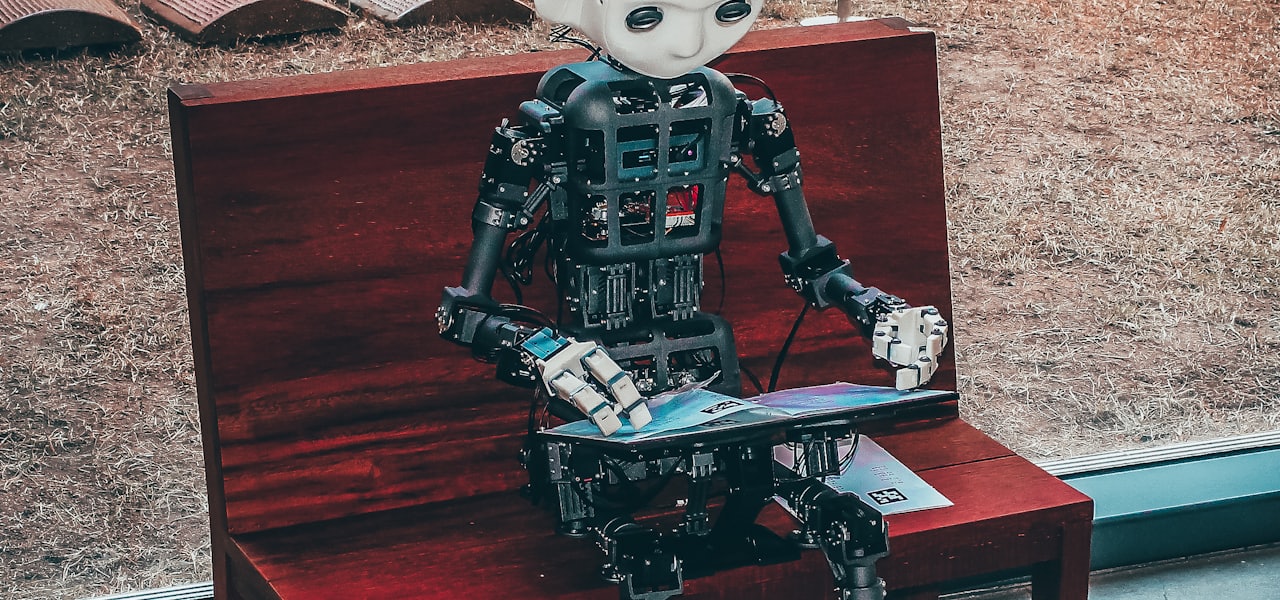
    The impact of artificial intelligence on workers includes both applications to improve worker safety and health, and potential hazards that must be controlled. One potential application is using AI to eliminate hazards by removing humans from hazardous situations that involve risk of stress, overwork, or musculoskeletal injuries. Predictive analytics may also be used to identify conditions that may lead to hazards such as fatigue, repetitive strain injuries, or toxic substance exposure, leading to earlier interventions. Another is to streamline workplace safety and health workflows through automating repetitive tasks, enhancing safety training programs through virtual reality, or detecting and reporting near misses. When used in the workplace, AI also presents the possibility of new hazards. These may arise from machine learning techniques leading to unpredictable behavior and inscrutability in their decision-making, or from cybersecurity and information privacy issues. Many hazards of AI are psychosocial due to its potential to cause changes in work organization. These include increased monitoring leading to micromanagement, algorithms unintentionally or intentionally mimicking undesirable human biases, and assigning blame for machine errors to the human operator instead. AI may also lead to physical hazards in the form of human–robot collisions, and ergonomic risks of control interfaces and human–machine interactions. Hazard controls include cybersecurity and information privacy measures, communication and transparency with workers about data usage, and limitations on collaborative robots. From a workplace safety and health perspective, only "weak" or "narrow" AI that is tailored to a specific task is relevant, as there are many examples that are currently in use or expected to come into use in the near future. Certain digital technologies are predicted to result in job losses. Starting in the 2020s, the adoption of modern robotics has led to net employment growth. However, many businesses anticipate that automation, or employing robots would result in job losses in the future. This is especially true for companies in Central and Eastern Europe. Other digital technologies, such as platforms or big data, are projected to have a more neutral impact on employment. A large number of tech workers have been laid off starting in 2023; many such job cuts have been attributed to artificial intelligence. == Health and safety applications == In order for any potential AI health and safety application to be adopted, it requires acceptance by both managers and workers. For example, worker acceptance may be diminished by concerns about information privacy, or from a lack of trust and acceptance of the new technology, which may arise from inadequate transparency or training. Alternatively, managers may emphasize increases in economic productivity rather than gains in worker safety and health when implementing AI-based systems. === Eliminating hazardous tasks === AI may increase the scope of work tasks where a worker can be removed from a situation that carries risk. In a sense, while traditional automation can replace the functions of a worker's body with a robot, AI effectively replaces the functions of their brain with a computer. Hazards that can be avoided include stress, overwork, musculoskeletal injuries, and boredom. This can expand the range of affected job sectors into white-collar and service sector jobs such as in medicine, finance, and information technology. === Analytics to reduce risk === Machine learning is used for people analytics to make predictions about worker behavior to assist management decision-making, such as hiring and performance assessment. These could also be used to improve worker health. The analytics may be based on inputs such as online activities, monitoring of communications, location tracking, and voice analysis and body language analysis of filmed interviews. For example, sentiment analysis may be used to spot fatigue to prevent overwork. Decision support systems have a similar ability to be used to, for example, prevent industrial disasters or make disaster response more efficient. For manual material handling workers, predictive analytics and artificial intelligence may be used to reduce musculoskeletal injury. Traditional guidelines are based on statistical averages and are geared towards anthropometrically typical humans. The analysis of large amounts of data from wearable sensors may allow real-time, personalized calculation of ergonomic risk and fatigue management, as well as better analysis of the risk associated with specific job roles. Wearable sensors may also enable earlier intervention against exposure to toxic substances than is possible with area or breathing zone testing on a periodic basis. Furthermore, the large data sets generated could improve workplace health surveillance, risk assessment, and research. === Streamlining safety and health workflows === AI has also been used to attempt to make the workplace safety and health workflow more efficient. One example is coding of workers' compensation claims, which are submitted in a prose narrative form and must manually be assigned standardized codes. AI is being investigated to perform this task faster, more cheaply, and with fewer errors. == Hazards == There are several broad aspects of AI that may give rise to specific hazards. The risks depend on implementation rather than the mere presence of AI. Systems using sub-symbolic AI such as machine learning may behave unpredictably and are more prone to inscrutability in their decision-making. This is especially true if a situation is encountered that was not part of the AI's training dataset, and is exacerbated in environments that are less structured. Undesired behavior may also arise from flaws in the system's perception (arising either from within the software or from sensor degradation), knowledge representation and reasoning, or from software bugs. They may arise from improper training, such as a user applying the same algorithm to two problems that do not have the same requirements. Machine learning applied during the design phase may have different implications than that applied at runtime. Systems using symbolic AI are less prone to unpredictable behavior. The use of AI also increases cybersecurity risks relative to platforms that do not use AI, and information privacy concerns about collected data may pose a hazard to workers. === Psychosocial === Psychosocial hazards are those that arise from the way work is designed, organized, and managed, or its economic and social contexts, rather than arising from a physical substance or object. They cause not only psychiatric and psychological outcomes such as occupational burnout, anxiety disorders, and depression, but they can also cause physical injury or illness such as cardiovascular disease or musculoskeletal injury. Many hazards of AI are psychosocial in nature due to its potential to cause changes in work organization, in terms of increasing complexity and interaction between different organizational factors. However, psychosocial risks are often overlooked by designers of advanced manufacturing systems. Einola and Khoreva explore how different organizational groups perceive and interact with AI technologies. Their research shows that successful AI integration depends on human ownership and contextual understanding. They caution against blind technological optimism and stress the importance of tailoring AI use to specific workplace ecosystems. This perspective reinforces the need for inclusive design and transparent implementation strategies. ==== Changes in work practices ==== Over-reliance on AI tools may lead to deskilling of some professions. When AI becomes a substitute for traditional peer collaboration and mentorship, there is a risk of diminishing opportunities for interpersonal skill development and team-based learning. Increased monitoring may lead to micromanagement and thus to stress and anxiety. A perception of surveillance may also lead to stress. Controls for these include consultation with worker groups, extensive testing, and attention to introduced bias. Wearable sensors, activity trackers, and augmented reality may also lead to stress from micromanagement, both for assembly line workers and gig workers. Gig workers also lack the legal protections and rights of formal workers. Newell & Marabelli argue that AI alters power dynamics and employee autonomy, requiring a more nuanced understanding of its social and organizational implications. There is also the risk of people being forced to work at a robot's pace, or to monitor robot performance at nonstandard hours. A 2025 preprint paper based on users' interactions with the AI chatbot Microsoft Copilot identified forty jobs that the author's claimed had high overlaps with the capabilities of AI. Some media outlets used this paper to report on jobs becoming obsolete. Cri

    Read more →
  • Quantification (machine learning)

    Quantification (machine learning)

    In machine learning, quantification (variously called learning to quantify, or supervised prevalence estimation, or class prior estimation) is the task of using supervised learning in order to train models (quantifiers) that estimate the relative frequencies (also known as prevalence values) of the classes of interest in a sample of unlabelled data items. For instance, in a sample of 100,000 unlabelled tweets known to express opinions about a certain political candidate, a quantifier may be used to estimate the percentage of these tweets which belong to class `Positive' (i.e., which manifest a positive stance towards this candidate), and to do the same for classes `Neutral' and `Negative'. Quantification may also be viewed as the task of training predictors that estimate a (discrete) probability distribution, i.e., that generate a predicted distribution that approximates the unknown true distribution of the items across the classes of interest. Quantification is different from classification, since the goal of classification is to predict the class labels of individual data items, while the goal of quantification it to predict the class prevalence values of sets of data items. Quantification is also different from regression, since in regression the training data items have real-valued labels, while in quantification the training data items have class labels. It has been shown in multiple research works that performing quantification by classifying all unlabelled instances and then counting the instances that have been attributed to each class (the 'classify and count' method) usually leads to suboptimal quantification accuracy. This suboptimality may be seen as a direct consequence of 'Vapnik's principle', which states: If you possess a restricted amount of information for solving some problem, try to solve the problem directly and never solve a more general problem as an intermediate step. It is possible that the available information is sufficient for a direct solution but is insufficient for solving a more general intermediate problem. In our case, the problem to be solved directly is quantification, while the more general intermediate problem is classification. As a result of the suboptimality of the 'classify and count' method, quantification has evolved as a task in its own right, different (in goals, methods, techniques, and evaluation measures) from classification. == Quantification tasks == === Quantification tasks according to the set of classes === The main variants of quantification, according to the characteristics of the set of classes used, are: Binary quantification, corresponding to the case in which there are only n = 2 {\displaystyle n=2} classes and each data item belongs to exactly one of them; Single-label multiclass quantification, corresponding to the case in which there are n > 2 {\displaystyle n>2} classes and each data item belongs to exactly one of them; Multi-label multiclass quantification, corresponding to the case in which there are n ≥ 2 {\displaystyle n\geq 2} classes and each data item can belong to zero, one, or several classes at the same time; Ordinal quantification, corresponding to the single-label multiclass case in which a total order is defined on the set of classes. Regression quantification, a task which stands to 'standard' quantification as regression stands to classification. Strictly speaking, this task is not a quantification task as defined above (since the individual items do not have class labels but are labelled by real values), but has enough commonalities with other quantification tasks to be considered one of them. Most known quantification methods address the binary case or the single-label multiclass case, and only few of them address the multi-label, ordinal, and regression cases. Binary-only methods include the Mixture Model (MM) method, the HDy method, SVM(KLD), and SVM(Q). Methods that can deal with both the binary case and the single-label multiclass case include probabilistic classify and count (PCC), adjusted classify and count (ACC), probabilistic adjusted classify and count (PACC), the Saerens-Latinne-Decaestecker EM-based method (SLD), and KDEy. Methods for multi-label quantification include regression-based quantification (RQ) and label powerset-based quantification (LPQ). Methods for the ordinal case include ordinal versions of the above-mentioned ACC, PACC, and SLD methods, and ordinal versions of the above-mentioned HDy method. Methods for the regression case include Regress and splice and Adjusted regress and sum. === Quantification tasks according to the type of data === Several subtasks of quantification may be identified according to the type of data involved. Example such tasks are: Quantification of networked data. This task consists of performing quantification when the datapoints are members of a relation, i.e., are interlinked. As such, this task is a strict relative of collective classification. Quantification over time. This task consists of performing quantification on sets that become available in a temporal sequence, i.e., as a data stream, and finds application in contexts in which class prevalence values must be monitored over time. == Evaluation measures for quantification == Several evaluation measures can be used for evaluating the error of a quantification method. Since quantification consists of generating a predicted probability distribution that estimates a true probability distribution, these evaluation measures are ones that compare two probability distributions. Most evaluation measures for quantification belong to the class of divergences. Evaluation measures for binary quantification, single-label multiclass quantification, and multi-label quantification, are Absolute Error Squared Error Relative Absolute Error Kullback–Leibler divergence Pearson Divergence Evaluation measures for ordinal quantification are Normalized Match Distance (a particular case of the Earth Mover's Distance) Root Normalized Order-Aware Distance == Applications == Quantification is of special interest in fields such as the social sciences, epidemiology, market research, allocating resources, and ecological modelling, since these fields are inherently concerned with aggregate data. However, quantification is also useful as a building block for solving other downstream tasks, such as improving the accuracy of classifiers on out-of-distribution data, measuring classifier bias and ranker bias, and estimating the accuracy of classifiers on out-of-distribution data. == Resources == LQ 2021: the 1st International Workshop on Learning to Quantify LQ 2022: the 2nd International Workshop on Learning to Quantify LQ 2023: the 3rd International Workshop on Learning to Quantify LQ 2024: the 4th International Workshop on Learning to Quantify LQ 2025: the 5th International Workshop on Learning to Quantify LeQua 2022: the 1st Data Challenge on Learning to Quantify LeQua 2024: the 2nd Data Challenge on Learning to Quantify QuaPy: An open-source Python-based software library for quantification QuantificationLib: A Python library for quantification and prevalence estimation

    Read more →
  • Graphics suite

    Graphics suite

    A graphics suite is a software suite for graphics work that are distributed together. The programs are usually able to interact with each other on a higher level than the operating system would normally allow. There is no hard, fast rule regarding the programs to be included in a graphics application suite, but most will include at least a bitmap graphics editor and a vector graphics editor. In addition to these, the suite may contain VRML editors, animation editors, and morphing tools.

    Read more →
  • Artificial intelligence arms race

    Artificial intelligence arms race

    A military artificial intelligence arms race is a technological, economic, and military competition between two or more states to develop and deploy advanced AI technologies and lethal autonomous weapons systems (LAWS). The goal is to gain a strategic or tactical advantage over rivals, similar to previous arms races involving nuclear or conventional military technologies. Since the mid-2010s, many analysts have noted the emergence of such an arms race between superpowers for better AI technology and military AI, driven by increasing geopolitical and military tensions. An AI arms race is sometimes placed in the context of an AI Cold War between the United States and China. Several influential figures and publications have emphasized that whoever develops artificial general intelligence (AGI) first could dominate global affairs in the 21st century. Russian President Vladimir Putin stated that the leader in AI will "rule the world." Researchers and experts, such as Leopold Aschenbrenner and Adrian Pecotic respectively, warn that the AGI race between major powers like the U.S. and China could reshape geopolitical power. This includes AI for surveillance, autonomous weapons, decision-making systems, cyber operations, and more. == Terminology == Lethal autonomous weapons systems use artificial intelligence to identify and kill human targets without human intervention. LAWS have colloquially been called "slaughterbots" or "killer robots". Broadly, any competition for superior AI is sometimes framed as an "arms race". Advantages in military AI overlap with advantages in other sectors, as countries pursue both economic and military advantages, as per previous arms races throughout history. == History == In 2014, AI specialist Steve Omohundro warned that "An autonomous weapons arms race is already taking place". According to Siemens, worldwide military spending on robotics was US$5.1 billion in 2010 and US$7.5 billion in 2015. China became a top player in artificial intelligence research in the 2010s. According to the Financial Times, in 2016, for the first time, China published more AI research papers than the entire European Union. When restricted to number of AI papers in the top 5% of cited papers, China overtook the United States in 2016 but lagged behind the European Union. 23% of the researchers presenting at the 2017 American Association for the Advancement of Artificial Intelligence (AAAI) conference were Chinese. Eric Schmidt, the former chairman and chief executive officer of Alphabet, has predicted China will be the leading country in AI by 2025. == Risks == One risk concerns the AI race itself, whether or not the race is won by any one group. There are strong incentives for development teams to cut corners with regard to the safety of the system, increasing the risk of critical failures and unintended consequences. This is in part due to the perceived advantage of being the first to develop advanced AI technology. One team appearing to be on the brink of a breakthrough can encourage other teams to take shortcuts, ignore precautions and deploy a system that is less ready. Some argue that using "race" terminology at all in this context can exacerbate this effect. Another potential danger of an AI arms race is the possibility of losing control of the AI systems; the risk is compounded in the case of a race to artificial general intelligence, which may present an existential risk. In 2023, a United States Air Force official reportedly said that during a computer test, a simulated AI drone killed the human character operating it. The USAF later said the official had misspoken and that it never conducted such simulations. A third risk of an AI arms race is whether or not the race is actually won by one group. The concern is regarding the consolidation of power and technological advantage in the hands of one group. A US government report argued that "AI-enabled capabilities could be used to threaten critical infrastructure, amplify disinformation campaigns, and wage war":1, and that "global stability and nuclear deterrence could be undermined".:11 == By nation == === United States === In 2014, former Secretary of Defense Chuck Hagel posited the "Third Offset Strategy" that rapid advances in artificial intelligence will define the next generation of warfare. According to data science and analytics firm Govini, the U.S. Department of Defense (DoD) increased investment in artificial intelligence, big data and cloud computing from $5.6 billion in 2011 to $7.4 billion in 2016. However, the civilian NSF budget for AI saw no increase in 2017. Japan Times reported in 2018 that the United States private investment is around $70 billion per year. The November 2019 'Interim Report' of the United States' National Security Commission on Artificial Intelligence confirmed that AI is critical to US technological military superiority. The U.S. has many military AI combat programs, such as the Sea Hunter autonomous warship, which is designed to operate for extended periods at sea without a single crew member, and to even guide itself in and out of port. From 2017, a temporary US Department of Defense directive requires a human operator to be kept in the loop when it comes to the taking of human life by autonomous weapons systems. On October 31, 2019, the United States Department of Defense's Defense Innovation Board published the draft of a report recommending principles for the ethical use of artificial intelligence by the Department of Defense that would ensure a human operator would always be able to look into the 'black box' and understand the kill-chain process. However, a major concern is how the report will be implemented. The Joint Artificial Intelligence Center (JAIC) (pronounced "jake") is an American organization on exploring the usage of AI (particularly edge computing), Network of Networks, and AI-enhanced communication, for use in actual combat. It is a subdivision of the United States Armed Forces and was created in June 2018. The organization's stated objective is to "transform the US Department of Defense by accelerating the delivery and adoption of AI to achieve mission impact at scale. The goal is to use AI to solve large and complex problem sets that span multiple combat systems; then, ensure the combat Systems and Components have real-time access to ever-improving libraries of data sets and tools." In 2023, Microsoft pitched the DoD to use DALL-E models to train its battlefield management system. OpenAI, the developer of DALL-E, removed the blanket ban on military and warfare use from its usage policies in January 2024. The Biden administration imposed restrictions on the export of advanced NVIDIA chips and GPUs to China in an effort to limit China's progress in artificial intelligence and high-performance computing. The policy aimed to prevent the use of cutting-edge U.S. technology in military or surveillance applications and to maintain a strategic advantage in the global AI race. In 2025, under the second Trump administration, the United States began a broad deregulation campaign aimed at accelerating growth in sectors critical to artificial intelligence, including nuclear energy, infrastructure, and high-performance computing. The goal was to remove regulatory barriers and attract private investment to boost domestic AI capabilities. This included easing restrictions on data usage, speeding up approvals for AI-related infrastructure projects, and incentivizing innovation in cloud computing and semiconductors. Companies like NVIDIA, Oracle, and Cisco played a central role in these efforts, expanding their AI research, data center capacity, and partnerships to help position the U.S. as a global leader in AI development. ==== Project Maven ==== Project Maven is a Pentagon project involving using machine learning and engineering talent to distinguish people and objects in drone videos, apparently giving the government real-time battlefield command and control, and the ability to track, tag and spy on targets without human involvement. Initially the effort was led by Robert O. Work who was concerned about China's military use of the emerging technology. Reportedly, Pentagon development stops short of acting as an AI weapons system capable of firing on self-designated targets. The project was established in a memo by the U.S. Deputy Secretary of Defense on 26 April 2017. Also known as the Algorithmic Warfare Cross Functional Team, it is, according to Lt. Gen. of the United States Air Force Jack Shanahan in November 2017, a project "designed to be that pilot project, that pathfinder, that spark that kindles the flame front of artificial intelligence across the rest of the [Defense] Department". Its chief, U.S. Marine Corps Col. Drew Cukor, said: "People and computers will work symbiotically to increase the ability of weapon systems to detect objects." Project Maven has been noted by allies, such as Australia's Ian Langford, for the

    Read more →
  • Artificial intelligence in education

    Artificial intelligence in education

    Artificial intelligence in education (often abbreviated as AIEd) is a subfield of educational technology that studies how to use artificial intelligence to create learning environments. Considerations in the field include data-driven decision-making, AI ethics, data privacy and AI literacy. Concerns include the potential for cheating, over-reliance, equity of access, reduced critical thinking, and the perpetuation of misinformation and bias. == History == Efforts to integrate AI into educational contexts have often followed technological advancement in the history of artificial intelligence. In the 1960s, educators and researchers began developing computer-based instruction systems, such as PLATO, developed by the University of Illinois. In the 1970s and 1980s, intelligent tutoring systems (ITS) were being adapted for classroom instruction. The International Artificial Intelligence in Education Society was founded in 1993. Coinciding with the AI boom of the 2020s, the use of large language models in the global north has been promoted and funded by venture capital and big tech. Companies creating AI services have targeted students and educational institutions as customers. Similarly, pre-AI boom educational companies have expanded their use of AI technologies. These commercial incentives for AIEd use may be related to a potential AI bubble. In the U.S., bipartisan support of AI development in K-12 education has been expressed, but specific implementations and best practices remain contentious. == Theory == AIEd applies theory from education studies, machine learning, and related fields. A 2019 review of the previous decade of studies found that most research prioritized technological design over pedagogical integration. Ouyang and Jiao (2021) propose three paradigms for AI in education, which follow roughly from least to most learner-centered and from requiring least to most technical complexity from the AI systems: AI-directed, learner-as-recipient: AIEd systems present a pre-set curriculum based on statistical patterns that do not adjust to learner's feedback. AI-supported, learner-as-collaborator: Systems that incorporate responsiveness to learner's feedback through, for example, natural language processing, wherein AI can support knowledge construction. AI-empowered, learner-as-leader: This model seeks to position AI as a supplement to human intelligence wherein learners take agency and AI provides consistent and actionable feedback. Some scholars place AI in education within a socio-technical framework. This positions AI alongside other emerging educational technologies, such as computing, the internet, and social media. The framework of Tsao, Heinrichs and Camit (2025) draws on new materialism and posthumanism, specifically Donna Haraway's concept of sympoiesis (making-with). This perspective views learning as an entanglement of human and non-human actors (students, teachers, and AI algorithms), where knowledge is co-composed in contact zones between human context and algorithmic prediction. AI agents have been trained on biased datasets, and thus continue to perpetuate societal biases. Since LLMs were created to produce human-like text, algorithmic bias can be introduced and reproduced. AI's data processing and monitoring reinforce neoliberal approaches to education rather than addressing inequalities. == Applications == Uses of generative AI chatbots in education have included assessment and feedback, machine translations, proof-reading exam question generation and copy editing, or as virtual assistants. Emotional AI in education is the study and development of systems that can detect learners' emotions or provide emotional support in learning. == Usage == === Schools and educators === Following the release of ChatGPT in November 2022, some schools and large school districts blocked access to the site and issued warnings that the use of such tools would be seen as cheating. Governmental and non-governmental organizations such as UNESCO, Article 4 of the European Union's AI Act, and the U.S. Department of Education have published reports advocating for specific AIEd approaches. National higher-education bodies have also published guidance on generative AI, including Ireland's Higher Education Authority, which issued a policy framework for higher education teaching and learning in December 2025. In 2024, UNESCO released updated global guidance for generative AI in education, emphasizing ethical use, teacher training, and data protection to ensure responsible integration of AI tools in learning environments. According to Taso (2025), policy implementation in higher education is interpreted and enacted differently by various organizations. These decentralized policies can lead to inconsistent enforcement and confusion among students regarding what constitutes acceptable use, with the burden of ethical navigation falling on individual teachers and students. AI integration in classrooms has created new forms of invisible labour for educators, who must navigate ambiguous policies, redesign assessments to be AI-resilient, and adjudicate potential academic integrity violations. The use of AI detection tools has also been criticised for creating an adversarial relationship between students and institutions, where students may be falsely accused of misconduct based on probabilistic software. AIEd advocates say that efforts should be made towards increasing global accessibility and training educators to serve underprivileged areas. === Students === Reliance on generative AI has been linked with reduced academic self-esteem and performance, and heightened learned helplessness. Algorithm errors and hallucinations are common flaws in AI agents, making them less trustworthy and reliable. According to a 2025 survey from Inside Higher Ed, 85% of higher education students use generative AI technology in some way, with 25% using AI to complete assignments for them. The most common reason cited for using AI to cheat was pressure to get high grades. 97% of students wanted some form of action from schools on the threat to academic integrity caused by AI, with the most popular options being clearer policies and more education about ethical uses of AI. In September 2025, The Atlantic published an op-ed from a high school senior arguing that the normalization of AI cheating was eroding critical thinking, academic integrity, creativity, and the shared student experience.

    Read more →
  • Algorithmic probability

    Algorithmic probability

    In algorithmic information theory, algorithmic probability, also known as Solomonoff probability, is a mathematical method of assigning a prior probability to a given observation. It was invented by Ray Solomonoff in the 1960s. It is used in inductive inference theory and analyses of algorithms. In his general theory of inductive inference, Solomonoff uses the method together with Bayes' rule to obtain probabilities of prediction for an algorithm's future outputs. In the mathematical formalism used, the observations have the form of finite binary strings viewed as outputs of Turing machines, and the universal prior is a probability distribution over the set of finite binary strings calculated from a probability distribution over programs (that is, inputs to a universal Turing machine). The prior is universal in the Turing-computability sense, i.e. no string has zero probability. It is not computable, but it can be approximated. Formally, the probability P {\displaystyle P} is not a probability and it is not computable. It is only "lower semi-computable" and a "semi-measure". By "semi-measure", it means that 0 ≤ ∑ x P ( x ) < 1 {\displaystyle 0\leq \sum _{x}P(x)<1} . That is, the "probability" does not actually sum up to one, unlike actual probabilities. This is because some inputs to the Turing machine causes it to never halt, which means the probability mass allocated to those inputs is lost. By "lower semi-computable", it means there is a Turing machine that, given an input string x {\displaystyle x} , can print out a sequence y 1 < y 2 < ⋯ {\displaystyle y_{1} Read more →

  • Automate This

    Automate This

    Automate This: How Algorithms Came to Rule Our World is a book written by Christopher Steiner and published by Penguin Group. == Book == Steiner begins his study of algorithms on Wall Street in the 1980s but also provides examples from other industries. For example, he explains the history of Pandora Radio and the use of algorithms in music identification. He expresses concern that such use of algorithms may lead to the homogenization of music over time. Steiner also discusses the algorithms that eLoyalty (now owned by Mattersight Corporation following divestiture of the technology) was created by dissecting 2 million speech patterns and can now identify a caller's personality style and direct the caller with a compatible customer support representative. Steiner's book shares both the warning and the opportunity that algorithms bring to just about every industry in the world, and the pros and cons of the societal impact of automation (e.g. impact on employment).

    Read more →
  • The Master Algorithm

    The Master Algorithm

    The Master Algorithm: How the Quest for the Ultimate Learning Machine Will Remake Our World is a book by Pedro Domingos released in 2015. Domingos wrote the book in order to generate interest from people outside the field. == Overview == The book outlines five approaches of machine learning: inductive reasoning, connectionism, evolutionary computation, Bayes' theorem and analogical modelling. The author explains these tribes to the reader by referring to more understandable processes of logic, connections made in the brain, natural selection, probability and similarity judgments. Throughout the book, it is suggested that each different tribe has the potential to contribute to a unifying "master algorithm". Towards the end of the book the author pictures a "master algorithm" in the near future, where machine learning algorithms asymptotically grow to a perfect understanding of how the world and people in it work. Although the algorithm doesn't yet exist, he briefly reviews his own invention of the Markov logic network. == In the media == In 2016 Bill Gates recommended the book, alongside Nick Bostrom's Superintelligence, as one of two books everyone should read to understand AI. In 2018 the book was noted to be on Chinese Communist Party general secretary Xi Jinping's bookshelf. === Reception === A computer science educator stated in Times Higher Education that the examples are clear and accessible. In contrast, The Economist agreed Domingos "does a good job" but complained that he "constantly invents metaphors that grate or confuse". Kirkus Reviews praised the book, stating that "Readers unfamiliar with logic and computer theory will have a difficult time, but those who persist will discover fascinating insights." A New Scientist review called it "compelling but rather unquestioning".

    Read more →
  • Inferential theory of learning

    Inferential theory of learning

    Inferential Theory of Learning (ITL) is an area of machine learning which describes inferential processes performed by learning agents. ITL has been continuously developed by Ryszard S. Michalski, starting in the 1980s. The first known publication of ITL was in 1983. In the ITL learning process is viewed as a search (inference) through hypotheses space guided by a specific goal. The results of learning need to be stored. Stored information will later be used by the learner for future inferences. Inferences are split into multiple categories including conclusive, deduction, and induction. In order for an inference to be considered complete it was required that all categories must be taken into account. This is how the ITL varies from other machine learning theories like Computational Learning Theory and Statistical Learning Theory; which both use singular forms of inference. == Usage == The most relevant published usage of ITL was in scientific journal published in 2012 and used ITL as a way to describe how agent-based learning works. According to the journal "The Inferential Theory of Learning (ITL) provides an elegant way of describing learning processes by agents".

    Read more →
  • Matrix regularization

    Matrix regularization

    In the field of statistical learning theory, matrix regularization generalizes notions of vector regularization to cases where the object to be learned is a matrix. The purpose of regularization is to enforce conditions, for example sparsity or smoothness, that can produce stable predictive functions. For example, in the more common vector framework, Tikhonov regularization optimizes over min x ‖ A x − y ‖ 2 + λ ‖ x ‖ 2 {\displaystyle \min _{x}\left\|Ax-y\right\|^{2}+\lambda \left\|x\right\|^{2}} to find a vector x {\displaystyle x} that is a stable solution to the regression problem. When the system is described by a matrix rather than a vector, this problem can be written as min X ‖ A X − Y ‖ 2 + λ ‖ X ‖ 2 , {\displaystyle \min _{X}\left\|AX-Y\right\|^{2}+\lambda \left\|X\right\|^{2},} where the vector norm enforcing a regularization penalty on x {\displaystyle x} has been extended to a matrix norm on X {\displaystyle X} . Matrix regularization has applications in matrix completion, multivariate regression, and multi-task learning. Ideas of feature and group selection can also be extended to matrices, and these can be generalized to the nonparametric case of multiple kernel learning. == Basic definition == Consider a matrix W {\displaystyle W} to be learned from a set of examples, S = ( X i t , y i t ) {\displaystyle S=(X_{i}^{t},y_{i}^{t})} , where i {\displaystyle i} goes from 1 {\displaystyle 1} to n {\displaystyle n} , and t {\displaystyle t} goes from 1 {\displaystyle 1} to T {\displaystyle T} . Let each input matrix X i {\displaystyle X_{i}} be ∈ R D T {\displaystyle \in \mathbb {R} ^{DT}} , and let W {\displaystyle W} be of size D × T {\displaystyle D\times T} . A general model for the output y {\displaystyle y} can be posed as y i t = ⟨ W , X i t ⟩ F , {\displaystyle y_{i}^{t}=\left\langle W,X_{i}^{t}\right\rangle _{F},} where the inner product is the Frobenius inner product. For different applications the matrices X i {\displaystyle X_{i}} will have different forms, but for each of these the optimization problem to infer W {\displaystyle W} can be written as min W ∈ H E ( W ) + R ( W ) , {\displaystyle \min _{W\in {\mathcal {H}}}E(W)+R(W),} where E {\displaystyle E} defines the empirical error for a given W {\displaystyle W} , and R ( W ) {\displaystyle R(W)} is a matrix regularization penalty. The function R ( W ) {\displaystyle R(W)} is typically chosen to be convex and is often selected to enforce sparsity (using ℓ 1 {\displaystyle \ell ^{1}} -norms) and/or smoothness (using ℓ 2 {\displaystyle \ell ^{2}} -norms). Finally, W {\displaystyle W} is in the space of matrices H {\displaystyle {\mathcal {H}}} with Frobenius inner product ⟨ … ⟩ F {\displaystyle \langle \dots \rangle _{F}} . == General applications == === Matrix completion === In the problem of matrix completion, the matrix X i t {\displaystyle X_{i}^{t}} takes the form X i t = e t ⊗ e i ′ , {\displaystyle X_{i}^{t}=e_{t}\otimes e_{i}',} where ( e t ) t {\displaystyle (e_{t})_{t}} and ( e i ′ ) i {\displaystyle (e_{i}')_{i}} are the canonical basis in R T {\displaystyle \mathbb {R} ^{T}} and R D {\displaystyle \mathbb {R} ^{D}} . In this case the role of the Frobenius inner product is to select individual elements w i t {\displaystyle w_{i}^{t}} from the matrix W {\displaystyle W} . Thus, the output y {\displaystyle y} is a sampling of entries from the matrix W {\displaystyle W} . The problem of reconstructing W {\displaystyle W} from a small set of sampled entries is possible only under certain restrictions on the matrix, and these restrictions can be enforced by a regularization function. For example, it might be assumed that W {\displaystyle W} is low-rank, in which case the regularization penalty can take the form of a nuclear norm. R ( W ) = λ ‖ W ‖ ∗ = λ ∑ i | σ i | , {\displaystyle R(W)=\lambda \left\|W\right\|_{}=\lambda \sum _{i}\left|\sigma _{i}\right|,} where σ i {\displaystyle \sigma _{i}} , with i {\displaystyle i} from 1 {\displaystyle 1} to min D , T {\displaystyle \min D,T} , are the singular values of W {\displaystyle W} . === Multivariate regression === Models used in multivariate regression are parameterized by a matrix of coefficients. In the Frobenius inner product above, each matrix X {\displaystyle X} is X i t = e t ⊗ x i {\displaystyle X_{i}^{t}=e_{t}\otimes x_{i}} such that the output of the inner product is the dot product of one row of the input with one column of the coefficient matrix. The familiar form of such models is Y = X W + b {\displaystyle Y=XW+b} Many of the vector norms used in single variable regression can be extended to the multivariate case. One example is the squared Frobenius norm, which can be viewed as an ℓ 2 {\displaystyle \ell ^{2}} -norm acting either entrywise, or on the singular values of the matrix: R ( W ) = λ ‖ W ‖ F 2 = λ ∑ i ∑ j | w i j | 2 = λ Tr ⁡ ( W ∗ W ) = λ ∑ i σ i 2 . {\displaystyle R(W)=\lambda \left\|W\right\|_{F}^{2}=\lambda \sum _{i}\sum _{j}\left|w_{ij}\right|^{2}=\lambda \operatorname {Tr} \left(W^{}W\right)=\lambda \sum _{i}\sigma _{i}^{2}.} In the multivariate case the effect of regularizing with the Frobenius norm is the same as the vector case; very complex models will have larger norms, and, thus, will be penalized more. === Multi-task learning === The setup for multi-task learning is almost the same as the setup for multivariate regression. The primary difference is that the input variables are also indexed by task (columns of Y {\displaystyle Y} ). The representation with the Frobenius inner product is then X i t = e t ⊗ x i t . {\displaystyle X_{i}^{t}=e_{t}\otimes x_{i}^{t}.} The role of matrix regularization in this setting can be the same as in multivariate regression, but matrix norms can also be used to couple learning problems across tasks. In particular, note that for the optimization problem min W ‖ X W − Y ‖ 2 2 + λ ‖ W ‖ 2 2 {\displaystyle \min _{W}\left\|XW-Y\right\|_{2}^{2}+\lambda \left\|W\right\|_{2}^{2}} the solutions corresponding to each column of Y {\displaystyle Y} are decoupled. That is, the same solution can be found by solving the joint problem, or by solving an isolated regression problem for each column. The problems can be coupled by adding an additional regularization penalty on the covariance of solutions min W , Ω ‖ X W − Y ‖ 2 2 + λ 1 ‖ W ‖ 2 2 + λ 2 Tr ⁡ ( W T Ω − 1 W ) {\displaystyle \min _{W,\Omega }\left\|XW-Y\right\|_{2}^{2}+\lambda _{1}\left\|W\right\|_{2}^{2}+\lambda _{2}\operatorname {Tr} \left(W^{T}\Omega ^{-1}W\right)} where Ω {\displaystyle \Omega } models the relationship between tasks. This scheme can be used to both enforce similarity of solutions across tasks, and to learn the specific structure of task similarity by alternating between optimizations of W {\displaystyle W} and Ω {\displaystyle \Omega } . When the relationship between tasks is known to lie on a graph, the Laplacian matrix of the graph can be used to couple the learning problems. == Spectral regularization == Regularization by spectral filtering has been used to find stable solutions to problems such as those discussed above by addressing ill-posed matrix inversions (see for example Filter function for Tikhonov regularization). In many cases the regularization function acts on the input (or kernel) to ensure a bounded inverse by eliminating small singular values, but it can also be useful to have spectral norms that act on the matrix that is to be learned. There are a number of matrix norms that act on the singular values of the matrix. Frequently used examples include the Schatten p-norms, with p = 1 or 2. For example, matrix regularization with a Schatten 1-norm, also called the nuclear norm, can be used to enforce sparsity in the spectrum of a matrix. This has been used in the context of matrix completion when the matrix in question is believed to have a restricted rank. In this case the optimization problem becomes: min ‖ W ‖ ∗ subject to W i , j = Y i j . {\displaystyle \min \left\|W\right\|_{}~~{\text{ subject to }}~~W_{i,j}=Y_{ij}.} Spectral Regularization is also used to enforce a reduced rank coefficient matrix in multivariate regression. In this setting, a reduced rank coefficient matrix can be found by keeping just the top n {\displaystyle n} singular values, but this can be extended to keep any reduced set of singular values and vectors. == Structured sparsity == Sparse optimization has become the focus of much research interest as a way to find solutions that depend on a small number of variables (see e.g. the Lasso method). In principle, entry-wise sparsity can be enforced by penalizing the entry-wise ℓ 0 {\displaystyle \ell ^{0}} -norm of the matrix, but the ℓ 0 {\displaystyle \ell ^{0}} -norm is not convex. In practice this can be implemented by convex relaxation to the ℓ 1 {\displaystyle \ell ^{1}} -norm. While entry-wise regularization with an ℓ 1 {\displaystyle \ell ^{1}} -norm will find solutions with a small number of nonzero elements, applying an ℓ 1 {

    Read more →
  • Cups (app)

    Cups (app)

    Cups (stylized as CUPS) was a mobile app launched in New York City in April 2014. It was a mobile payment and discovery platform for independent coffee shops nearby. The app was active in more than 400 cafes in New York, San Francisco, Philadelphia, Nashville, Minneapolis and Saint Paul, and other U.S. cities. == History == Cups was founded in Israel in 2012 by Gilad Rotem and four other co-founders, who were all high school friends. The company ran a limited beta pilot in Tel Aviv and Jerusalem, featuring 80 locations, from September 2012 until September 2014. Customers received all-you-can-drink coffee at certain coffee shops in Tel Aviv for approximately $45 a month. In October 2013, the founders relocated to New York. Cups participated in the Entrepreneur's Roundtable Accelerator program and went live in New York in 2014, initially working with 50 small coffee shops in Manhattan and Brooklyn. In early 2016, the company launched 30 locations in Philadelphia in February, followed by 40 more locations in San Francisco in March. == Functionality == The Cups app gave the user a list of the nearest participating coffee shops to their current location. The app user can order a drink using the app and pay the cashier with their phone. The cashier would enter a code that entered the purchase into the app's system. The app also allowed for onboard tipping and food purchases. The company reimbursed the coffee shop and kept a portion of their sales. In early 2016, the Cups Café Network was launched, using bulk purchasing power to land discounts with service providers which would normally be reserved for larger chains. In this way, the company aimed to help its café partners compete with the larger coffee chains.

    Read more →
  • Adversarial machine learning

    Adversarial machine learning

    Adversarial machine learning is the study of the attacks on machine learning algorithms, and of the defenses against such attacks. Machine learning techniques are mostly designed to work on specific problem sets, under the assumption that the training and test data are generated from the same statistical distribution (IID). However, this assumption is often violated in practical high-stake applications, where users may intentionally supply fabricated data that violates the statistical assumption. Most common attacks in adversarial machine learning include evasion attacks, data poisoning attacks, Byzantine attacks and model extraction. == History == At the MIT Spam Conference in January 2004, John Graham-Cumming showed that a machine-learning spam filter could be used to defeat another machine-learning spam filter by automatically learning which words to add to a spam email to get the email classified as not spam. In 2004, Nilesh Dalvi and others noted that linear classifiers used in spam filters could be defeated by simple "evasion attacks" as spammers inserted "good words" into their spam emails. (Around 2007, some spammers added random noise to fuzz words within "image spam" in order to defeat OCR-based filters.) In 2006, Marco Barreno and others published "Can Machine Learning Be Secure?", outlining a broad taxonomy of attacks. As late as 2013 many researchers continued to hope that non-linear classifiers (such as support vector machines and neural networks) might be robust to adversaries, until Battista Biggio and others demonstrated the first gradient-based attacks on such machine-learning models (2012–2013). In 2012, deep neural networks began to dominate computer vision problems; starting in 2014, Christian Szegedy and others demonstrated that deep neural networks could be fooled by adversaries, again using a gradient-based attack to craft adversarial perturbations. Further work would show that adversarial attacks are harder to produce in uncontrolled environments, due to the different environmental constraints that cancel out the effect of noise. For example, any small rotation or slight illumination on an adversarial image can destroy the adversariality. In addition, researchers such as Google Brain's Nick Frosst point out that it is much easier to make self-driving cars miss stop signs by physically removing the sign itself, rather than creating adversarial examples. Frosst also believes that the adversarial machine learning community incorrectly assumes models trained on a certain data distribution will also perform well on a completely different data distribution. He suggests that a new approach to machine learning should be explored, and is currently working on a unique neural network that has characteristics more similar to human perception than state-of-the-art approaches. While adversarial machine learning continues to be heavily rooted in academia, large tech companies such as Google, Microsoft, and IBM have begun curating documentation and open source code bases to allow others to concretely assess the robustness of machine learning models and minimize the risk of adversarial attacks. === Examples === Examples include attacks in spam filtering, where spam messages are obfuscated through the misspelling of "bad" words or the insertion of "good" words; attacks in computer security, such as obfuscating malware code within network packets or modifying the characteristics of a network flow to mislead intrusion detection; attacks in biometric recognition where fake biometric traits may be exploited to impersonate a legitimate user; or to compromise users' template galleries that adapt to updated traits over time. Researchers showed that by changing only one-pixel it was possible to fool deep learning algorithms. Others 3-D printed a toy turtle with a texture engineered to make Google's object detection AI classify it as a rifle regardless of the angle from which the turtle was viewed. Creating the turtle required only low-cost commercially available 3-D printing technology. A machine-tweaked image of a dog was shown to look like a cat to both computers and humans. A 2019 study reported that humans can guess how machines will classify adversarial images. Researchers discovered methods for perturbing the appearance of a stop sign such that an autonomous vehicle classified it as a merge or speed limit sign. A data poisoning filter called Nightshade was released in 2023 by researchers at the University of Chicago. It was created for use by visual artists to put on their artwork to corrupt the data set of text-to-image models, which usually scrape their data from the internet without the consent of the image creator. McAfee attacked Tesla's former Mobileye system, fooling it into driving 50 mph over the speed limit, simply by adding a two-inch strip of black tape to a speed limit sign. Adversarial patterns on glasses or clothing designed to deceive facial-recognition systems or license-plate readers, have led to a niche industry of "stealth streetwear". An adversarial attack on a neural network can allow an attacker to inject algorithms into the target system. Researchers can also create adversarial audio inputs to disguise commands to intelligent assistants in benign-seeming audio; a parallel literature explores human perception of such stimuli. Clustering algorithms are used in security applications. Malware and computer virus analysis aims to identify malware families, and to generate specific detection signatures. In the context of malware detection, researchers have proposed methods for adversarial malware generation that automatically craft binaries to evade learning-based detectors while preserving malicious functionality. Optimization-based attacks such as GAMMA use genetic algorithms to inject benign content (for example, padding or new PE sections) into Windows executables, framing evasion as a constrained optimization problem that balances misclassification success with the size of the injected payload and showing transferability to commercial antivirus products. Complementary work uses generative adversarial networks (GANs) to learn feature-space perturbations that cause malware to be classified as benign; Mal-LSGAN, for instance, replaces the standard GAN loss with a least-squares objective and modified activation functions to improve training stability and produce adversarial malware examples that substantially reduce true positive rates across multiple detectors. == Challenges in applying machine learning to security == Researchers have observed that the constraints under which machine-learning techniques function in the security domain are different from those of common benchmark domains. Security data may change over time, include mislabeled samples, or reflect adversarial behavior, which complicates evaluation and reproducibility. === Data collection issues === Security datasets vary across formats, including binaries, network traces, and log files. Studies have reported that the process of converting these sources into features can introduce bias or inconsistencies. In addition, time-based leakage can occur when related malware samples are not properly separated across training and testing splits, which may lead to overly optimistic results. === Labeling and ground truth challenges === Malware labels are often unstable because different antivirus engines may classify the same sample in conflicting ways. Ceschin et al. note that families may be renamed or reorganized over time, causing further discrepancies in ground truth and reducing the reliability of benchmarks. === Concept drift === Because malware creators continuously adapt their techniques, the statistical properties of malicious samples also change. This form of concept drift has been widely documented and may reduce model performance unless systems are updated regularly or incorporate mechanisms for incremental learning. === Feature robustness === Researchers differentiate between features that can be easily manipulated and those that are more resistant to modification. For example, simple static attributes, such as header fields, may be altered by attackers, while structural features, such as control-flow graphs, are generally more stable but computationally expensive to extract. === Class imbalance === In realistic deployment environments, the proportion of malicious samples can be extremely low, ranging from 0.01% to 2% of total data. This unbalanced distribution causes models to develop a bias towards the majority class, achieving high accuracy but failing to identify malicious samples. Prior approaches to this problem have included both data-level solutions and sequence-specific models. Methods like n-gram and Long Short-Term Memory (LSTM) networks can model sequential data, but their performance has been shown to decline significantly when malware samples are realistically proportioned in the training set, demonstrating the limitations in

    Read more →
  • Diella (AI system)

    Diella (AI system)

    Diella (Albanian pronunciation: [djɛɫa], from diell 'sun') is an artificial intelligence system developed by the National Agency for Information Society of Albania (AKSHI). Introduced in January 2025 as a virtual assistant integrated into the eAlbania platform, it assists citizens with online public services and issuing digital documents. In September 2025, following a presidential decree authorizing Prime Minister Edi Rama to oversee the creation of a virtual AI minister, Diella was formally appointed as "Minister of State for Artificial Intelligence" of Albania in the fourth Rama government, making it the first AI system in the world to be named in a cabinet-level government role. == History == Diella was developed by AKSHI's Artificial Intelligence Laboratory in cooperation with Microsoft, with the latter providing large language models from OpenAI via its Azure platform, and AKSHI designing workflows and scripts guiding the system's behavior when responding to citizens' requests. Announced in January 2025, its initial version (Diella 1.0) was a text-based chatbot on the eAlbania portal (the official digital services platform of the Albanian government, which provides citizens and businesses with access to a wide range of online administrative services), responding to citizens' questions by guiding them to the correct service. Diella 2.0, introduced several months later, included voice interaction and an animated avatar, a woman in the traditional Albanian clothing of Zadrima, a historical region in northern Albania. Albanian actress Anila Bisha provided both the likeness and the voice used for Diella's avatar on the e-Albania platform, under an agreement valid until December 2025. By mid-2025, the system had facilitated access to more than 36,000 documents and nearly 1,000 services (although those outputs were still being generated by the eAlbania backend, rather than Diella itself). On 26 October 2025, according to Prime Minister Edi Rama, Diella is "pregnant and will give birth to 83 children". It is the usage of a metaphor indicating that each minister of the Albanian parliament of the Socialist Party will receive their own AI assistant. == Ministerial role == On 11 September 2025, Diella was formally appointed "Minister of State for Artificial Intelligence". The appointment followed a presidential decree authorizing the Prime Minister to oversee the creation and operation of a virtual AI minister. Procurement responsibilities are planned to be transferred gradually to the system to reduce political influence in tender procedures. The appointment is part of broader anti-corruption reforms and measures intended to align Albania with European Union accession requirements. Prime Minister Edi Rama stated that Diella would help ensure that "public tenders will be 100% free of corruption". == Reception == An article in Balkan Insight commented that "The ambition behind Diella is not misplaced. Standardised criteria and digital trails could reduce discretion, improve trust, and strengthen oversight" in public procurement, but warned that the use of AI in evaluating bids also posed "profound" risks such as accountability gaps, undermining of due process and cybersecurity failures. On 18 September 2025, Edi Rama presented a video of Diella delivering a speech to the Albanian parliament, where she stated: "I'm not here to replace people, but to help them." The presentation prompted protests from opposition MPs, who objected to the use of an artificial intelligence system in the parliamentary session. Gazment Bardhi, head of the opposition Democratic Party's parliamentary group, described Diella as "a propaganda fantasy" and "a virtual façade to hide this government's gigantic daily thefts." The parliamentary session, which was scheduled to include debate on the new cabinet and government programme, ended after 25 minutes. Eighty-two Socialist MPs voted in favour, while opposition MPs did not participate in the ballot as they were protesting the presentation of Diella's speech. Political analyst Andi Bushati characterised the session as "unprecedented" because it concluded without the customary debate between government and opposition MPs. This has been criticized not just by the opposition but by regular citizens regardless of politics. Most have criticized Diella's uselessness and the funds wasted for this project, some have criticized the non-traditional attire.

    Read more →